

Open your mind to Openness
“I find that when you open the door toward openness and transparency, a lot of people will follow you through.”
– Kirsten Gillibrand
Martin Weller’s book, 25 Years of Ed Tech, explores the evolution of educational technology, highlighting technologies explored over the last twenty-five years, some of which are still considered industry standards today. Over these years, many passionate educators have driven changes and continue to shape the educational landscape. This article will examine Robin DeRosa’s contributions, who was mentioned in Weller’s chapter on “Open Textbooks” (Weller, 2020). It will focus on her achievements and role in advocating for a shift towards open pedagogy, transforming how educational materials are created and shared.
DeRosa earned her Ph.D. in one of her many passions, English, from Tufts University in Medford, Massachusetts (DeRosa, n.d.-a). She spent fifteen years teaching English, enriching her curriculum with her interests in museums and critical historical periods like the Revolutionary War and the Salem Witch Trials. Transitioning to Plymouth State University, she now works in Interdisciplinary Studies, focusing on student-centred pedagogy that weaves historical insights into educational practices.
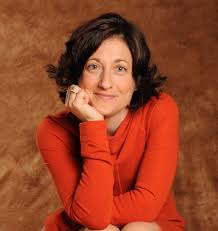
As a pioneer in the open-textbook movement, DeRosa advanced the concept of open textbooks beyond their original monetary purpose, emphasizing their role as open educational resources (Weller, 2020, Chapter 20, Open Textbooks para 11). At Plymouth State University, DeRosa facilitated an English course on American Literature. Observing that students were spending approximately $100 on textbooks, she initiated the design and development of an electronic book (eBook) with alumni (DeRosa & Robison, 2017). This process involved collecting and refining relevant information about American Literature and organizing it using online sharing and publishing software. By the start of the next class, students received the initial framework of this eBook, which served dual purposes: as a medium for consuming knowledge and as a platform for collaboration. Throughout the course, they engaged in an iterative process of editing, writing excerpts, and gathering additional information, thereby continuously evolving this open educational resource.
DeRosa discovered that students could produce content that resonated better with their peers than she could, given their understanding of the demographic they were addressing, themselves. (DeRosa & Robison, 2017). This involvement gave students a sense of ownership and a stronger connection to the scholarly community, as they were essentially the authors of this open educational resource. DeRosa acknowledges that this approach to curating open educational resources and practicing open pedagogy may be extreme and unsuitable for all situations; however, its success demonstrates that by embracing open education as an active endeavour rather than merely something to acquire, we open new opportunities and potential for learning.
In her advocacy for open educational resources, DeRosa can be found on youtube where she shares her thoughts send in education regarding open pedagogy. A compelling five-minute YouTube video where she discusses the impact and importance of OER in modern education can be found here: Robin DeRosa on OER. This video provides a concise overview of her stance on OER and its role in enhancing educational accessibility and effectiveness.
Those interested in learning more about her innovative approaches on this topic can explore her thoughts and updates on her blog at Robin’s Blog (DeRosa, n.d.-b). DeRosa blog appears to have gone dormant however you can follow and interact with her on social media at Social.coop (DeRosa, n.d.-c), where she shares insights and engages with the community on open education and pedagogy issues.
References
ConnectedLearningAlliance. (2016, October 11). Robin DeRosa – Ignite Talk DML2016 [Video]. YouTube. https://www.youtube.com/watch?v=IpOP6RZXzXQ
DeRosa, R. (n.d.-a). About me. actualham. Retrieved September 14, 2024, from https://robinderosa.net/about/
DeRosa, R. (n.d.-b). Blog. Retrieved from https://robinderosa.net/my-blog/
DeRosa, R. (n.d.-c). Profile [@actualham]. Social.coop. Retrieved from https://social.coop/@actualham
DeRosa, R and Robison S. 2017. From OER to Open Pedagogy: Harnessing the Power of Open. In: Jhangiani, R S and Biswas-Diener, R. (eds.) Open: The Philosophy and Practices that are Revolutionizing Education and Science. Pp. 115–124. London: Ubiquity Press. DOI: https://doi.org/10.5334/bbc.i. License: CC-BY 4.0
Gillibrand, K. (n.d.). Quotes. In BrainyQuote. Retrieved from https://www.brainyquote.com/quotes/kirsten_gillibrand_623982?src=t_openness
OpenAI. (2024). Teacher reflects on new methods, technology icons in thought bubble. https://chat.openai.com/
Weller, M. (2020). 25 years of Ed Tech. Athabasca University Press. https://doi.org/10.15215/aupress/9781771993050.01
Be First to Comment