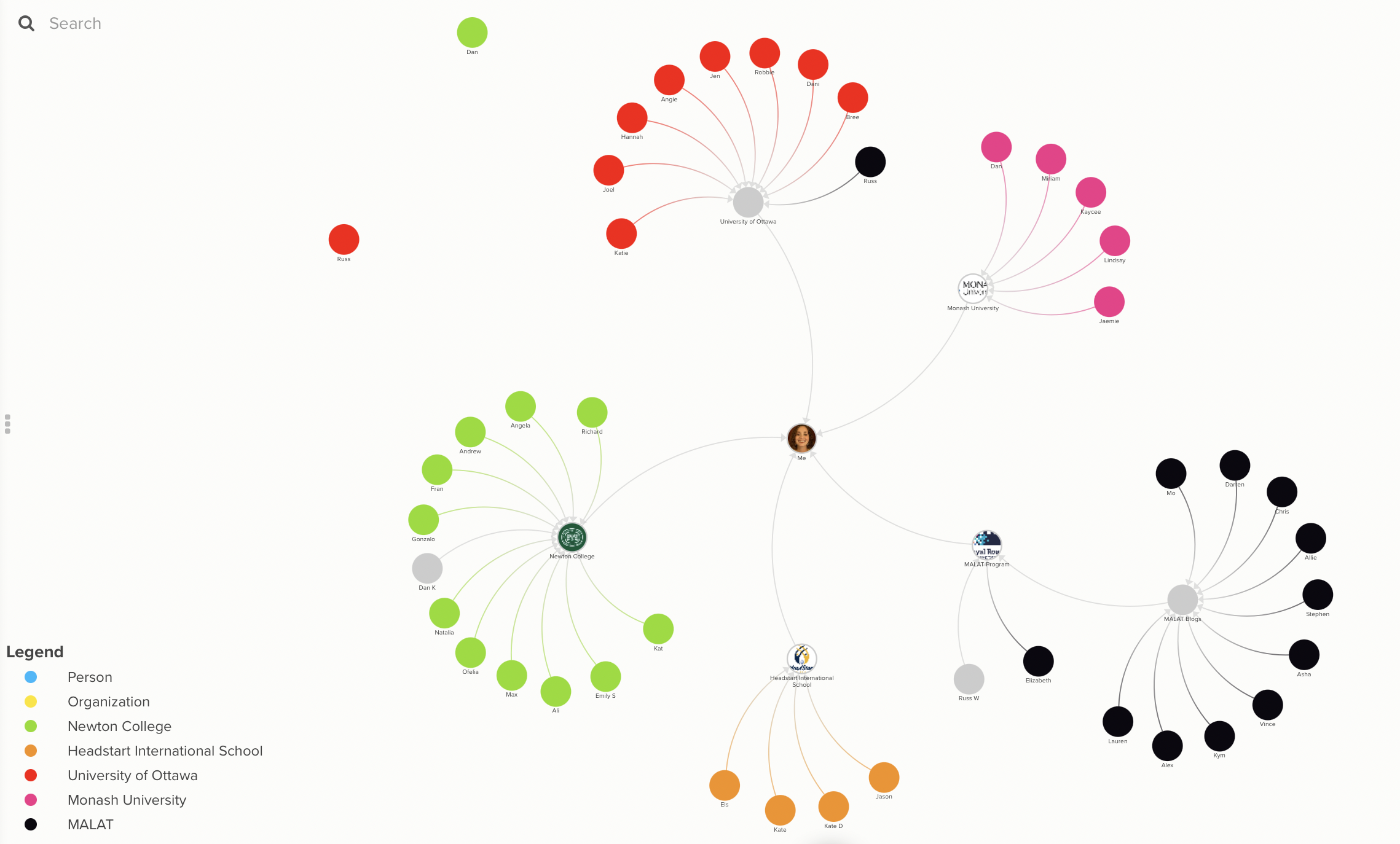
In this post, I present my professional network map, focusing on professional development. My goal was to map my current professional networks to compare them in a month and assess how networking on LinkedIn has impacted my professional connections. The map includes my professional and educational networks from where I have worked and studied. These institutions have been instrumental in my development as a primary school educator over the past 10+ years. I excluded my social and digital networks to maintain clarity and emphasize my professional journey and contacts within those networks. Below, you’ll find an overview of my map, created using Kumu.
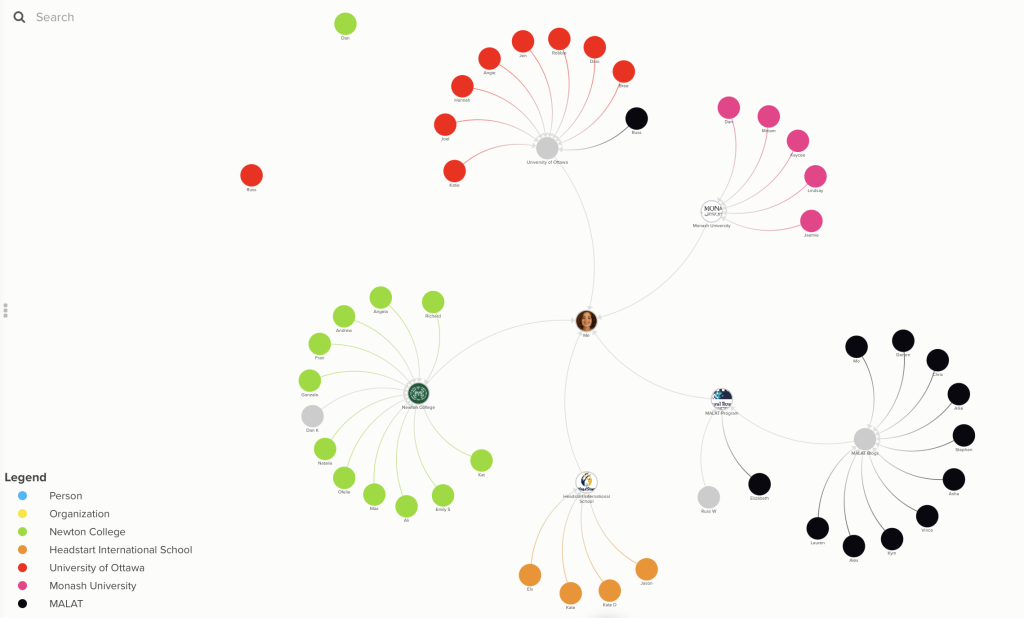
In creating this map, I can clearly see that I keep all my networks separate and do not engage in professional networks beyond them. This separation is partly because each network was built in a different country, with five out of the four networks being in completely different countries. This immediately reduces the chance of overlap between connections since I tend to keep my networks distinct. This is in stark contrast to my natural tendency to connect people and bring my social communities together. It was a subconscious choice rather than a conscious one to keep my networks so separate. I can see that this may be a challenge for me in the future if I continue this pattern.
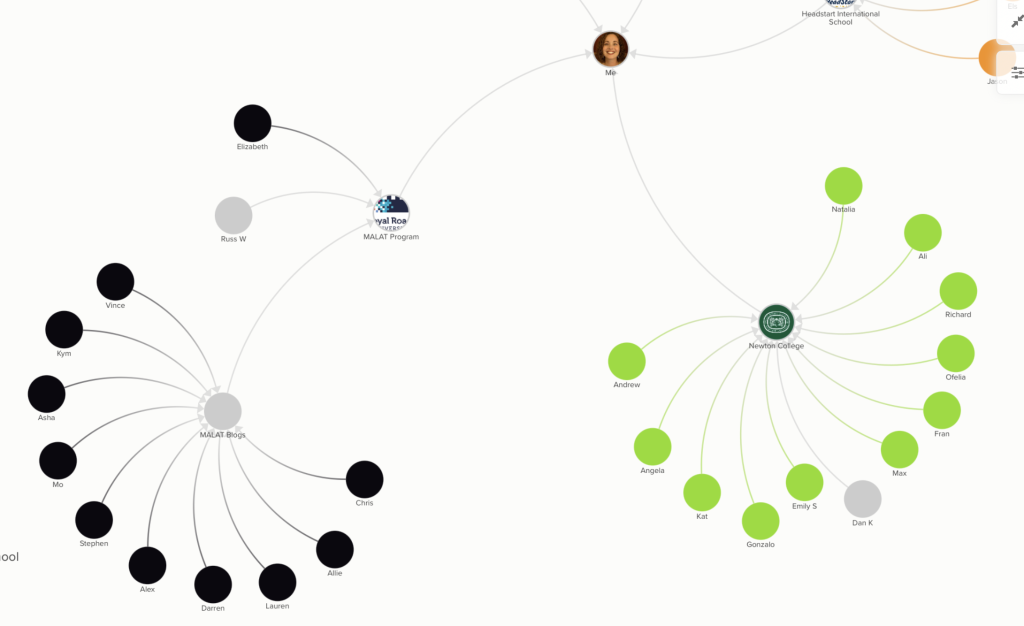
All my networks are education-based, either as a student at an institution or working as an educator. This means that I have few professional contacts outside the realm of education, and none of my educator contacts overlap. I consider my professional network map a work in progress as I now intentionally begin to make more connections outside the teaching K-12 network and into digital teaching and instructional design in various fields, not just education.
“Networking is a lot like nutrition and fitness: we know what to do, the hard part is making it a top priority.”
Herminia Ibarra
I can see a clear goal during the course of my MALAT journey will be making this a top priority.
Interesting thoughts, Heidi. An important part of this activity is simply the process of systematically looking at our networks so that we can see what really exists, and as you have done so well here, reflect on why that pattern has emerged for us. Once we know where we are, it becomes much easier to map a path to where we might want to go.