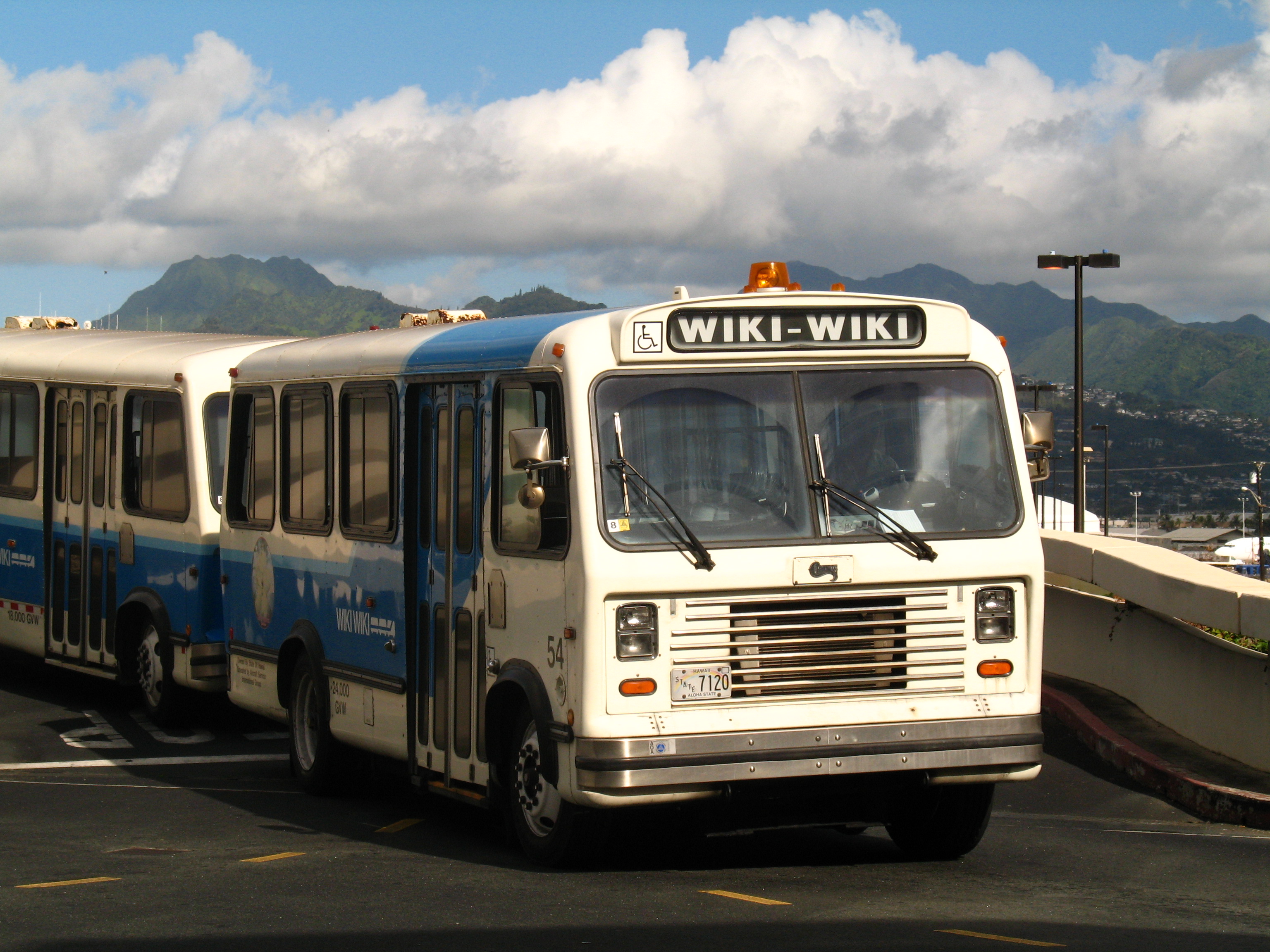
Wiki are websites where the user can read, contribute, or edit the existing content. Despite the useful promise of Wikis to revolutionize education, they have largely failed to achieve their potential to substantively influence learning outcomes and remain an underutilized technology despite the enormous possibilities. Ward Cummingham coined the term Wiki from the Hawaiian word quick, developing the collaborative technology in 1994. Wikis are a web-based tool that according to (Trocky & Buckley, 2016) have four main educational themes: writing skills improvement; collaboration; knowledge acquisition, and to provide a centralized knowledge repository. A review of the use of Wikis as collaborative educational technology, engagement tool, and the implication of their use in influencing learning outcomes is further discussed. In this essay, a synthesis of research is presented to investigate: Wikis power to enrich the quality of information; Wikis potential in problem-based learning contexts; and Wikis ability to increase engagement.
Wikis power to enrich the quality of information is derived from the many eyes principle where mimicking nature, the size of the group simplifies the task of scanning the environment in which each individual contributes to support the group. Many eyes are fitting as (Noveck, 2009) describes Wiki strengths are grounded in transforming raw data through visual deliberation, and where distributed groups working together mediated by a screen that mirrors their work back to them to improve the end result. Groups are better at filling in gaps in information as their members often have unique skills, training, circumstances, or perspectives. Groups are needed to triage the modern paradigm of an abundance of content. “More data does not always mean more usable data.” (Noveck, 2009, p. 124) Wikis can filter the volume to discover what is relevant. Wiki use in education aligns with a constructivist approach and standing alone cannot guarantee the quality of interaction or knowledge construction. (Kai et al., 2017) asserts that the power to enrich information is a product of Wiki discussion function which provides a forum for detecting issues, settling conflicts, and reach agreement in the application of constructed knowledge. General agreement amongst the authors reviewed supports the conclusion that Wikis are effective tools in social constructivist-based learning with the ability to connect people, however (Trocky & Buckley, 2016) emphasizes the use of Wiki central information depository role to support collaborative learning is enriching the quality and accessibility of information.
Wikis potential in problem-based learning contexts captures their unique ability to harness the many hands make light work in filtering immense quantities of information into usable data. Most education and governments entities are striving to make more data available, but this does not mean data alone contributes to learning or better decision making. (Noveck, 2009) questions the view that hierarchal structures are effective innovators and that solutions to problems reside in far-flung corners of our institutions. As (Kai et al., 2017) concludes professionals have to solve sophisticated problems that now require expertise from different disciplines. Once again Wikis are inimitably positioned for this task of problem-based learning as it requires an interdisciplinary approach and (Kai et al., 2017) presents arguments to emphasize traditional instruction systematically guides us through predesigned answers and questions. Contrasted by a Wikis approach, problem-based work necessitates community to solve open, sophisticated ill-structured problems in a real-world context. Advantages suggested by (Trocky & Buckley, 2016) are that Wikis have greater usefulness in problem analysis combined with the construction of a group artifact. When a useful product is created from aggregated information, the quality is increased exponentially.
Like all social media Wiki face possible problems of inappropriate content and unintentional deletions degrading the outcome. This issue as (Augar, Raitman, & Zhou, 2004) 2004) points out can be addressed by precautions of implementing tracking and authentication mechanisms. Wikis have affordances that contributing to positive behavior; however, these advantages can be mitigated by some undesirable user traits. (Augar, Raitman, & Zhou, 2004) attribute a satisfactory standard in overall conduct on a Wiki to positive, clear usage guidelines to avoid potential difficulty and are addressed in the original design. A set of guidelines is normally sufficient in an educational setting. This was a closed educational environment example in which students were invited and identified. However, this view somewhat underestimates the potential problems relating to the security of wiki content in open resources and the public at large. Security may be an influential factor of engagement in the usage of unfacilitated spaces, and this is an area for further study.
Engagement is a common thread through the literary review of the 5 articles referenced. Often grounded in the sense of belonging, Wikis provide a space for interaction to take place. (Noveck, 2009) asserts that this can be simulated as long as the long as the screen is designed in ways that encourage belonging. This sense of belonging in the Wiki environment, according to the engagement model portrayed by (Kai et al., 2017) is a combination of elements; relating; creating; and donating resources facilitated by the technology. (Augar, Raitman, & Zhou, 2004) investigates dissatisfaction with Wikis and reflects that it is a frustration with the level of interaction of peers, instructors and indeed the technology itself that have an adverse effect on engaging in Wiki discourse. Also as previously discussed the production of an artifact is an important element in engagement and satisfaction of the interactions on a Wiki site. Decisions to engage in a Wiki is influenced by the production of something useful and as (Noveck, 2009) describes seeing the usefulness of the products developed. “If we use the computer screen as a looking glass—a mirror to reflect the work of the group back to itself—we may be able to help people to form groups. “Seeing” reduces the cost to a person of deciding which groups to join and where to invest time and expertise.” (p. 127). (Trocky & Buckley, 2016) describe the willingness to engage in a Wiki as gaining new skills in team-building, facilitation, and coordination, further they describe evidence of satisfaction is displayed by the willingness to forego individual preferences for group objectives. Perhaps the greatest motivator is also how applicable to how relevant he outcome is for the individual. (Noveck, 2009) cites a community willing to review data and information to identify and reduce local toxins (p. 126). This is perhaps the most credible evidence of the power of Wiki spaces to engage loosely connected individuals in collaboratively solving real-world problems.
Conclusion
Wikis show enormous potential to democratize learning outcomes. They enrich information by providing a space to discuss real-world problems generate useful outcomes and artifacts and filter through enormous amounts of information no single entity could manage. They have the ability to highlight the relevance and the gaps in huge amounts of data, add expertise to solve real-world concepts and produce useful artifacts. Traditional paradigms in education and government have slowed their use and Wikis share the same security concerns of other social media. Engaging in the use of Wikis is dependent on seeing the usefulness of interaction in the space and frustration of early adoption attempts did not fulfill the expectation in learning outcomes. Their great resiliency seems to be a central depository of information, and the ability to solve real-world problems in real-world contexts. The usefulness of Wikis to influence learning outcomes is dependent on good design and a real purpose.
References
Augar, N., Raitman, R., & Zhou, W. (2004). Teaching and learning online with wikis. Beyond the comfort zone: proceedings of the 21st ASCILITE Conference, Perth,5-8 December, 95-104.
Kai, S., Chu, W., Zhang, Y., Chen, K., Chan, C. K., Wing, C., &Lau, W. (2017). The effectiveness of wikis for project-based learning in different disciplines in higher education. The Internet and Higher Education, 33, 45-60.
Trocky, N. M., & Buckley, K. M. (2016). Evaluating the impact of Wikis on Student Learning Outcomes: An Integrative Review. Journal of Professional Nursing 32, 364-376
Noveck, B. S. (2009). Wiki Government. In B. S. Noveck, Wiki government: how technology can make government better, democracy stronger, and citizens more powerful (pp. 107-126). Washington: Brookings Institution Press.
Zheng, B., Niiya, M., & Warschauer, M. (2015). Technology, Pedagogy and Education Wikis and collaborative learning in higher education. Technology, Pedagogy, and Education, 24:3, 357-374

Leave a Reply