The future of education is a thrilling prospect, driven by the advancements in technology and an evolving understanding of how people learn. If we look ahead to the future, I feel we can envision a world of learning that is different from today. Some key trends and possibilities I foresee after reading through our suggested article are more personalized learning opportunities.
With the advent of adaptive technologies and AI-powered platforms, the possibilities for tailoring education to individual needs are boundless. These innovations enable students to customize their learning journey, aligning it with their unique requirements. Students are empowered to learn at their own pace. The use of AI-powered learning assistants allows for 24/7 support and a resource to offer personalized assistance whenever it is needed. This kind of support isn’t bound by time or location, making education more accessible and flexible.
Customized and personal learning will also allow students to focus on their well-being and mental health. By integrating practices of customized, self-paced learning, students can work to better cope with the stress and challenges that they face not just in academia but in real life. This holistic approach to education acknowledges that personal growth and emotional resilience are equally vital.
In the article “Student and society in 2020. Three future ‘histories’ of education and technology by Felicitas Macgilchrist, Heidrun Allert & Anne Bruch speak upon digital nomads that “Their lifestyle is not about moving from state to state, but is a self-chosen status of being state-free” (Macgilchrist et al., 2019, P.81). After the effect of Covid-19 and working from home and the rapid development of technologies digital nomads represent a lifestyle choice where geographical boundaries no longer restrict one’s learning and work opportunities. They have already pioneered a path where customized learning experiences can be accessed from virtually anywhere, transcending the traditional 9-5 desk job model.
In summary, the future of education is on the cusp of a notable transformation, guided by personalization, accessibility, and well-being. As we continue to embrace technology and innovative approaches to learning, the possibilities are endless. The future looks bright, with a focus on empowering students to take charge of their educational journey and, ultimately, their lives.
References
2020 EDUCAUSE Horizon ReportTM | Teaching and Learning Edition. (2020, March 2). Library.educause.edu. https://library.educause.edu/resources/2020/3/2020-educause-horizon-report-teaching-and-learning-edition
Macgilchrist, F., Allert, H., & Bruch, A. (2019). Students and society in the 2020s. Three future “histories” of education and technology. Learning, Media and Technology, 45(1), 1–14. https://doi.org/10.1080/17439884.2019.1656235
Selwyn, N., Pangrazio, L., Nemorin, S., & Perrotta, C. (2019). What might the school of 2030 be like? An exercise in social science fiction. Learning, Media and Technology, 45(1), 90–106. https://doi.org/10.1080/17439884.2020.1694944
Spurred on by the COVID-19 pandemic, the world has seen an abrupt shift towards digital adoption, with an abundance of Edtech startups racing to design the most impactful EdTech learning tool. The great media debate between Richard Clark and Robert Kozma is perhaps more relevant today than it was when it began in 1993, with Robert Clark stating that media “are mere vehicles that deliver instruction but do not influence students achievement any more than the truck that delivers our groceries causing changes in nutrition” (Clark, 1983, p. 445). Kozma’s rebuttal was presented in his 1994 article “Will Media Influence Learning: Reframing the Debate,” where he argued that media in itself does not possess magical qualities and better learning in education. He proposed shifting the focus onto the design and implementation of these tools, integrating them into evidence-based models of design to improve education and training. Clark and Kozma’s valuable theoretical and practical perspectives are interesting lenses through which to view current-day innovations in EdTech.
In the article ” Exploring Opportunities and Challenges of Artificial Intelligence and Machine Learning in Higher Education Institutions” by Valentin Kuleto, Milena Ilić, Mihail Dumangiu, Marko Ranković, Oliva M. D. Martins, Dan Păun, and Larisa Mihoreanu, the authors dive into how artificial intelligence (AI) and machine learning (ML) are making a significant impact on colleges and universities. They examine the benefits and opportunities of practical applications of AI and ML within higher education institutions. This includes the deployment of AI-driven chatbots to provide real-time support to students, utilizing AI-based analytics to gain insights into student performance patterns, behaviours, and engagement, and implementing ML algorithms to personalize learning materials and enhance teaching and learning experiences.
They also investigate the challenges associated with implementing AI and ML, issues related to data privacy, algorithm bias, the need for faculty training, and potential job displacement. Kuleto et al. also consider the ethical issues with implementing AI and ML, such as the responsible use of student data, addressing algorithmic biases that might disadvantage certain groups of students, and ensuring transparency in decision-making processes. This study shows that AI can make a big positive change in how students learn in college. It says that colleges and tech companies should be open to trying new things to stay competitive and meet students’ changing needs. Kuleto et al. also recommend more research to find practical ways to use AI in education, especially in countries with fewer resources.
With how rapidly technology changes, Clark might have acknowledged that the emerging trends offer intriguing possibilities for personalized and adaptive learning experiences. There would still need to be more careful considerations to ensure that these tools are thoughtfully integrated into pedagogical practices rather than relying solely on their technological allure. There is a need for a balanced approach. While AI and machine learning hold great promise, they are not a magical solution to all educational challenges. The effectiveness of these technologies must depend on how they are designed, implemented, and integrated into pedagogical practices.
Kozma sought to reevaluate the discussion around the influence of media on learning. The focus should not only be on whether the media has influenced learning but rather on effectively integrating it into the education process. It is crucial to align technological advancements with pedagogical goals. Media and technology should be seen as tools that educators can leverage to enhance learning outcomes. For AI and machine learning, this means thoughtful integration into instructional design. The article by Kuleto et al. contributes to this ongoing conversation; we need to consider the need to harness the potential of AI and ML while focusing on effective instructional design and realistic access for all learners.
Another interesting evolution in EdTech is the emergence of fully online distance education in K-12, along with the use of virtual reality (VR) as a medium for content delivery. In his recent September 19, 2023 article and podcast episode for EdSurge, “Will Virtual Reality Lead More Families to Opt-Out of Traditional Public Schools,” Jeffrey R. Young introduces the Optima Academy Online, founded in 2022 in Florida by Erika Donalds. What’s unique and arguably radical about this charter school is that it’s touted as the world’s first fully online virtual school. Children in grades 3 to 8 spend 30 to 40-minute intervals experiencing VR lessons, with breaks in between for online peer connections, body movements or snacks. Morning lessons delivered through VR headsets are followed by independent coursework in the afternoons, with the option to connect virtually to teachers, tutors or peers. According to Erika Donalds, the school was established largely in response to COVID-19, and to the growing school-choice-movement. According to Donalds, the traditional in-person, bricks-and-mortar models can’t respond fast enough to a growing demand for education, choice in delivery model, or individual student learning needs. Surely, Clark and Kozma couldn’t have imagined that educational technology would develop at such an alarming rate and in such innovative ways. Clark would most likely have arguments to share around replaceability, accessibility and the separation of method and medium in research methodology, while Kozma would argue for a greater focus on learning design and research into the learning impacts of digital mediums while calling for a paradigm shift in research methodology that guides educational research.
At the core of Clark’s argument is the concept of replaceability. He states that if the results of a learning outcome can be replicated using a single or combination of other mediums, regardless of the digital or analogue tools used to support the learning, then the cause can not be attributed back to one single learning tool. It is the instructional content and method that is embedded in the medium that influences the learning, rather than the medium itself (Clark, 1984, p. 1). As a result, it could be that Clark’s response to the emergence of a distance learning school leveraging virtual reality as the main medium for curriculum delivery is more about the flexible delivery or novelty of the new medium than scientific proof that the design model produces better learning outcomes for the learners than traditional or other digital mediums (Clark, 1984, p.4). Further to this point, he would argue that in an environment of competing complex social, economic and environmental problems and limited resources to solve them, it is our responsibility to choose methods that are most cost-effective (Clark, 1994, p. 5). A new fully online school that leverages VR for the delivery of elementary school curriculum along with the traction that the school-choice-movement is gaining, supports Kozma’s call for new models of learning design and greater research and focus on media theory. With the proliferation of digital tools and environments in education along with the increased need to develop digital literacy, there is indeed an urgency to generate scientific data to inform choices moving forward (Kozma, 1994, p.7).
Contrary to Kozma’s position that EdTech is a design science and not a natural science, there is a need to understand the effect that digital technologies have on the health and wellness of children and adult learners. This is supported by Stanford VR researcher Jeremy Bailenson’s concerns around the still unknown cognitive effects of long-term VR use with children in K to 12 over weeks, months and years (Bailenson, as cited in Young, 2023, para 14). His VR lab has implemented a 30-minute maximum for VR sessions with adults, finding that use can result in some users suffering from headaches, nausea and even reality blurring, which is the difficulty differentiating between reality and VR simulation (Bailenson, as cited in Young, 2023, para 15). This need to gain a better understanding of the impact that technology has on our well-being could lend support to Clark’s notion of separating method and medium in research, as opposed to Kozma’s stance on their integration.
Regardless of what side of the Clark versus Kozma debate you fall on, hopefully, we can all agree on the need for technology-enhanced pedagogies and andragogies that contribute to the development of digital literacy skills to support learner success in the digital age. In addition, the debate emphasizes the need for technology to enhance, not replace effective teaching and learning. Kozma’s concluding statement seems to ring true as we find ourselves in post-pandemic enlightenment, “In what ways can we use the capabilities of media to influence learning for particular students, tasks, and situations?” (Kozma, 1994, p. 19). As education continues to evolve, this topic reminds us that it is a broader conversation on understanding that technologies such as AI, ML and VR serve as digital tools and environments to amplify educational outcomes and help to address the issue of equality.
References
Clark, R. E. (1983). Reconsidering Research on Learning from Media. Review of Educational Research, 53(4), 445–459. https://doi.org/10.3102/00346543053004445
Clark, R. E. (1994). Media will never influence learning. Educational Technology Research and Development VO, 42(2), 21. doi.org/10.1007/BF02299088
Kuleto, Valentin, et al. “Exploring Opportunities and Challenges of Artificial Intelligence and Machine Learning in Higher Education Institutions.” Sustainability, vol. 13, no. 18, 18 Sept. 2021, p. 10424, https://doi.org/10.3390/su131810424.Young, Jeff.R. “Will Virtual Reality Lead More Families to Opt out of Traditional Public Schools? – EdSurge News.” EdSurge, 19 Sept. 2023, www.edsurge.com/news/2023-09-19-will-virtual-reality-lead-more-families-to-opt-out-of-traditional-public-schools.
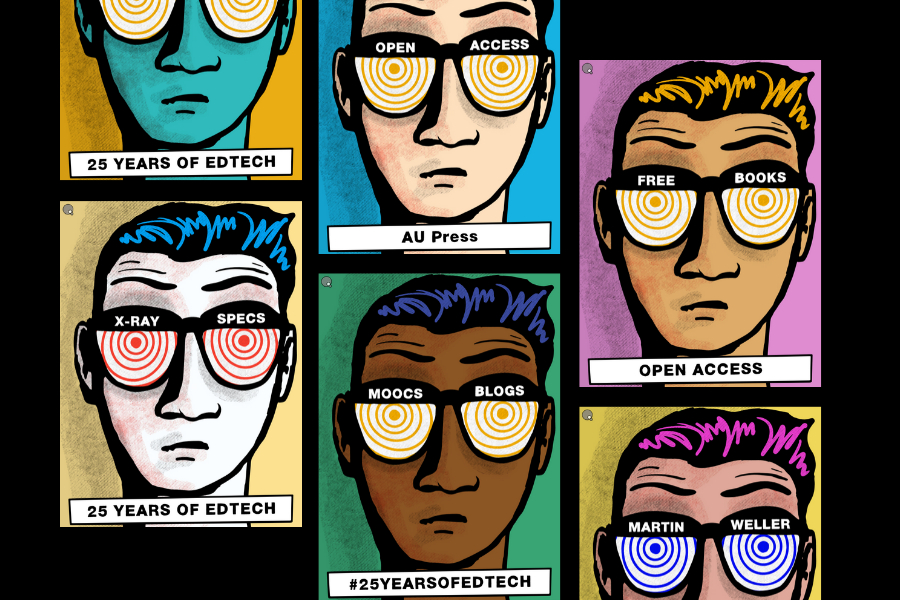
Given my background in IT, I always find it intriguing to explore fresh perspectives on the ever-changing landscape of educational technology. Having delved more into the chapter of 25 years of Tech from Weller’s perspective one theme that particularly piqued my interest was the role of videos in education. The potential of video-based learning resonated with me on multiple levels.
Video-based learning has undergone significant evolution in recent years, offering a range of flexible formats, from instructional to animated to simulative. Videos are versatile tools that provide an interactive, visual, and auditory means of education, catering to a diverse audience with varying learning preferences. Their reliability and accessibility make them suitable for students of all ages and socioeconomic backgrounds, thus enhancing inclusivity and reach.
I’ve personally witnessed the positive impacts of well-crafted educational videos. When I assumed a leadership role within my team, I recognized that using videos was an effective way to share information among team members as a learning option compared to traditional methods such as written materials or manual step-by-step instructions, videos proved to be more engaging and effective. They not only encouraged active learning but also provided clarity on complex concepts, leading to a deeper understanding of the subject matter. Additionally, videos facilitated just-in-time learning, removing barriers by providing access to content at any time. Particularly in the corporate world, where scalable and cost-effective training solutions are in high demand, videos possess the potential to become the default medium for instruction in the future.
It is very interesting to see where Weller’s opinion starts on the beginning of his view of 25 years in tech. In the first eight chapters of “25 Years of Ed Tech” by Martin Weller, it takes a historical look at the evolution of educational technology. His perspective is unique to the fact of what he considered the most impactful moments of technology. Here are some key points and observations I noted in these chapters:
1. Historical Perspective: The emergence of digital technology in education, and showing how it has evolved over the past 25 years. It’s surprising to see how far technology in education has come and how quickly it has advanced.
2. Evolution of Online Learning: Weller emphasizes how online learning has grown from its early stages to become a vast and continually evolving ecosystem. It’s compared to a living language that changes and adapts with time, driven by educational innovations and technological advancements.
3. Challenges to E-Learning: One surprising revelation is the initial resistance to e-learning in higher education and how the academic community was concerned about the influence of private companies and the commercialization of academics. There was a widespread assumption that face-to-face learning was superior and that online education was of lower quality. This idea of in-person education being inherently better still continues today despite the advancements in online education.
4. Relevance of Past Concerns: Some concerns raised about the web are still relevant. These concerns include the difficulty of governing or censoring the web and the topic of AI and its effect on whether to embrace or reject it.
If one were to write a similar book, the choice for me would be around 1995, which personally marked a more significant point for me when the internet began to have a substantial impact on education. It was a period when online learning and digital technologies started to gain traction and change the landscape of education. Therefore, beginning the story of educational technology around 1995 allows for an exploration of the developments and challenges that have shaped the field over the past 25 years.
Jane McGonigal is a renowned game designer and accomplished author, holding a Ph.D. in Performance Studies. With a Ph.D. in Performance Studies, she currently holds the Director of Game Research and Development position at the non-profit organization Institute for the Future. She is a leading advocate for gamification, applying game design principles and mechanics to non-game contexts, such as education and workplace settings. One of her notable projects is “SuperBetter,” designed to help individuals build resilience, recover from challenges, and achieve personal goals.
McGonigal is also renowned for her captivating TED talks, with “Gaming can make a better world” being an interesting watch. In this talk, she poses intriguing questions about the transformative power of games: “What about games makes it impossible to feel that we can’t achieve everything? How can we take those feelings from games and apply them to real-world work?” (TED, 2010). Jane has many inspiring achievements, and her most influential book, “Reality Is Broken: Why Games Make Us Better and How They Can Change the World,” explores the positive impact of games on individuals and society. It delves into game engagement psychology and how games can be applied to real-world challenges.
I chose Jane because her focus on using games for education is vital in today’s digital age. With both simple mobile games and complex virtual worlds, her advocacy for gaming as a learning tool is highly relevant. It is vital for the new generation of learners, referred to as “iPad kids,” who can significantly benefit from the educational potential of modern games.
You can explore more about Jane on her website: You Found Me