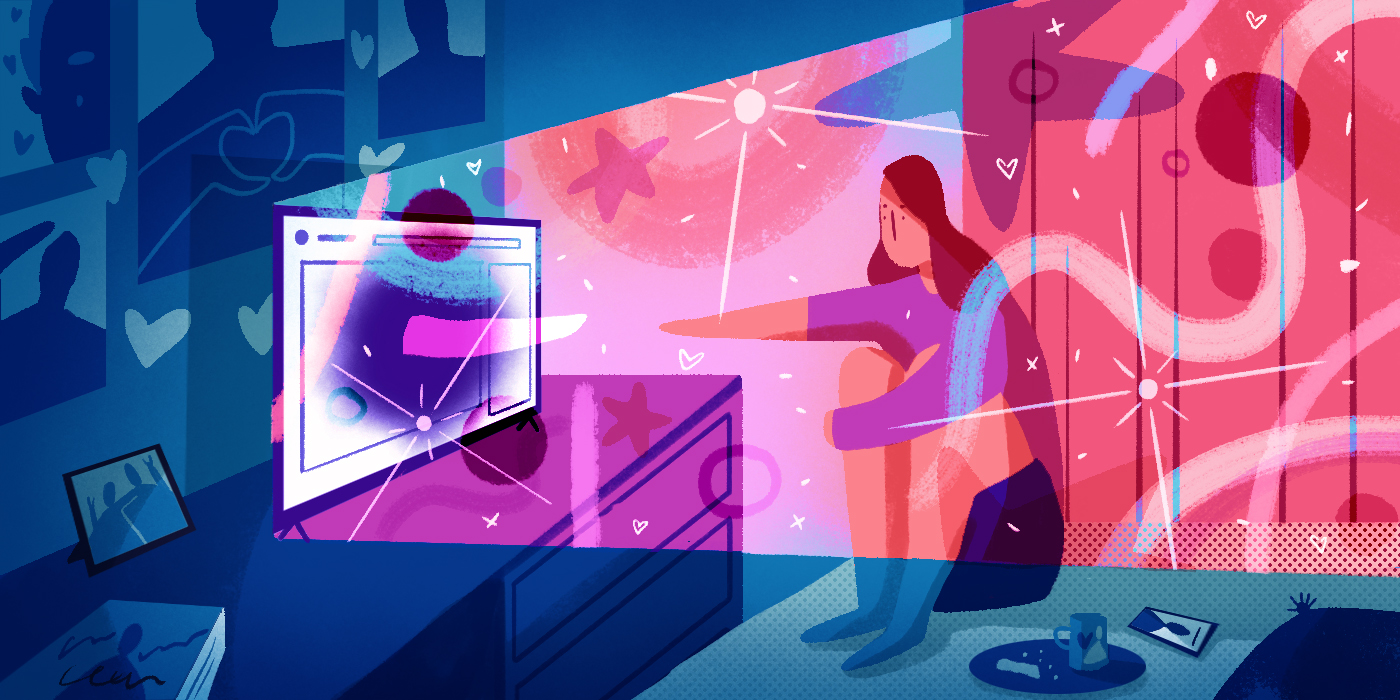
Like many others I’ve often turned to YouTube for quick, practical learning. Whether it was figuring out how to pronounce a tricky word or learning how to bake a cake. What I hadn’t really stopped to reflect on until now is just how rich and layered the learning experience on YouTube actually is. As part of our group inquiry into YouTube as a learning technology, I’ve chosen to critically examine the intersection of parasocial interaction and algorithmic influence. I believe these two components are deeply intertwined and have a powerful impact on what we learn, who we learn from, and how we engage with content on the platform.
Learning on YouTube involves more than simply searching and clicking. My personal experience is shaped by a combination of factors, including who is delivering the material, how the content is presented, and which video recommendations I am shown. These choices are dependant on a mix of platform design, recommendation systems, and the emotional connections I form with content creators. Looking back at my YouTube watch history, I’ve noticed myself returning to specific creators not just for the quality of their content, but because I found them likeable and trustworthy. They felt familiar, consistent, and in some cases, even supportive. This sense of connection is often described as a parasocial relationship, a one-sided bond that can make learning feel more personal and engaging (Giles, 2002). At the same time, it’s clear that YouTube’s algorithm plays a significant role in determining which content creators we even encounter in the first place. The algorithm prioritizes engagement such as likes, shares, and watch time, not necessarily pedagogical quality or accessibility. Educational creators who align well with the algorithm often have high production value, charismatic delivery, and strong personal branding, which can shape how learners perceive their credibility and authority (Covington et al., 2016).
Educational YouTubers also often do more than teach by creating relationships with their viewers which can build a sense of community and increase learner engagement. Studies show that parasocial relationships can boost motivation and perceived support, both of which are critical for adult learners (Giles, 2002). In parallel, research on social presence in online environments suggests that feeling connected to an instructor improves retention and overall satisfaction (Poquet et al., 2018). However, these benefits also come with risks. Parasocial bonds may lead learners to prefer charismatic creators over those with deeper instructional design expertise. Meanwhile, YouTube’s recommendation system often amplifies content that performs well in terms of watch time and likes, rather than content that promotes critical thinking or inclusive learning (Arriagada & Bishop, 2021).
Understanding how these dynamics influence my learning is driving me to think more intentionally about the role YouTube plays in shaping not only what I consume, but how I evaluate it. Who is being recommended? What content is prioritized? And what does this mean for learners who rely on this platform for education?
References
Arriagada, A., & Bishop, S. (2021). Between commerciality and authenticity: the imaginary of social media influencers in the platform economy. Communication Culture and Critique, 14(4), 568–586. https://doi.org/10.1093/ccc/tcab050
Covington, P., Adams, J., & Sargin, E. (2016). Deep neural networks for YouTube recommendations. https://research.google.com/pubs/pub45530.html?authuser=1
Giles, D. C. (2002). Parasocial Interaction: A review of the literature and a model for future research. Media Psychology, 4(3), 279–305. https://doi.org/10.1207/s1532785xmep0403_04
Poquet, O., Kovanović, V., De Vries, P., Hennis, T., Joksimović, S., Gašević, D., & Dawson, S. (2018). Social presence in massive open online courses. The International Review of Research in Open and Distributed Learning, 19(3). https://doi.org/10.19173/irrodl.v19i3.3370
Image sourced from Every. Illustration by Rachel Tunstall
Hi Asha – thanks for this thoughtful blog post.
I’m really appreciating the way that your group are digging into YouTube as an edtech platform and the impact that it has on learning specifically. There’s so many areas that are ripe for exploration and I think the way that you are focussing in on the tension between an algorithm that is designed to maximise “engagement” and the notions of “quality” that we want to apply to educational contexts is interesting especially when you start to tease out the parasocial intersection. In the paper by Tim Fawns that we use on this course he talks about purposes and values – and in this he’s drawing on work by Gert Biesta, who thinks a lot about the purposes of education. The paper below in particular talks about the complexity of what “good education” is and what it’s for (a complex blend of qualification, socialisation, and subjectification). Which leads me to more fundamental questions about YouTube and what ideas are encoded into the operations of the platform about what education is and how learning happens? Is there a fundamental disconnect at the level of purposes here?
Biesta, G. Good education in an age of measurement: on the need to reconnect with the question of purpose in education. Educ Asse Eval Acc 21, 33–46 (2009). https://doi.org/10.1007/s11092-008-9064-9
https://link.springer.com/article/10.1007/s11092-008-9064-9
Thank you for the feedback, Anne-Marie. Your question about YouTube’s encoded assumptions about learning really resonates with me. It has come up in my research and prompted me to reflect on how the platform’s infrastructure encourages an instrumentalist view of learning with high engagement content favoured over deeper, reflective learning. I have started to see how algorithmic influence is a complex blend of qualification, socialization, and subjectification, as Biesta describes (2009). That complexity and its disconnect between algorithmic priorities and pedagogical goals is something I want to explore more in my final paper. Thank you for the helpful direction!
Hi Asha!
Looking through your posts makes me appreciate once again how lucky I was to work with you on this project. Your analysis of parasocial interaction and influence through algorithms is incredibly insightful; as it combines the emotional and technical aspects of learning on YouTube in a very grounded, reflective, and holistic manner.
The most noteworthy aspect for me was how you returned to creators because they were familiar and trustworthy. That connection surfaced Garrison et al.’s (2000) social presence. The idea that connection, even in asynchronous learning environments, enhances engagement. This social presence, active or passive, is often taken for granted. Your observation about trust and watching framed through algorithms also concerns Selwyn’s (2010) critique; that EdTech suffers from neutrality; it holds concealed assumptions, biases, and values requiring deeper examination. It makes me wonder how this operates within the context of learner autonomy and the illusion of choice provided on YouTube.
I appreciate your collaboration as well as the thoughtfulness. I learned so much from you, thank you!
Cheers,
Marion
Thanks for your comment, Marion! It means a lot and I really enjoyed working with you as well on this project! I appreciate your point about Selwyn (2010). It has got me thinking abut how YouTube gives the impression of open choice, but as we found during the project, the algorithm is quietly shaping what we see based on engagement. So, what feels like autonomy might actually be pretty limited. This algorithmic framing is something I want to unpack more as I think about invisible biases and how they influence informal learning on platforms like YouTube.
Hi Asha,
I really enjoyed reading your post and watching your group’s presentation. YouTube as an educational tool is so helpful, as I know we all have learned a few things there.
Although you looked into a reputable YouTube channel, what do you think of other educational YouTube creators? I know that when using YouTube as supplemental support in my classroom, I spend a lot of time finding the best video possible, especially to ensure the video is appropriate. How is the algorithm impacted by those like me watching several different videos to find the right one?
How has your research expanded since your presentation?
Thanks for your question, Lauren! You raise a great point. Search behaviour like yours, especially when you spend time reviewing multiple videos to find the best fit for your class, definitely has an impact. It influences elements like click-through rates and watch time, which the algorithm uses to fine tune recommendations. According to YouTube (n.d.) itself, they track what users watch, how long they watch, and what they skip, to determine what to suggest next.
What I’ve noticed is that YouTube also gives users more direct ways to shape their algorithm. Using direct feedback options in videos such as “Add to queue,” “Save to Watch Later,” or “Share” can signal a preference for similar content. The more of those actions you take, the more the algorithm learns to serve content from similar creators or themes. On the flip side, using features like “Not interested” can help eliminate it from your feed. It essentially tells the system to stop promoting that type of content altogether, sometimes for an extended period (YouTube, n.d.)
In the future, if you’re browsing through videos to find the best ones for your class, you might find recommendations more aligned with your preferences by using those direct feedback features!
Since our presentation, I’ve been thinking a lot about what this means for learners who don’t know about these controls or don’t have time to manage them. In those cases, the algorithm defaults to promoting content that performs well in terms of views and engagement which is not necessarily what’s pedagogically sound. That’s especially important to consider in self-directed learning environments where learners may not realize how much the algorithm is adding invisible biases to their choices.
Youtube. (n.d.) YouTube performance FAQ & Troubleshooting
https://support.google.com/youtube/answer/141805#zippy=%2Chow-does-youtube-choose-what-videos-to-promote
I’m with you, Asha, I never anticipated just how complex video-based learning platforms could be. Like you, I often use YouTube more for educational purposes than entertainment, and I usually click on content from creators I’m familiar with; or let’s be honest, whichever video has the coolest thumbnail!
Through our inquiry, we uncovered several caveats and limitations when it comes to meaningful learning on these platforms. Still, I appreciate how easy it is to find content on virtually any subject with just a quick YouTube search. In a way, I’m thankful the algorithm prioritizes high-value content, even if that sometimes means sifting through videos that are less than ideal. Personally, I’d rather have a slightly suboptimal learning experience than endure poorly made, bad-sounding videos.
That said, as you pointed out, the algorithm and the complex decision-making behind it are ultimately driven by ad revenue. This doesn’t always align with delivering the best educational results. You mentioned YouTube creators engaging with their audiences, but how meaningful is that engagement, really? I imagine popular channel owners rarely have the time to respond to individual comments. Instead, their “shoutouts” likely reflect broader audience sentiment rather than a true student-teacher interaction.
Could you share some of the social engagement techniques you’ve seen used on the English with Emma channel? What do you think are the most impactful ways educators on YouTube can foster genuine relationships with their viewers? Or is the relationship they build very surface-level, no different from fans of a famous musician who feel connected to the singer through their lyrics, even though that connection doesn’t go any deeper?