My reflection on digital facilitation involved pondering complexities after reviewing the Unit 1 readings. Using the 3-2-1 approach, I will share my 3 initial thoughts, 2 questions, and 1 metaphor on digital facilitation.
3 Thoughts
The three initial thoughts and feelings that came to mind were as follows:
First, effective facilitation should provide a supportive community where learners feel safe to engage (Boettcher, n.d.; Bull, 2013; Dunlap & Lowenthal, 2018). However, in my experience, creating this environment is more difficult than it sounds. Therefore, this course is appreciated for its guidance in creating a safe and inclusive learning community.
Second, Dunlap and Lowenthal (2018) explained tips about using videos and advised instructors to “step outside of the LMS” (p. 85). I agree that videos are more beneficial than instructor messages solely being typed through the LMS. The complexity for me involves supporting all instructors in embracing the training to develop their own videos at my organization.
Third, determining learners’ feedback is a research topic of interest. Boettcher (n.d.) highlighted capturing informal feedback in week three. Week three would not work in my learning environment, as attrition typically occurs earlier. Engaging with feedback mechanisms earlier in courses is needed but challenging with large student populations.
2 Questions
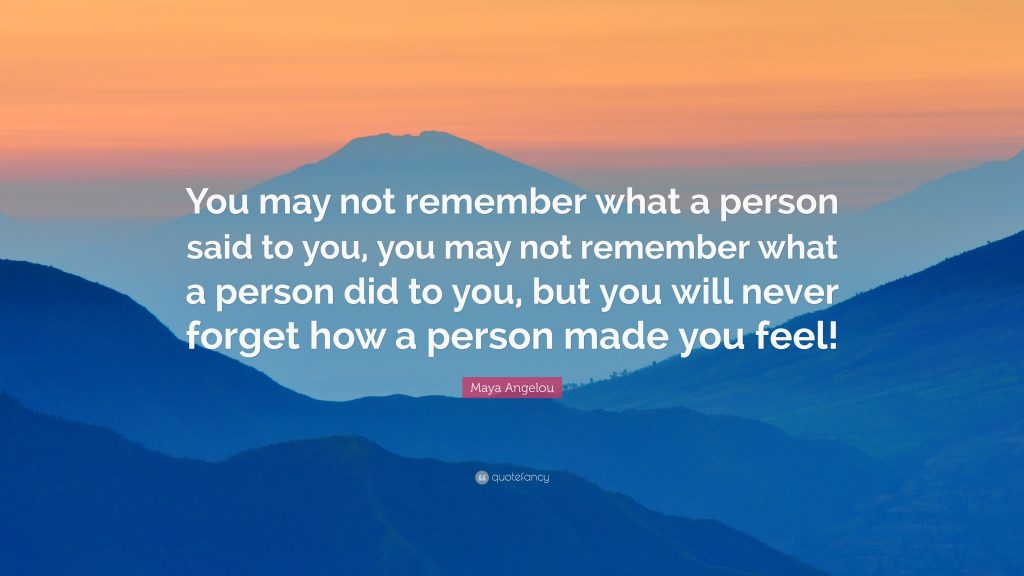
Are there additional best practices not highlighted in the Unit 1 readings that can provide learners with this “feeling” described in the above Maya Angelou quote?
Are there best practices for capturing informal feedback from learners who are not feeling engaged? I am curious about alternatives to email and survey outreach modes.
1 Metaphor
As I read through the roles in the Bull (2013) article, I immediately thought of digital facilitation like an army knife. The army knife can handle various tasks in different situations, much like a digital facilitator.

Source: https://cdn.britannica.com/69/73469-050-793BD41B/Handyman-knife-Swiss-Army-Wenger-NA.jpg
References
Boettcher, J. V. (n.d.). Ten best practices for teaching online. Design for Learning. http://designingforlearning.info/writing/ten-best-practices-for-teaching-online/
Bull, B. (2013). Eight roles of an effective online teacher. Faculty Focus. https://www.facultyfocus.com/articles/online-education/eight-roles-of-an-effective-online-teacher/
Dunlap, J. C., & Lowenthal, P. R. (2018). Online educators’ recommendations for teaching online: Crowdsourcing in action. Open Praxis, 10(1), 79-89. https://doi.org/10.5944/openpraxis.10.1.721
Mary Burgess
I have always loved that quote Marni, it really resonates with me. Something I’ve learned in my inclusion work is that as a facilitator I can’t necessarily create a space that will be “safe” for everyone, but perhaps it’s safer. I really like your focus on the elements that make humans feel connected.