Published by Weri Gadou September 15th, 2024
I began my journey in educational technology primarily as a consumer, engaging with digital tools that promised to transform learning. However, after reading Martin Weller’s 25 Years of Ed Tech, I realized how difficult it is for education to keep pace with the rapid evolution of technology. One aspect that deeply struck me was raised by Slade and Prinsloo (2013), who discussed the ethical dilemmas in learning analytics. They argue that data can be co-opted to reinforce privilege, an idea that mirrors Dr. Ruha Benjamin’s concerns about how digital tools and data can perpetuate social inequalities.
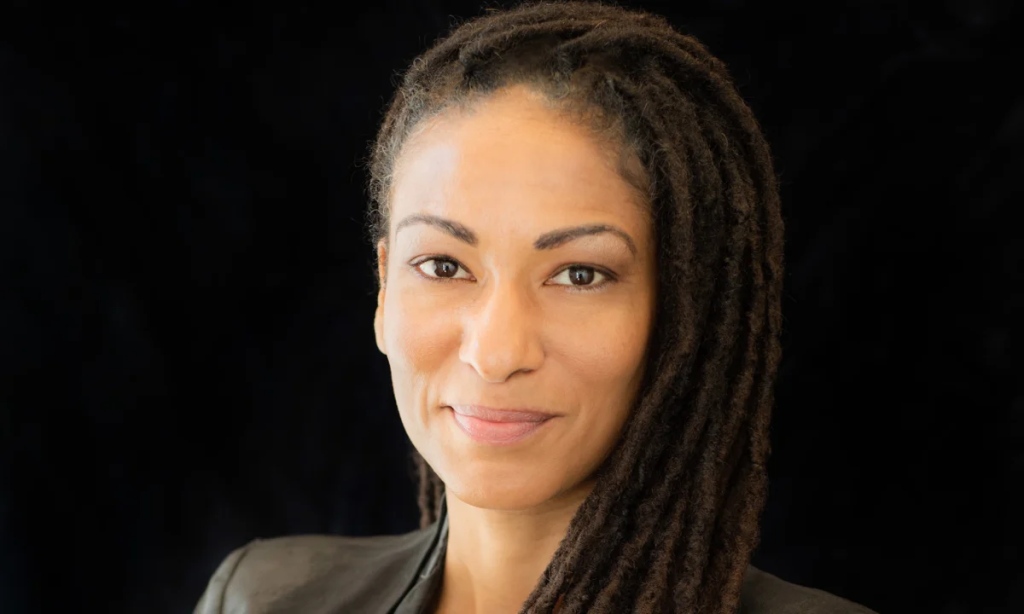
Dr. Ruha Benjamin is a professor of African American Studies at Princeton University. As a transdisciplinary scholar and educator, she critically examines the intersection of technology, society, and justice. Over the past decade, she has authored four influential books, including Race After Technology and Viral Justice, where she explores how scientific and technological advances shape social structures and contribute to both justice and inequity. Although her research extends beyond educational technology, her work is crucial in this field because of her focus on how algorithms, data, and software—tools central to ed tech—can reproduce structural inequalities. In her book Race After Technology, Dr. Benjamin analyzes how even well-meaning digital systems can perpetuate ethnic and class divides. About data sharing, she wrote: “Access goes both ways. If someone is marked “risky” in one arena, that sigma follows him around much more efficiently, streamlining marginalization” (Benjamin, 2019). Her insights encourage us to scrutinize how we collect and use data, particularly in educational settings, where learning analytics might seem like an objective tool but can easily reinforce pre-existing biases.
I chose to highlight Dr. Benjamin because her work reveals the hidden biases in technology, especially how we use data in learning environments. Her work is critical to the future of educational technology, pushing for more inclusive and accountable design and implementation as digital learning expands. In her recent talk Is Technology Our Savior – or Our Slayer? (Ted, 2023), she critiques the direction of technological innovation, arguing that a small elite group, especially in Silicon Valley, shapes our digital futures with a focus on profit. She introduces the idea of “ustopia,” borrowed from Margaret Atwood, to describe a future where technology serves collective well-being rather than corporate interests. She emphasizes grassroots movements that reclaim technology for social good, advocating for a more just and equitable digital future.
In contrast, scholars like Aguilar and Pifarré Turmo argue that technology can foster social creativity and reduce inequalities within the classroom (Aguilar & Pifarre Turmo, 2019). Similarly, Vera-Choqqueccota et al. (2024) ) argue that advanced digital tools can offer marginalized students access to resources previously out of reach. While these perspectives focus on the potential of technology to promote equality in isolated educational contexts, Dr. Benjamin’s critique extends beyond the classroom.
Weller (2020) illustrates Dr. Benjamin’s argument about the danger of learning analytics. He refers to Slade and Prinsloo’s (2013) ethical concerns about predictive models designed to identify students at risk of dropping out. While the intention is to support students, these algorithms risk reinforcing biases related to class and ethnic origins, potentially leading universities to exclude students deemed too costly to support. This echoes Dr. Benjamin’s critique, highlighting the danger of technologies that, despite their good intentions, perpetuate privilege and inequality.
Dr. Ruha Benjamin’s work pushes us to rethink how we use technology in education, urging educators and technologists to consider the ethical implications of the data we collect and the systems we build. Her research is a powerful reminder that while technology holds the potential to transform education, it must be developed and implemented with a commitment to equity and social justice.
For more on Dr. Ruha Benjamin’s work, you can visit her official website or explore an interview (CNET Highlights, 2020) where she discusses the intersection of technology and social justice.
References
Aguilar, D., & Pifarre Turmo, M. (2019). Promoting social creativity in science education with digital technology to overcome inequalities: A scoping review. Frontiers in Psychology, 10, 1474.
Benjamin, R. (2019). Race after technology: Abolitionist tools for the new Jim code. John Wiley & Sons.
CNET Highlights. (2020, Jun 25). Why technology made racial injustice worse (and how to fix it) [Video]. YouTube. https://youtu.be/7acvCo1lkHk
Slade, S., & Prinsloo, P. (2013). Learning analytics: Ethical issues and dilemmas. American Behavioral Scientist, 57(10), 1510-1529.
Ted. (2023, November 07). Is Technology Our Savior – or Our Slayer? | Ruha Benjamin [Video]. YouTube. https://youtu.be/QO3nY_u6hos
Vera-Choqqueccota, S., Belmekki, B. E. Y., Alouini, M. S., Teodorescu, M., Haussler, D., & Mostajo-Radji, M. A. (2024). Reducing education inequalities through cloud-enabled live-cell biotechnology. Trends in Biotechnology.
Weller, M. (2020). 25 years of ed tech. Athabasca University Press.
Thank you for sharing this great post and introducing such an important figure, Weri. I was not aware of Dr. Ruha Benjamin before this post, but I will be sure to learn more about her work. Her scholarly work overlaps significantly with Dr. Joy Bouloamwini, who I wrote about in my blog post. Unfortunately, the embedded biases that exist in technology are unintentionally (or worse, intentionally) promoting ongoing inequities and oppression of many equity-deserving groups. However, it’s also encouraging to see brilliant individuals like Dr. Benjamin and Dr. Buolamwini striving to raise awareness and drive change in the tech industry.
Here’s a great article about racial bias in data and algorithms that discusses the work of Dr. Bouloamwini, Dr. Benjamin and many others to promote anti-racism in STEM: https://researchdata.wisc.edu/uncategorized/racial-bias-in-data-and-algorithms/.
One of the posts linked from the above article is a worthwhile read, even though it’s targeted at data scientists. Many of the principles apply to us as we pursue our scholarly work: https://towardsdatascience.com/5-steps-to-take-as-an-antiracist-data-scientist-89712877c214
Thank you Chris for your share those articles! Worth a read!