Published by Weri Gadou October 14, 2024
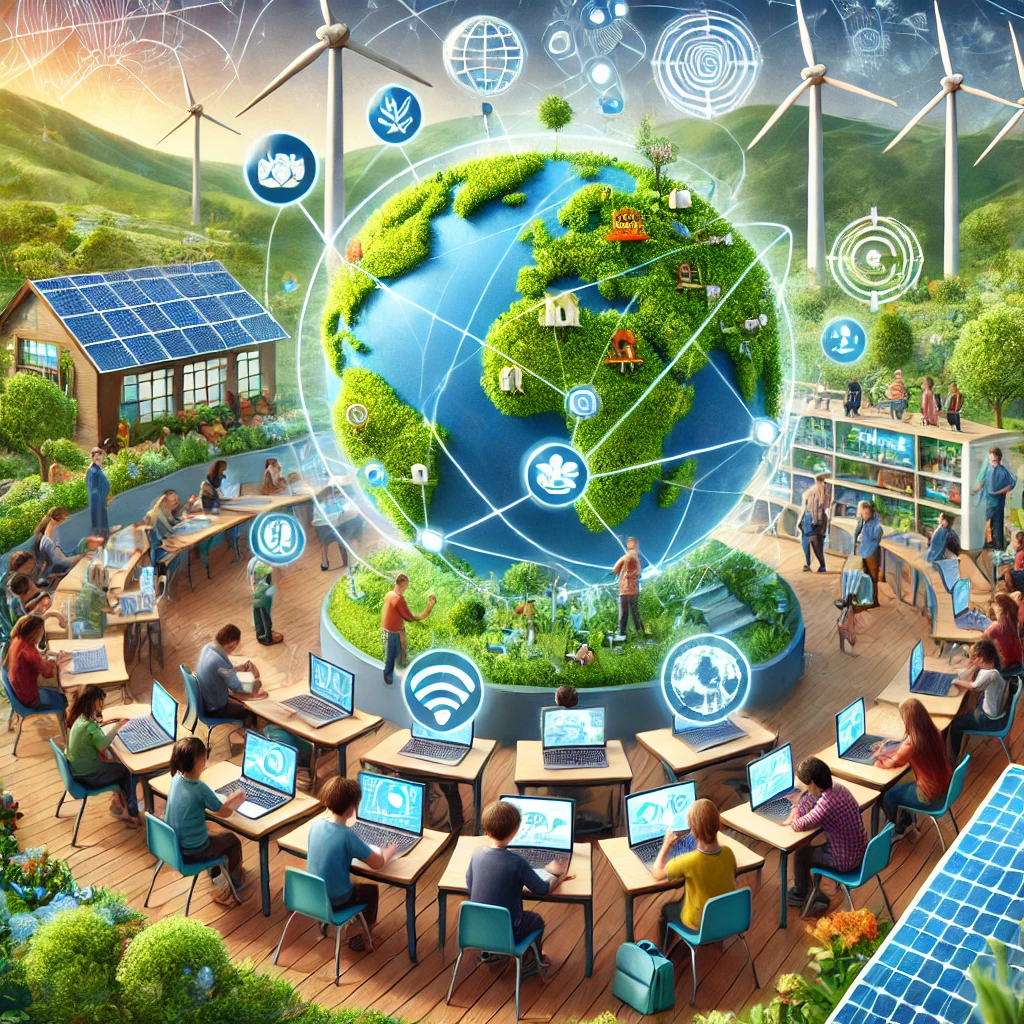
As we approach 2030, we face two interconnected challenges in education: ensuring equitable access to EdTech and addressing the ongoing environmental crisis. The future of education will depend heavily on how we balance technology with sustainability. While technological advancements promise to revolutionize how we learn and teach, the uneven distribution of these tools—both within and between countries—could widen educational gaps instead of closing them.
In my upcoming essay, I will explore how we can achieve more equitable access to EdTech, with a focus on the intersection of environmental sustainability. The digital divide remains a significant issue, with disadvantaged learners facing barriers to accessing the very technologies that promise to help them. Additionally, Macgilchrist et al. (2020) remind us that technologies themselves are not neutral—when used carelessly, they can exacerbate existing inequalities.
I will also consider how the environmental crisis shapes this conversation. As Selwyn (2021) discusses, we must anticipate the impact of environmental limits on educational technologies, especially in light of growing concerns about climate change and resource scarcity. By analyzing these topics, I aim to reflect on solutions that address both equitable access and environmental sustainability, imagining a future where innovation serves all learners without further harming the planet.
References:
Macgilchrist, F., Allert, H., & Bruch, A. (2020). Students and society in the 2020s. Three future ‘histories’ of education and technology. Learning, Media and Technology, 45(1), 76-89.
Selwyn, N. (2021). Ed-Tech Within Limits: Anticipating educational technology in times of environmental crisis. E-Learning and Digital Media, 18(5), 496-510.