Published by Weri Gadou on September 7th, 2024
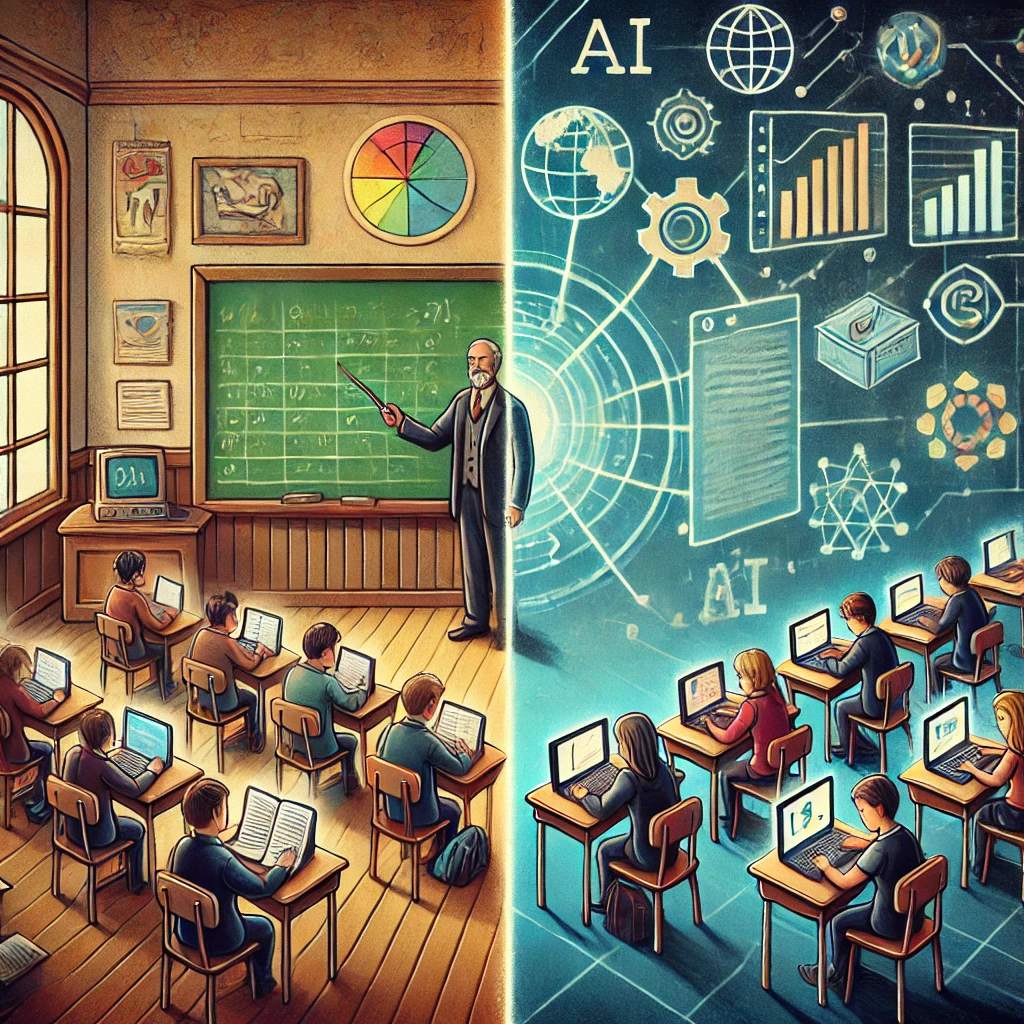
In my experience as a former elementary school teacher, I observed firsthand one of the challenges described in 25 Years of Ed Tech: “It has often been noted that when a new technology arrives, it tends to be used in old ways before its unique characteristics are recognized” (Weller, 2020, p. 64). When we were introduced to the platform FreshGrade in 2018, it was designed to revolutionize students’ engagement and portfolio building. The platform had the potential of providing a more holistic view of the student, shifting the focus beyond academic grades to encompass a broader range of skills, progress, and personal growth. It was also supposed to enable meaningful exchanges between students and their parents. However, its transformative possibilities were often overshadowed by traditional usage. Instead of fully embracing its interactive features, many of us reverted to familiar practices, primarily by having students take pictures of their marked assignments and uploading them to the platform. This process was time-consuming and didn’t add much value beyond traditional methods. Some teachers who were more open to experimenting with the platform found it more beneficial, but many of us reverted to old habits. This situation illustrates Weller’s point that new technologies are often not fully embraced at first, as we naturally fall back on what we already know.
A lesson from Weller’s that contradicts current practices is the notion that Web 2.0 communities “tend to be democratic, based on a bottom-up approach and socially oriented” (Weller, 2020, p. 93). In other words, communities where content generation and engagement are largely driven by users themselves in a seemingly open and democratic manner. However, in today’s landscape, especially with the rise of AI-driven content, I find this notion of democracy increasingly compromised. AI algorithms now curate and generate content based on what users follow, creating personalized “echo chambers” that limit exposure to diverse perspectives. This shift reflects a form of control over shared information, where the content we engage with is tailored and, in many cases, filtered without our active choice. In my experience as a teacher, this undermines the idea of open, democratic knowledge-sharing that Web 2.0 once promised. It creates a dynamic where learners are subtly guided by algorithms rather than engaging in organic, community-driven learning experiences.
Reference:
Weller, M. (2020). 25 years of ed tech. Athabasca University Press.
Hi Weri,
Great post!
Your insights on FreshGrade and the role of AI in content curation highlight several vital themes addressed by Weller (2020). It’s a common challenge that new technologies are often initially applied in traditional ways before their unique benefits are fully realized. Your experience with FreshGrade highlights this issue well, and despite its potential for welcoming student engagement and fostering meaningful interactions, the platform’s confirmation was strained by traditional practices.
It’s intriguing to consider how this behaviour might influence the adoption of future educational technologies and how we might encourage a bolder approach to leveraging new tools.
The shift towards AI-driven content will challenge the idea of open and autonomous knowledge-sharing. It could mean that educators and technology developers might need to reconsider the design and use of digital platforms to ensure they support diverse perspectives and encourage community engagement rather than reinforcing existing biases.
Your observations highlight important considerations for current and future educational practices, emphasizing the need to assess how technology shapes learning environments and user experiences.
Hi Weri,
Great Incites in this Blog Post!
I 100% agree that we need to look at the Ed tech that is being used to ensure we are not selecting it because its fast and easy, and help deal with the lack of time we educators always feel we are pressed hard for; or at least thats what I’ve come to see in the environment around me. So very important that we look at the capabilities and capacity of the DE tool, but in my view before that, we need to look at the pedagogical model FIRST, and then see if this Tool fits.
If we are building a house, it takes the proper method, order and tools. If you have the method and plans to progress, but you are given a pneumatic wrench and sockets instead of a hammer and nails, what do we hope to achieve?
In regard to the personal AI Echo Chamber; I see your point and it is a reality. However, knowing it’s an echo chamber, there are myriad ways to adjust prompts, scoping and memory deletes, to prevent this as much as possible. OR just don’t allow Social Media accounts in teaching because we know those are questionable at best. Definitely a hurdle, although I think that the average student wouldn’t go to that extent, as it’s very common to just accept the first “Google Search” that agreed with the prompters original thoughts in the first place. Facilitation by properly selecting the sources — Social Media — NOT among them, but rather other more publicly vetted info sights like Wiki’s, or materials and sources the instructor vetted prior, for use during their facilitations and group discussions.
Thanks for the thought provoking Read!!
Cheers!