
Carnage? Hype? AI? What’s next…

Charmaine and Jennifer – Activity 5

From a professional perspective, as we are both instructors, AI is being integrated into the education and employment sector. Education now has aspects of AI into the curriculum design and employment has incorporated AI into “rising expectations around speed, quality and self-sufficiency” (Bansal, 2026). The selected articles reflect the impacts that AI may have on education and the job market.

Article #1:  AI was supposed to destroy jobs. Where’s the carnage?

The article argues AI is reshaping work not by eliminating jobs but by transforming their content, structure, and skills demands. Labour economists like Nicole Bachaud (in Bansal, 2026) emphasize that the workforce is experiencing a “rising bar rather than a shrinking pool,” with a shift from job scarcity to skills-matching. AI is driving a gradual move toward contract and freelance arrangements, consolidating roles, and discouraging new hiring for tasks that can be automated. Robert Seamans categorizes AI’s impact into three groups:  jobs made obsolete, jobs created, and jobs changed with the biggest group being the third. This mirrors past technological shifts like computers and the internet. The biggest disruption is qualitative rather than quantitative; the expectations for workers are rising, with 74% of employers viewing AI skills as a strong advantage and 13% requiring them across the entire company, creating pressure for candidates to arrive already practical or advanced on day one.

Article 2: What is really happening to jobs? Separating AI hype from reality

Author Neale Mahoney dives into a policy brief of whether AI is affecting the labor market. Based on various studies, further research is needed as time is required to determine if AI does in fact impact employment. Below are areas that Mahoney used to base her study on:

1.      AI’s impact on the aggregated employment is likely small right now

  • According to Neale there is no evidence that AI has caused significant job loss right now.

 2.      A tough market for recent graduates may be partly due to AI

  • In 2022 there has been a decline in hiring entry-level workers in AI-exposed occupations. Impacting younger workers.

 3.      AI’s impact on worker productivity is mixed but generally positive

  • Studies show that AI generally speeds up productivity and completion based on task, context and skill level.

4.      Firm adaptation has accelerated but unevenly across the economy

  • “AI varies across economies due to methodology and sample composition. Large corporations like to adapt compared to smaller firms” (Mahoney et al., 2026)

 5.      Early evidence is hardly the last word on AI’s impact

  • “Technological advances typically take years, even decades to transform business and labor markets”

What would Clark and Kozma say?

According to Kozma’s (1994) argument, when you combine media with learning, more mental links are made.  He would agree that integrating media into education would assist students in the workforce. Kozma (1994) states “we will understand the potential for a relationship between media and learning when we consider it as an interaction between cognitive processes and characteristics of the environment” (p. 8).

The above two articles further Clark’s (1994) stance that although AI was incorporated into the workplace and education, it was neither the result of an increase or decrease in employment or productivity. Clark’s (1994) main argument is that media does not influence learning and believes that instructional methods not media drive learning. As stated by Clark (1994), “media and their attributes influence cost or speed of learning but only the use of adequate instructional methods will influence learning” (p. 27).  

AI Disclaimer: We used AI to make sure we were on the right track.

References:

Bansal, V. (2026, August 12). AI was supposed to destroy jobs. Where’s the carnage? The Guardian. https://www.theguardian.com/technology/2026/aug/12/ai-job-destruction

Clark, R. E. (1994). Media will never influence learning. Educational Technology Research and Development, 42(2), 21-29. https://www.jstor.org/stable/30218684

Kozma, R. B. (1994). Will media influence learning? reframing the debate. Educational Technology Research and Development, 42(2), 7-19. https://www.jstor.org/stable/30218683

Mahoney, N., McEntarfer, E., & Wahal, K. (2026, July). What is really happening to jobs? Separating AI hype from reality. Stanford Institute for Economic Policy Research. https://siepr.stanford.edu/publications/policy-brief/what-really-happening-jobs-separating-ai-hype-reality
Say What? An Electronic Trivia Game About Sickle Cell Anemia Bringing Awareness to Patients, Families and Healthcare Providers?

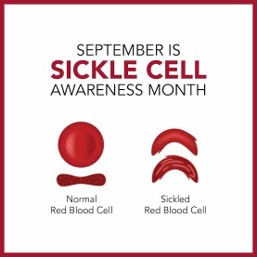
Image is courtesy of Sickle Cell Disease and Social Security – Gillette Law Group

September is National Sickle Cell Awareness Month. Sickle cell disease (SCD) is a “genetic, hereditary, chronic pathology with rare chances of a cure, where oxygen is absent or reduced, altering the shape of the red blood cell, which acquires a sickle shape” (Santana et al., 2024). SCD can affect any organ and could result in strokes in the brain, kidney damage, or complications (Tanabe et al., 2020). Statistics show that over 8 million people worldwide have SCD (National Heart, Lung, and Blood Institute, 2025).

Melanie Fields is a physician, and associate professor of pediatrics, neurology, hematology, and oncology at Washington University School of Medicine. She is the mentor behind the interactive game called Game to Raise Awareness for Patient/Provider/Public Education of SCD or GRAPES at the St. Louis Children’s Hospital in Missouri. Through GRAPES SCD patients, their families, and healthcare providers discuss symptoms, treatments, and obtain life encouragement (National Heart, Lung, and Blood Institute, 2021). As Fields indicates this tool is important and impacting because:

Patients learning more about SCD, they may feel more empowered to advocate for themselves in different health care settings, schools, or work environments. Plus, a patient’s clinical outcomes or experience could improve as their knowledge about the disease increases. Documented bias among doctors and nurses exists, such as a clinician not realizing how much pain a patient is in. The game explains lab results don’t always reflect pain, which can last for 3-4 days or more. (Fields, 2020)

Personally, I have family and friends who live and have died from SCD’s altering symptoms and chronic pain. In agreeance with Fields that “it’s not that the patients and medical staff are clicking quickly or efficiently, but that they are talking about the disease” (Fields, 2020) and this is a disease very much worth talking about.      

September is National Sickle Cell Awareness Month. Sickle cell disease (SCD) is a “genetic, hereditary, chronic pathology with rare chances of a cure, where oxygen is absent or reduced, altering the shape of the red blood cell, which acquires a sickle shape” (Santana et al., 2024). SCD can affect any organ and could result in strokes in the brain, kidney damage, or complications (Tanabe et al., 2020). Statistics show that over 8 million people worldwide have SCD (National Heart, Lung, and Blood Institute, 2025).

Melanie Fields is a physician, and associate professor of pediatrics, neurology, hematology, and oncology at Washington University School of Medicine. She is the mentor behind the interactive game called Game to Raise Awareness for Patient/Provider/Public Education of SCD or GRAPES at the St. Louis Children’s Hospital in Missouri. Through GRAPES SCD patients, their families, and healthcare providers discuss symptoms, treatments, and obtain life encouragement (National Heart, Lung, and Blood Institute, 2021). As Fields indicates this tool is important and impacting because:

Patients learning more about SCD, they may feel more empowered to advocate for themselves in different health care settings, schools, or work environments. Plus, a patient’s clinical outcomes or experience could improve as their knowledge about the disease increases. Documented bias among doctors and nurses exists, such as a clinician not realizing how much pain a patient is in. The game explains lab results don’t always reflect pain, which can last for 3-4 days or more. (Fields, 2020)

Personally, I have family and friends who live and have died from SCD’s altering symptoms and chronic pain. In agreeance with Fields that “it’s not that the patients and medical staff are clicking quickly or efficiently, but that they are talking about the disease” (Fields, 2020) and this is a disease very much worth talking about.      

Additional Information:

To learn more about Melanie Fields, MD, MSCI:

https://physicians.wustl.edu/people/melanie-fields-md

https://profiles.wustl.edu/en/persons/melanie-fields

Article: Innovating sickle cell disease education models

https://www.nhlbi.nih.gov/news/2021/innovating-sickle-cell-disease-education-models

Article: GRAPES (Game to Raise Awareness for Patient/Provider/Public Education of SCD)

National Library of Medicine – https://pubmed.ncbi.nlm.nih.gov/35441455/

www.tinyurl.com/GRAPESgame

REFERENCES:

GRAPES Game. (n.d.). GRAPES game. http://www.tinyurl.com/GRAPESgame

National Heart, Lung, and Blood Institute. (2020, September 1). Announcement of requirements and registration for the Hope for Sickle Cell Disease Challenge. National Institutes of Health. https://www.nhlbi.nih.gov/sites/default/files/media/docs/03%20%20SCD%20Challenge%20Announcement%2020200923.pdf

National Heart, Lung, and Blood Institute. (2021, July 7). Innovating sickle cell disease education models. National Institutes of Health. https://www.nhlbi.nih.gov/news/2021/innovating-sickle-cell-disease-education-models

National Heart, Lung, and Blood Institute. (2025, December 10). What is sickle cell disease? National Heart, Lung, and Blood Institute. https://www.nhlbi.nih.gov/health/sickle-cell-disease

Santana, R. C., Silva, L. F. da, Gama, P. da S. M. da, Nascimento, L. de C. N., Silveira, A. L. D. da, & Moraes, J. R. M. M. de. (2024). Educational technologies for the self-care of children with sickle cell anemia: An integrative review. Cogitare Enfermagem, 29. https://doi.org/10.1590/ce.v29i0.96369

25 Years of Ed Tech – Chapters #9 and #12

Activity #3

After reading 25 Years of Ed Tech (Weller, 2020), the chapters that most resonated with me were chapters 9 and 12. Chapter 9 comprised of the learning management system (LMS) in 2002. Weller (2020) describes the role of the LMS in education technology as both “the centre of their work, and it can often be an unglamorous role ensuring that a system works effectively for thousands of students, and the LMS doesn’t get the credit it deserves in ed tech circles” (Weller, 2020). This statement is very true and relevant to my current line of work. The LMS (Blackboard) is a crucial system that hosts assessments, courses materials, and various applications such as Zoom and YouTube. As Weller stated it is the centre of our work. The students rely on the LMS to supply their work and access their graded assessments. The faculty members rely on the LMS to host and ensure the classroom runs smoothly.

In chapter 12 we were introduced to the interesting discussion of video in 2005. Through platforms such as the LMS educators are able to post videos from sources such as YouTube or Zoom for the students to assist and supplement with their learning and studies. Students have few issues accessing the videos that are provided; however, once a student is asked to create a video for assessment purposes this poses an issue. One that is not commonly discussed. Weller (2020) stated that “many students will go through their education without being required to produce a video as a form of assessment, and we have not fully developed critical strictures for this medium that are as commonly accepted as they are for text” (Weller, 2020). This piece I found to be quite interesting as the conflict posed is quite true. Quite a few of the of the courses at my current work are incorporating more video assessments. I have had quite a few instances where students of all ages have come to me as they are unfamiliar as to how to create a video. The ask for the video in the assessment is not for it to be the best quality; the only requirements are that it is a video and that it captures the requirement of the assessment. Some struggle with this and instead provide presentations without the video component. This challenge I believe as Weller (2020) implies is that the students are not always trained to complete this task – however the assumption is that they know how to do it.

Reference:

Weller, M. (2020). 25 years of ed tech. Athabasca University Press. https://doi.org/10.15215/aupress/9781771993050.01