My Approach to Leadership
Digital technology has been a part of my career for many years. I have always been captivated by technology and had a positive attitude toward it. I believe digital technology is a great tool to help offer education to anybody, regardless of their location and/or situation. As an online, face-to-face, and blended instructor, I use this technology in my classes all the time, but on a different level. I can say that digital technology has made some changes in my leadership as I use it more and more every year. For example, use of social media has made a difference in the level of communication I have with my students, and made it possible to have my students collaborate better with each other.
I have students with many different backgrounds, cultures, and levels of technological knowledge in my classes, and I have to always keep this point in mind when organizing my lesson plans. Due to these factors, the best methods of leadership to match the way I lead my students are reflective and adaptive leadership. I always start with myself and try to assess my own strengths or weaknesses. As found by Castelli (2016), leaders that are aware of what they are good at and what they need to improve make more successful leaders. By being mindful of my own strengths, I can focus on them more in my classes, and I will also be able to try to overcome my weaknesses. Having confidence and wisdom can help me lead my students with more assurance. “Reflective leadership is the consistent practice of reflection, which involves conscious awareness of behaviors, situations, and consequences with the goal of improving organizational performance” (Catelli, 2016, p. 217). Reflective leadership can be done through building trust, having open communication, and allowing the followers to explore their full potential in a safe and diverse environment.
I always try to be flexible with my leadership based on my students’ potentials as to motivate them to work to their complete ability, and this can be aligned with my leadership using the adaptive method. As found by Khan (2017), adaptive leaders try to understand their follower’s values and evaluate their struggles as to be able to support them and motivate them to be successful. By taking these steps, the followers will stay motivated, interested, and will perform better. I try to build trust with my students and make my classrooms a safe place to discover and learn through open communication and cooperation.
Digital Learning Environment
The change and constant upgrading that is a part of using digital technology can definitely affect everyone involved, including the leaders. I believe that leadership is not different in this regard, but the style of getting tasks done is. As stated by Sheninger (2014), leadership has stayed the same throughout the years but what is different in today’s digital age is the way leaders have to prepare their team for the changes that will be coming their way because of technology.
I believe reflective and adaptive leadership will be a great fit in any digital learning environment and not just in my classes. Garrity (2010) found that adaptive leaders should be mentors and focused on everyone’s learning and knowledge of the situation. Having the knowledge and training can help everyone involved to have better self-confidence in what they need to do, and therefore, be more successful. It is essential in a digital learning environment for everyone involved, leaders and followers alike, to be educated and have the proper training in order to have the confidence needed to succeed. This can be done through both adaptive and reflective leadership. “The leader’s role in raising the self-esteem and confidence levels of followers is an important aspect of reflective leadership” (Catellie, 2016, p. 224).
In order for the leaders to be able to increase the confidence of their followers, they would need to find out what the cause of any hesitation and fear is. As found by Sheninger (2014), it is essential for any successful leader to be able to have an understanding of the reasons for the alarm and/or false impressions people usually have from using technology. What can help the leader overcome this is the act of inspiring their followers and providing them with enough knowledge to have the self-confidence needed to be productive.
Conclusion
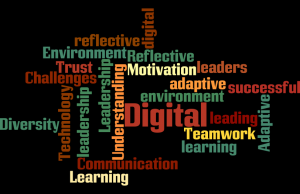
I believe leaders of the digital learning environment such as myself can be successful in leading their teams by using adaptive and reflective leadership method. These are some, but not all of the benefits of these two methods of leadership: build trust, have open communication, motivate the followers, build self-esteem, and understand the followers’ diversity. By using these techniques in classrooms, leaders can ensure the success of their followers and be able to overcome any challenge that accompanies technology in today’s digital age.
References
Castelli, P. (2016). Reflective leadership review: a framework for improving organisational performance. Journal of Management Development, 35(2), 217-236.
Garrity, R. (2010). Future leaders: Putting learning and knowledge to work. On the Horizon, 18(3), 266-278. doi:10.1108/10748121011072717
Khan, N. (2017). Adaptive or transactional leadership in current higher education: A brief comparison. International Review of Research in Open and Distance Learning,18(3).
Sheninger, E. (2014). Pillars of digital leadership. International Centre for Leadership in Education.
Leave a Reply