Why does the soccer ball look the way it does?

“Soccer Ball in a Yard” by Ryan is licensed under CC BY-NC-SA 2.0

“Google CEO Eric Schmidt claims that society produces more information in two days than was created from the beginning of human history until 2003” (Weller, 2011, p. 234).

As we set out to accomplish Activity 6, and investigate the abundance of information on a topic, we first had to decide on something we felt we can learn more about, had little knowledge of, and gain new perspectives on. We started to talk about our different hobbies, and soccer was quickly part of our mainstream conversation. As current (Dorothy) and past (Amanda) soccer players, we were both familiar with the iconic soccer ball, but knew little about the ball’s history. This lead us on our google adventure of the soccer ball. As we knew there would be an inordinate amount of information we narrowed our curiosity to, why does the soccer ball look the way it does? Focusing on the tradition black and white hexagonal/pentagonal pattern, and what has caused it to change throughout the years?

Our Findings

  • Soccer balls has evolved from humble beginnings, “inflated pigs bladders wrapper in leather” (Biggs, n.d., para 1.). Through the years, the science of the material has improved. The leather and rubber have been perfected to allow for better ball play, and product lifespan.
  • Updates to the soccer ball were made due to the leather becoming waterlogged during games. The added weight caused head and neck injuries when players headed the ball (Rigsby, n.d.). These injuries have now been linked to dementia in previous players (Bazian, 2017).  
  • The iconic black and white pattern was done so the ball could be more visible on television and so that players could more easily track its curve. (Biggs, n.d.; Rigsby, n.d)
  • The pattern of 20 hexagons and 12 pentagons makes of a buckminster or buckyball- a truncated icosahedron pattern. It was used as it is the closet to a true sphere that they could create with sewn leather. It first appeared in the 1950s (Rigsby, n.d.).

Our confidence on whether abundant content around our topic exists to enable us to learn about it.

  • We are confident that there is an abundant amount of content on the topic. This is due to not just the volume of content, but the diversity of who is publishing the content. This confirms one of Weller’s (2011) assumptions that “content is abundant” (p. 230) due to easy sharing platforms, such as blogs, personal websites, and social media.  
  • It is important to remember that the soccer ball belongs to a global market and industry that has been commoditized selling us this product. With so many global companies competing in the space of soccer our research spun out of control and took us through detours of pro vs cons of other products.
  • Abundance also comes from the fact soccer is a universal world sport, a common sport that women, men and children play.  It is a part of the many lives due to affordability. There are 211 countries that have a national soccer team, players that are famous and fans that idolize and buy all the memorabilia.  Alongside soccer games having a dedicated TSN channel, universities offer soccer scholarships. This almost hinders our ability to learn as the abundance of information does not always make our task of learning easier (Weller, 2011).
  • Weller points out that “when goods become digital and available online then scarcity disappears” (2011, p. 224) as it is the case since soccer balls can be customized with any color and graphic and ordered online 24/7 through soccer websites and online stores like Nike and Adidas.

Is abundant content enough?

  • No, we need to make sure that we have “developed teaching and learning approaches to make best use of it” (Weller, 2011, p. 228).  There has to be distilling and curation of the content to ensure is understood and applied appropriately.
  • Often just because there is a lot of information out there it does not mean that the information is valid. It is important to check your sources and consider who is behind the information. The evidence and authority of your sources are essential to ensure accuracy and be supported.
  • Sometimes there is so much that you actually don’t get to what you are looking for, as it is masked with some many layers you can easily lose what you were really trying to scaffold and uncover. Kind of like losing your eye on the prize!
  • When there is an abundance of content it may be too much, creating a feeling of overwhelmingness and less clarity. With so much content you can find more sources that sound different, leading to misinterpretation or contradictions.  As Weller points out,

It could be argued that with everyone able to publish content in a web 2.0 world, then the ‘dangers’ inherent in constructivism become more pronounced, as the proliferation of conspiracy theories might attest. However, given that this is the environment everyone has to operate within, the ability to construct appropriate and rigorous knowledge from a range of sources is even more relevant (2011, p. 229).

What do you need to be equipped with to make use of the abundant content that we discovered?

  • Research skills, students need to be able to narrow down the results when searching for specific information.
  • Time management and focus to be able to distill and weed out poor sourced and evidenced information.  Using certain sites, resources and sources that are recognized and suggested over others.Find information that has valid evidence that supports your findings and possible conclusions.
  • Content management skills where you can break apart and compartmentalize information in to sub-topics and groupings. Furthermore, being able to “see connection between fields, ideas, and concepts” (Weller, 2011, p. 232).
  • Technology such as having a mobile device or computer, and the internet, opens up the world to this information. It also allows us to search for information find out who is behind the publications. To be able to learn with all the abundance of information out there, you first must have access to it.

What ways can we make use of this content as instructors or learners?

  • To educate players about the sport’s history and some of the reasons why the ball differs. This knowledge can be translated to their game; for example, how it  the ball may react differently on turf vs grass, why it spins and curves when they are taking a shot, and why it grips the way it does when they do a throw. This can help players connect the why with the what, as connectivism suggests this helps nurture to facilitate continual learning (Weller, 2011) and furthermore the opportunity to share that knowledge with others.
  • To satisfy and engage in curiosity, for instance we are now wondering how the new balls that are being created would be traced on a black and white televisions, and how certain weather conditions impact the physical aspects of the ball, such as in extremely hot, cold, or rainy conditions. Does it make a difference in the physical aspects of the soccer ball, or if there are environmentally friendly balls?
  • To reference as an example of how history and influential societal changes and makes an impact; for instance once soccer became televised the ball had to be changed to make it more visible. This has brought people together from all parts of the world during world cup and how massive global companies started to capitalize on selling the product for profit and sponsorships.  It provides meaning, context and a story behind something as simple as a soccer ball.
  • To gain knowledge and insights, to improving skills, knowledge, and abilities as a soccer player.  As technology continues to advance at a rapid speed there are virtual reality rooms that you can virtually kick a soccer ball at a screen which looks like a net and see if you hit certain targets and score goals against a virtual goalie.

References

Bazian. (2017). Heading footballs ‘linked to brain damage in professional players’. Retrieved from https://www.nhs.uk/news/neurology/heading-footballs-linked-to-brain-damage-in-professional-players/

Biggs, S. (n.d.) WHY ARE SOCCER BALLS MADE OF HEXAGONS? Retrieved from https://livewell.jillianmichaels.com/soccer-balls-made-hexagons-4225.html

Rigsby, B. (n.d.) The History of the Soccer Ball. Retrieved from http://soccerballworld.com/History.htm

Weller, Martin (2011). A pedagogy of abundance. Spanish Journal of Pedagogy, 249 pp. 223–236.
Activity 5- Where do I fall?

When reflecting on this activity-to take a stance aligning myself with a single theoretical position- I found myself torn.

Similar to how Ertmer & Newby (2013) discussed behaviorism, cognitivism, and constructivism as a continuation, I agree that it is very much dependent on where you currently are in your learning journey. As described in Ertmer & Newby, it is dependent on the experience of the learner, and where they fall on the introductory to expert learning spectrum. Therefore, I was not able to pick only one specific theory to get behind. However, in my position as a secondary school teacher, I would argue that the majority of my students are closer to the introductory- low knowledge side of the spectrum, and therefore techniques based on behavior and cognitive theory are often used more and more relevant.

For instance, Ertmer & Newby description of behaviorism immediately leads me to think of final exams, especially provincial exams:

“Behaviorism focuses on the importance of the consequences of this performance and contends that responses that are followed by reinforcement are more likely to recur in the future (2013, p. 48)”

Using English as an example, students are often given exam like essay questions ( previous exams) to answer. After completing this essay, their teacher will give feedback that will allow them to make improvements to that style of writing in the future. In their example, Ertmer & Newby’s discussion of behaviorism that “(a)lthough the initial responses may not be in the final proper form, repeated practice and reinforcement shape the response until it is correctly executed”(p. 50).

By having the practice similar to the final, it is aligning with fourth design principle for instruction, application.

“Learning is promoted when the practice is consistent with the learning goal” (Merrill, 2002, p.49).

Behaviourism further corresponds with Merrill’s (2002) second and third principle- activation which promotes learning “when relevant previous experience is activated” (p. 46) and demonstration of “what is to be learned” (p. 47). By being able to get practice and feedback on a specific task, it is the hope that the student will become more comfortable with that in the future. This can often be negatively referred to as ‘kill and drill’, but when there is the need to practice (final or provincial exam) but not necessary the drive from the student (lack of interest, only doing the exam because they have to), it becomes a necessary learning tool to aid in students’ success.

Similar to behaviorism, cognitive theory uses feedback, and relates to Merrill’s second and third principle. However, cognitivism differs in the tools and strategies that it employs: “framing, outlining, mnemonics, concept mapping, advance organizers, and so forth” (West, Farmer, & Wolff, 1991, as cited in Ertmer, & Newby, 2013, p. 54) as well as the amount of active involvement by the learner. I am often using this type of instructions to help guide my students when specific terms or ideas are needed (ex. Classification). Furthermore, learning the different tools allow the students to grow their knowledge base, which will hopefully allow for their knowledge to be transferred to similar like task and problems.

However, to correctly use those learning tools, student buy in is necessary but not always present. The lack of involvement by the learner (by student lack of interest and lack of flexibility in course/curriculum design) makes cognitive theory not always possible and further explains why constructivism is not used as often as it requires even more learner involvement in the process.

Overall, as the learner progress and gain more knowledge, changing learning theories will only help them grow. However, in the relatively rigid secondary setting, learners knowledge is still low and the theories most often used ( behaviourism and cognitivism) are reflective of that.

References:

Ertmer, P., & Newby, T. (2013). Behaviorism, Cognitivism, Constructivism: Comparing critical features from an instructional design perspective. Performance Improvement Quarterly, 26(2), 43-71.

Merrill, M. D. (2002). First principles of instruction. Educational Technology Research and Development, 50(3), 43-59.

A brief history of Distance Learning.

powered by Advanced iFrame

After reading through the different articles in Unit 1, the interesting thing for me was realizing how little I knew about the history of educational technology. As technology is all about looking into the future, it is important to remind ourselves to look back every now and then and see where we have come from. Below you will see my link to a timeline of Distance Learning.

Link to my Timeline


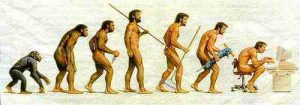
Does education really change?

Dyson, E. (2005). Evolution [Photograph]. licensed under CC By-NC-ND 2.0 

When reading through this week article, it is interesting comparing the evolution of technology over the years as discussed by Weller (2018) and Reiser (2001a, 2001b).

One of the main points that stood out to me in Weller’s (2018) article was in his conclusion, where he succinctly stated that in the advancement of edtech, it is the tech(nology) that has been changing, not the ed(ucation). I find this very interesting as a online secondary school teacher. The technology that has advanced in education has given me a job that did not even exist that long ago, but what I teach, and a lot of the way I instruct or assess has not changed. There are still tests, but instead of being written by hand on paper, they are done on the computer. This is in agreement with what Weller was discussing.

In Reiser’s articles (2001a, 2001b) he discusses the history of instructional design and technology up to his publication date of 2001. Reiser discusses how  instructional television was not adopted for a few reasons; including, the resistance to change, the expense of new technology, and that the technology is only a educational enhancement (2001a, p. 59). Although in many ways I agree with these statements, in the last few years technology has been able to do more than just be an educational enhancement. With the increase in technology used in distributed learning, we are now able to reach more students who would not have been successful ( for one reason or another ) in the traditional classroom. For them, the growth in technology means that they can still continue their education, and is much more than just an enhancement.

Overall, I have to agree with Reiser in that throughout history, we have had a tendency to jump into new technology bandwagons. The potential that they were originally sold us on, was not lived up to and often the technology ends up being abandoned. It is interesting to think of how fast technology is currently changing, and assuming we are going to be following similar trends, where we might end up in only a few short years.

References:

Reiser, R. A. (2001a). A history of instructional design and technology: Part I: A history of instructional media. Educational Technology Research and Development, 49(1), 53-64.

Reiser, R. A. (2001b). A history of instructional design and technology: Part II: A history of instructional design. Educational Technology Research and Development, 49(2), 57-67.

Weller, M. (2018). Twenty Years of Edtech. Educause Review Online, 53(4), 34-48.

From Printing Press to the Internet- what is next?

Kinlund, C. (2011). Vintage Gutenberg printing press [Photograph]. licensed under CC By-NC-ND 2.0 

Looking back at the history of educational technology, I came across multiple articles about how technology has improved. One of the articles I read, written by Tony Bates, was a blog post discussing how “roles of technology in education go back at least 2,500 years” (2014, para 2). His example was the writing Moses chiseled on stone in the bible. As discussed by Bates, as technology advanced, such as writing tools, it challenged what was the accepted norm and lead to a resistance. I see this in current education, with the change in curriculum in BC, using more computer mediated tools. Resistance to change is a common theme seen throughout history and currently in education.

In his article, Bates broke education into different categories: oral communication, written communication, broadcasting & video, and computer technologies. As he discussed how the different technologies within the different categories has evolved and developed, he points out that most education technologies were not originally developed for education purposes, but for business, such as overhead projectors and powerpoint. I wonder how technologies developed specifically for education improvement today, compare statistically to the older, less specific technologies?

Reading through this article and its discussion of the printing press, it lead me back to a course I took in university (History of Biology) and the discussion around the most influential people in the last millenium (personal communication, 2012). After our course did our guessing, it was revealed that Johannes Gutenberg was giving the title for his invention of the printing press (Johannes Gutenberg, n.d.). It was the printing press that allowed mass production of words, which lead to more reading and changes to education.

The printing press made the world a smaller place by having written word reach with more people, and the internet has done that again, reaching a larger audience.  I am curious what the next big invention or technology will be that completely revolutionizes the way we learn and live our lives, much like the printing press or the internet has done.

References

Bates, T. (2018). A short history of educational technology. Retrieved 9 September 2018, from https://www.tonybates.ca/2014/12/10/a-short-history-of-educational-technology/

Johannes Gutenberg. (n.d.). In Wikipedia. Retrieved 9 September 2018, from https://en.wikipedia.org/wiki/Johannes_Gutenberg

Thinking about research

One of the main points that I took out of the question and answer podcasts with Dr George Veletsianos was how to stay current with your research in education and technology when technology is changing so quickly (2018a). Veletsianos stressed that it is important to focus and study the problem, not the technology. This was interesting to me as I often think we look at technology and think to ourselves

okay here is this new and greatest advancement, how can this help me?

But instead, let’s look at the bigger picture and think,

what is a current problem we are facing in education, what is causing this problem, and how can I work towards overcoming this problem?

During the second podcast, Dr. Veletsianos discussed the different tools and resources he uses in his research, and discusses how his colleagues play an integral part to his research (2018b). Thinking about how we as RRU MALAT students are about to embark on a research project or thesis soon, it makes me feel more comfortable knowing we have a strong foundation of support within our cohort. Hopefully, we can work together to support each other as colleagues as we start our own research.

References

Veletsianos, G. (2018a). Audio File #1  [Audio File]. Retrieved from https://moodle.royalroads.ca/moodle/mod/page/view.php?id=279463

Veletsianos, G. (2018b.) Audio File #2  [Audio File]. Retrieved from https://moodle.royalroads.ca/moodle/mod/page/view.php?id=279463

Learning about Copyright

Throughout our RRU courses, I feel like we have been reminded a few times ( rightfully so in my case, as I am/was a little rusty in academic writing) to make sure we had correct citations and were giving credit when credit was due.  For me, I always considered this being important as the authors do deserve the credit and it is crucial to not be plagiarizing.

As a teacher, I am use to the Copyright warning on all of out photocopies, and the 10% for text books etc. I sometimes have the Wild West Attitude that Wrobel explained, and often in my teaching life think that if I can find it I can use it.

However, I have never put to much thought into it, and how is affects me as a student.

After reviewing Melanie Wrobel’s A guide to Copyright presentation (2016), it reminded me about how Copyright is going to come into play, and the importance of remembering the specific rules around Copyright.

3 of the many things I did not know about Copyright laws here is Canada before Wrobel’s presentation were:

  • Life of copyright is life of author + 50 years, and that is different then in the USA when it is +75 years. Canadian Copyright laws differ in a few ways to American Copyright laws.
  • If writing a thesis, you will have to use Royal Roads Copyright permission letter to ask for permission when using other’s material. I am still a little unsure if this includes when you are paraphrasing, or if it is when you are using images or direct quotations. Something I will have to look into if I end up going down the thesis track.
  • Copyright laws protect most works in Canada, even if there are no copyright restrictions, and that citations may not be enough.

Overall, I feel like I still have a lot to learn about Copyright and how it is going to affect the remainder of my writing here at Royal Roads University.

Wrobel, M. (2016) A Guide to Copyright [Video file]. Retrieved from https://moodle.royalroads.ca/moodle/mod/page/view.php?id=245370

What Makes a good Research Question?

This is going to be dependent on the type of research that is taking place, and what the purpose of the research is.

Qualitative research questions (or the central question) “is a broad question that asks for an exploration of the central phenomenon of concept” (Creswell, 2009, p.129). The purpose of this question is to not narrow the inquiry, and allow for the research to be as broad as needed.

Alternatively, quantitative research questions (or hypothesis) “inquire about the relationships among variables” (Creswell, 2009, p. 13). As compared to the former, this is very focused and specific.

Regardless of the type of research, the Royal Roads University Writing Centre highlights three points that make a good research question:

  • The question is clear and distinct;
  • It is focused and leads the research;
  • Allows for elaborations, not a simple yes or no answer.

By focusing on your research question meeting all three points above, one should have a good start to their research.

References

Creswell, J. (2009). Research design: Qualitative, quantitative, and mixed methods approaches (3rd ed. ed.). Los Angeles: Sage.

Royal Roads University. (n.d.). Thesis Statements/Research questions/Problem statement. Royal Road University. Retrieved from http://library.royalroads.ca/writing-centre/writing/structure/thesis-statementshow

Impacts of Digital Learning on Poverty


Impacts of Digital Learning on Poverty

Group Activity 1 Unit 4 Royal Roads MALAT
Danielle Beare, Jessica Brown, Amanda Dunn, Chad Flinn, & Alastair Linds

“In the world today, information is a resource for development, and the absence of reliable information is an epitome of underdevelopment” (Huang & Russell, 2006, p.160).

As we began to discuss and further explore the topic of poverty in relation to digital learning, it was clear to us that we could easily go into a rabbit hole of information and research. We choose to narrow our scope to focus on rights around access to information and technology (or lack thereof), and how the cycle of poverty, and already present digital divide, are further impacting those in poverty.

Societal barriers that are already in place and how digital learning is further impacting them.

Social Mobility:

  • As the world becomes more reliant on a digital marketplace it is important that individuals are taught digital literacy.  It is becoming essential that people learn to evolve their digital skills at the same pace as the industry is growing. This means that not only do they have to have access to information and communication technology (ICT’s) to use, they have to understand how to use them to their full potential (Krish, 2018, p.3).
  • It is important for people to have a base level of competence in traditional literacies in order to fully benefit from access to ICTs.  Studies have shown that children from a higher economic background exhibited higher levels of information and multimedia literacy than those from a lower economic background (Warschauer, 2007, p. 43).
  • Access to ICT and online learning may in fact increase the digital divide.  Even with an equal amount of access the minority students will not engage as actively as those from a higher economic background.  Studies show that a shift from oral to written creates anxiety in those who do not possess basic skills in traditional literacies (Tawfik, 2016, p. 600).

Cycle of Poverty:

  • Poverty doesn’t just affect financial decisions but the stress of poverty takes a toll on cognitive decisions. Even if someone in poverty has access to the internet, because of this the idea of further education may not be substantiated.
    • Being poor means coping not just with a shortfall of money, but also with a concurrent shortfall of cognitive resources. The poor, in this view, are less capable not because of inherent traits, but because the very context of poverty imposes load and impedes cognitive capacity. The findings, in other words, are not about poor people, but about any people who find themselves poor (Mani, Mullainathan, Shafir, Zhao, 2013, p. 980).
  • Poverty influences the perception of education. Without significant possibility of reward education is often determined to be of less value than labour.

    • Particularly in rural areas, many children may be involved in agricultural work or domestic duties (for example, fetching wood or water), so sending them to school involves an opportunity cost to the household (Van der Berg, 2008, p. 14).
  • Engagement online is directly affected by the level of poverty. Access to the internet, how people access the internet, and what they do with the internet are all diminished.

    • Social inequalities such as poverty, illiteracy, and unequal educational opportunities, prevent all Americans from enjoying full participation online and in society more generally (Yoshikawa, Aber, Beardslee, 2012, p. 157).

How has digital learning changed the access to information and what impacts has that made?

  • Access to information, including the creation, application and communication have been the key to the evolution of successful societies, including having access to education, employment, social interaction and civic participation (Farmer & Studies, 2015).
  • With receiving and sharing information being a human right (United Nations, 1948, Article 19), and digital learning and technology fast becoming the forefront of sharing information (Warschauer, 2007, p. 41), the digital divide currently seen between the different socioeconomic status’ ( Marien & Prodnik, 2014, p. 36) could be looked at as infringing on one’s rights.
    • Digital Divide – the economic, educational, and social inequalities between those who have computers and online access and those who do not (Merriam-Webster, 2018).

What is being done to bridge the divide?

Access to Education for All:
As movements towards open education flourished, there rose a belief  that open, digitally distributed educational resources could bridge some of the educational gaps prominent within vulnerable populations, and thus, we are morally obligated to share educational content:

 “If educational materials can bring people out of poverty, and information can now be copied and shared with greater ease, there is a moral obligation to do so. Information should be shared, because it is the right thing to do” (Caswell, Henson, Jensen, & Wiley, 2008, p. 8).

  • As mentioned above, subsequent research related to digital literacy suggests that making content open does not mean that it is accessible to vulnerable populations: “something being freely available (e.g., open access, open educational resources, etc.) is insufficient to enable many people to successfully engage with a more open educational provision” (Lane, 2009, p. 9).
    • With open education, came massive open online courses (MOOCs) that have the ability to reach new learners; however, it has been seen “that MOOCs are not increasing access to postsecondary institutions and knowledge for underserved populations” ( Tawfik, 2016, p. 600) and are being primarily used by currently employed and educated people (Tawfik, 2016, p. 600).
  • A Way Forward: Although making traditional educational content open may not assist to limit divides and “bring people out of poverty”(Caswell, Henson, Jensen, & Wiley, 2008, p. 8), tailored content designed with vulnerable populations in mind could be effective.
    • “It  is how  that openness  is instantiated or  structured to meet the  particular needs of excluded  groups that makes the difference” (Lane, 2009, p. 9).


References

Caswell, T., Henson, S., Jensen, M., & Wiley, D. (2008). Open Content and Open Educational Resources: Enabling universal education. The International Review of Research in Open and Distributed Learning, 9(1). https://doi.org/10.19173/irrodl.v9i1.469

Digital Divide. (2018, May 12). Merriam-Webster Online. Retrieved May 29, 2018, from https://www.merriam-webster.com/dictionary/digital%20divide

Farmer, L. S. J., & Studies, A. (2015). Information as a Human Right, 6(March), 18–35. https://doi.org/10.4018/ijavet.2015010102

Huang, J., & Russell, S. (2006). The digital divide and academic achievement. The Electronic Library, 24(2), 160–173. https://doi.org/10.1108/02640470610660350

Krish Chetty, Liu Qigui, Nozibele Gcora, Jaya Josie, Li Wenwei, and Chen Fang (2017). Bridging the digital divide: measuring digital literacy. Economics Discussion Papers, No 2017-69, Kiel Institute for the World Economy.http://www.economics-ejournal.org/economics/discussionpapers/2017-69

Lane, A. (2009). The Impact of Openness on Bridging Educational Digital Divides. The International Review of Research in Open and Distributed Learning, 10(5). doi:10.19173/irrodl.v10i5.637

Mani, A., Mullainathan, S., Shafir, E., & Zhao, J. (2013). Poverty Impedes Cognitive Function. American Association for the Advancement of Science; 341, 976-980. https://doi:10.1126/science.1238041

Mariën, I., & A. Prodnik, J. (2014). Digital inclusion and user (dis)empowerment: A critical perspective. Info, 16(6), 35-47. doi:10.1108/info-07-2014-0030

Tawfik, A. A., Reeves, T. D., & Stich, A. (2016). Intended and Unintended Consequences of Educational Technology on Social Inequality. TechTrends, 60(6), 598–605. https://doi.org/10.1007/s11528-016-0109-5

United Nations. (1948). Universal declaration of human rights. Paris, France: United Nations. (http://www.claiminghumanrights.org/udhr_article_19.html)

Van der Berg, S. (2008). Poverty and Education. Education Policy Series, 1-28. ISBN: 978-92-803-1322-2

Warschauer, M. (2007). The paradoxical future of digital learning. Learning Inquiry, 1(1), 41–49. https://doi.org/10.1007/s11519-007-0001-5

Yoshikawa, H., Aber, J. L., & Beardslee, W. R. (2012). The Effects of Poverty on the Mental, Emotional, and Behavioral Health of Children and Youth Implications for Preventions. American Psychologist, 67(4), 272-284. doi:10.1037/a0028

How are digital structures going to impact my digital presence and identity?

My plan discussed in Cultivating my Digital Presence had 3 main goals. The one I chose to reflect on while I was reading was how I am going to become more visible as an educational professional and learner.I knew I needed to perform certain tasks, such as blog and tweet often, follow others, hashtag, and participate in dialogue. What I did not know, was how these different interactions fit within the virtual structures.

As Dron & Anderson explain, “Twitter’s hashtags provide a powerful means of clustering around a single topic” (p. 79) forming a Set. Since it is just one word (a hashtag) that may allow me to connect with someone else, it is important that I choose my words wisely. As I tweet more often, I think I should be researching different hashtags beforehand, to confirm that my thoughts are reaching the intended set of people.

To help me narrow down my search for appropriate sets, I may want to use my Nets – people I follow- and see what hashtags they commonly use ( Dron & Anderson, 2014, p.79). Hopefully, as I become more visible, my net will grow which will allow me to see new sets I can contribute too.  Furthermore, I hope that by increasing my network, I will be able to find more online learning communities to be a part of. It is my hope to find such “community that promotes each member’s sense of autonomy, engagement, and collaboration.” (vanOostveen, R., DiGiuseppe, M., Barber, W., Blayone, T., & Childs, E., 2016, p. 3)

Reference

Dron, J, & Andreson, T. (2014). Teaching Crowds. Edmonton, AB: Athabasca University Press

vanOostveen, R., DiGiuseppe, M., Barber, W., Blayone, T., & Childs, E. (2016). New conceptions for digital technology sandboxes: Developing a Fully Online Learning Communities (FOLC) model. In Proceedings of EdMedia: World Conference on Educational Media and Technology 2016(pp. 665-673). Association for the Advancement of Computing in Education (AACE).