
My prior exposure to video learning has been limited to simple instructional how-to videos before I started to use Lynda.com video tutorials to learn design (Adobe Photoshop, Illustrator, InDesign…) back in 2008. I felt and still feel videos help and are effective as they demonstrate how to do things compared to only reading up instructions. Educational videos have become an important content-delivery tool in higher-education (Brame, 2016).
Through one of the research assignments, I looked into digital and print reading and the science behind how our brain reads and comprehends text. That motivated me now to look into how our memory works when watching video-based tutorials, and what are the underpinning theories. Mayer and Moreno (2003) propose the cognitive theory of multimedia learning (CTML) based on three assumptions: humans process pictorial and verbal material separately (dual-channel); each channel has limited capacity for the material that can be processed at once (limited-capacity); meaningful learning involves cognitive processing taking place in the verbal and visual channels (active-processing).
I always appreciated Lynda.com and other video resources, but after a few years of teaching students, I am aware that it is not for everybody. Some people favour written instructions, paper-based or digital books, podcasts over video-based learning. Based on my research so far, there are scenarios where video curated libraries are found great for learning, such as procedural knowledge and task-oriented training (Hong, Pi, & Yang, 2018). Video-based tutorials seem to be an excellent resource for many, but not the solution to all and I feel that for higher order learning and thorough education, there should be more than just a few video tutorials.
Classmates expressed the availability of abundant and exciting information; I am also “down in the rabbit hole” with my narrowed down topic where I research the implications of instructor presence in video-based tutorials on learning and how social that learning can be.
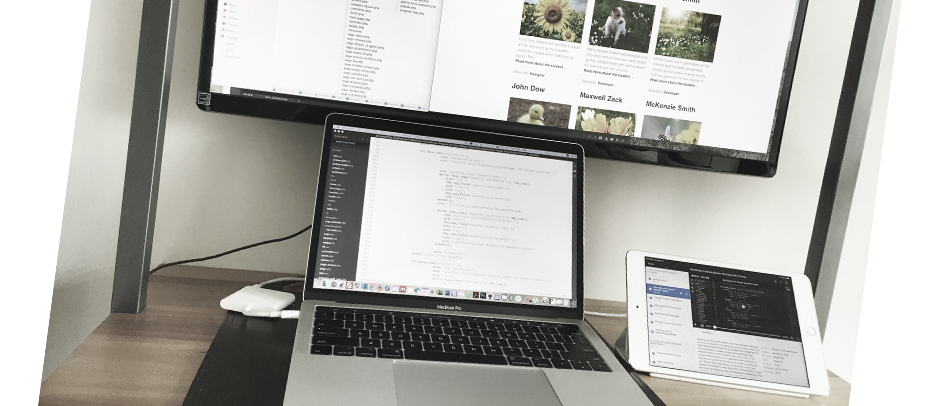
The illustration is created by the author.
References
Brame, C. J. (2016). Effective educational videos: Principles and guidelines for maximizing student learning from video content. CBE—Life Sciences Education, 15(4), es6. https://doi.org/10.1187/cbe.16-03-0125
Hong, J., Pi, Z., & Yang, J. (2018). Learning declarative and procedural knowledge via video lectures: cognitive load and learning effectiveness. Innovations in Education and Teaching International, 55(1), 74–81. https://doi.org/10.1080/14703297.2016.1237371
Mayer, R. E., & Moreno, R. (2003). Nine ways to reduce cognitive load in multimedia learning. Educational Psychologist, 38(1), 43–52. https://doi.org/10.1207/S15326985EP3801_6
I really appreciated your group’s investigation of Lynda.com. I use video quite heavily in my own practice. The trade I teach relies heavily on math for the theoretical side. Having procedural “walkthrough” videos on how to solve problems has been helpful for SOME students. I say some and not all because, as you mentioned in your post, not all learners learn well from a video. One thing I have done is to also provide a PDF of the walkthrough that the students can follow along with if they are watching the videos or use as a stand-alone resource. We need to be careful in thinking that video lessons can solve a lot of problems. While it is powerful and useful it needs to be used in conjunction with solid teaching.
I provide choices for the students as alternatives for the video, acknowledging that they might not prefer video-based learning in every single case. In my field providing open source online written tutorials or open source example codes are accepted as well. And these tie in with OER, although I am aware that open source code examples are not the same as OER, they are just open resources.