by BK | May 31, 2019 | LRNT 526
Educational videos have become an important content-delivery tool in higher-education (Brame, 2016), especially in online and blended learning. The rapid growth in different contexts is accompanied by a wide range of design options (Carmichael, Reid, Karpicke, &...
by BK | May 21, 2019 | LRNT 526
I listed several factors that contribute to balance the cognitive load in video-based learning. A discussion on learning different topics and types of knowledge brought me to learning declarative or procedural knowledge (PK) via video tutorials (Hong, Pi, & Yang,...
by BK | May 15, 2019 | LRNT 526
The interactions between student and teacher are fundamentally changed in video-based learning. Assessing cognitive load and whether learning has taken place and maintaining student engagement is imperative in determining whether a curated video library can be a...
by BK | May 12, 2019 | LRNT 526
My prior exposure to video learning has been limited to simple instructional how-to videos before I started to use Lynda.com video tutorials to learn design (Adobe Photoshop, Illustrator, InDesign…) back in 2008. I felt and still feel videos help and are effective as...
by BK | May 12, 2019 | LRNT 526
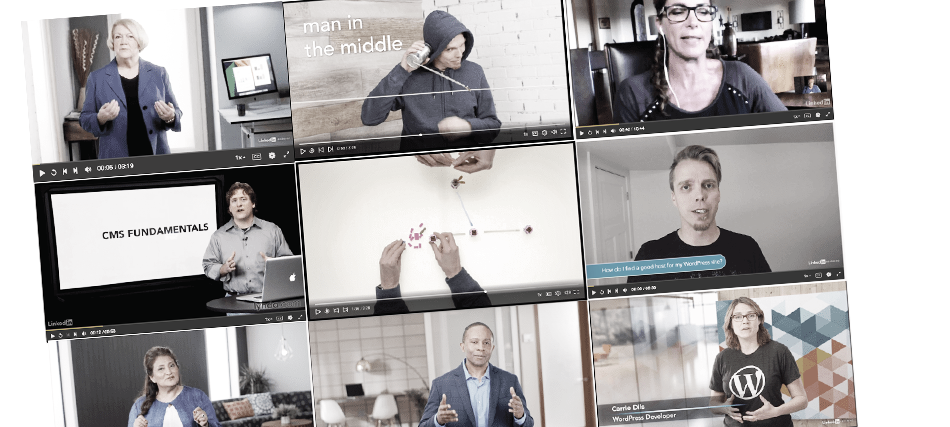
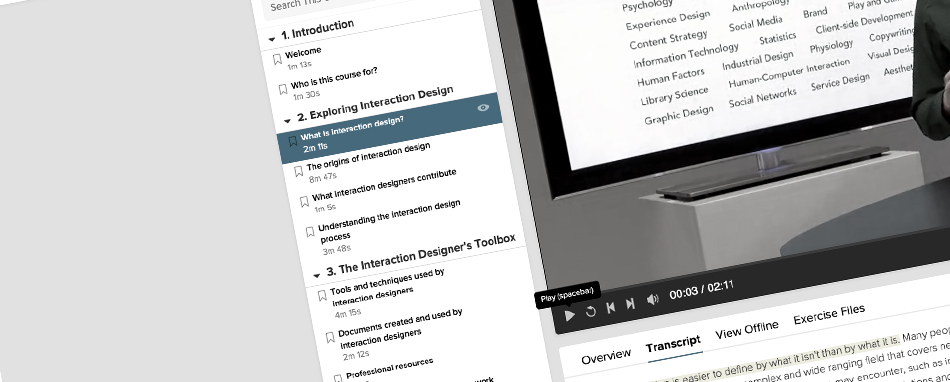
From a free web design resource created in 1995 to a multibillion-dollar global online learning platform acquired by LinkedIn (Porter, 2015), Lynda.com’s impact on online learning is widespread and its adoption can be seen in government, academia, and business sectors...
by BK | Apr 19, 2019 | LRNT 526
Our group teamed up to examine Lynda.com video library. Lynda.com aims to be a platform that provides training in software, creative and business skills (Lynda.com, 2019) and varying skill levels needed to complete the courses. I decided to examine the effects of...