
The title, paraphrased from Angie, by The Rolling Stones
Though the Rolling Stones may have been asking the question of Angie, the sentiment still applies to the ADDIE framework of learning design. Where does ADDIE lead us in a digital age?
The ADDIE (Analyse, Design, Develop, Implement and Evaluate) model illustrated in Figure 1 is increasingly described as a relique of planning’s past (Bates, 2014).
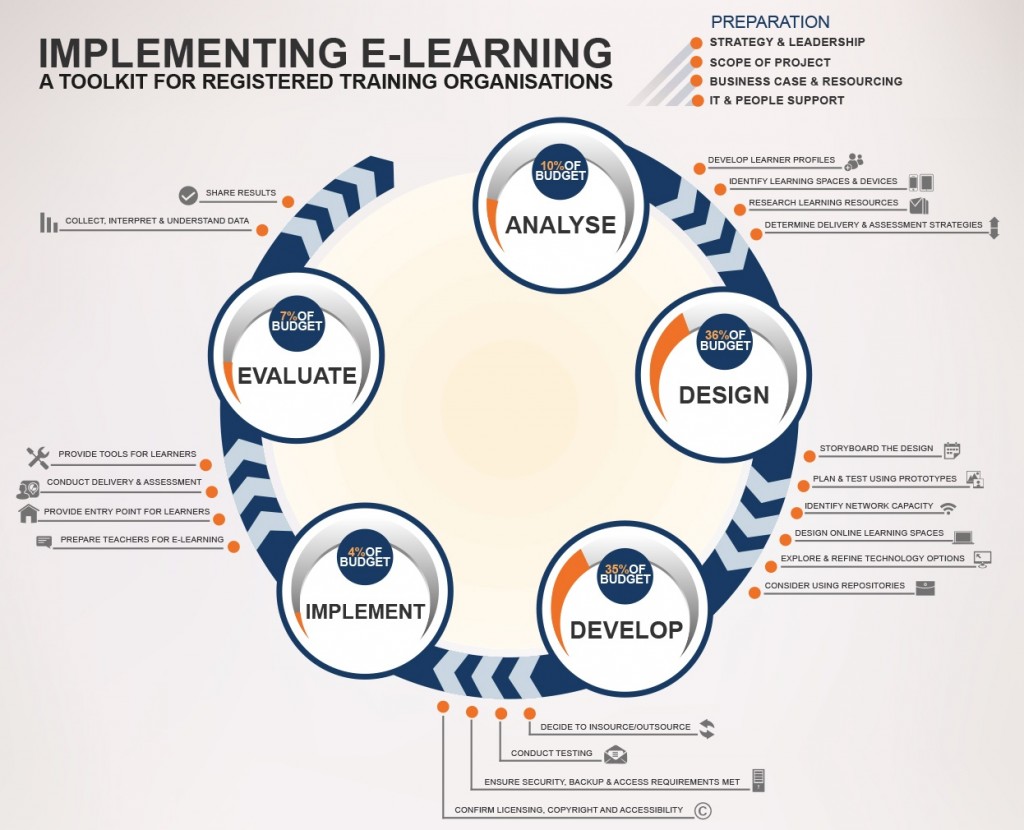
I agree with my colleagues (Can Instructional Design Models Stand the Test of Time? Early Thoughts on ADDIE) that ADDIE’s formula front-loads the efforts of course creation, and prompts a heavy linear-thinking flow that reduces the reflexivity. According to Online Learning Research Associate, Dr. Tony Bates ADDIE privileges behaviourist over constructivist education theory by not factoring in learn-instructor interaction. (2014, p. 3). Moreover, there can be a certain clunkiness to ADDIE in practice. “If ADDIE is a 100-piece orchestra, with a complex score and long rehearsals, then flexible design models are a jazz trio who get together for a single performance then break up until the next time,” writes Bates (2014b, p. 2). In an age where learning design has evolved to rightly priorities learning and student-centricity, age-old standards like ADDIE seem too inflexible to keep up with trending agile technology (An, 2004).
Where my opinions differ from Tony Bates’ critiques of ADDIE, is the underlying assumption that a solution to ADDIE’s dominance in Learning and Development is to replace it with a newer, tech-centric, model which plug the gaps in methodology. Bates’ deeper criticisms of ADDIE come from systems thinking, design thinking and agile methodology viewpoints. Paradoxically these paradigms of complexity theories, in themselves, oppose the binary of labelling “right vs. wrong” ways of doing things and reliance on technical problem-solving.
Many of the critiques of ADDIE which Flash Design or agile methodology solve are matters of parameters, stocks, delays, flows, feedback, and so forth. Whereas the underlying cause of these symptoms is, in fact, the “mindset or paradigm out of which the system — its goals, structure, rules, delays, parameters — arises” (Meadows, 1999).
The debate over ADDIE vs. flexible design is about process, not praxis.

And while process is important, especially for larger organizations, when considering base approaches for particular L&D projects, feedback loops and parameters do not inherently affect the systems change that flexible approaches try to champion. In fact, the false dichotomy between the two erodes the goal of education design which transforms perception, self and action beyond boundaries.
Bates, T. (2014, September 9). [Blog post]
Bates, T. (2014b, November 26). ‘Agile’ Design: Flexible designs for the digital age
Bates, A. W. (2015). . BC Campus.
Meadows, D. (1999). Leverage Points: Places to Intervene in a System. Retrieved from http://donellameadows.org/wp-content/userfiles/Leverage_Points.pdf
Stanford University Institute of Design. (2016). A virtual crash course in design thinking.
Thomas, P. Y. (2010).. In Towards developing a web-based blended learning environment at the University of Botswana. (Doctoral dissertation).
<script src=”//platform.linkedin.com/in.js” type=”text/javascript”></script>
<script type=”IN/MemberProfile” data-id=”http://www.linkedin.com/in/kate-nickelchok” data-format=”inline” data-related=”false”></script>