
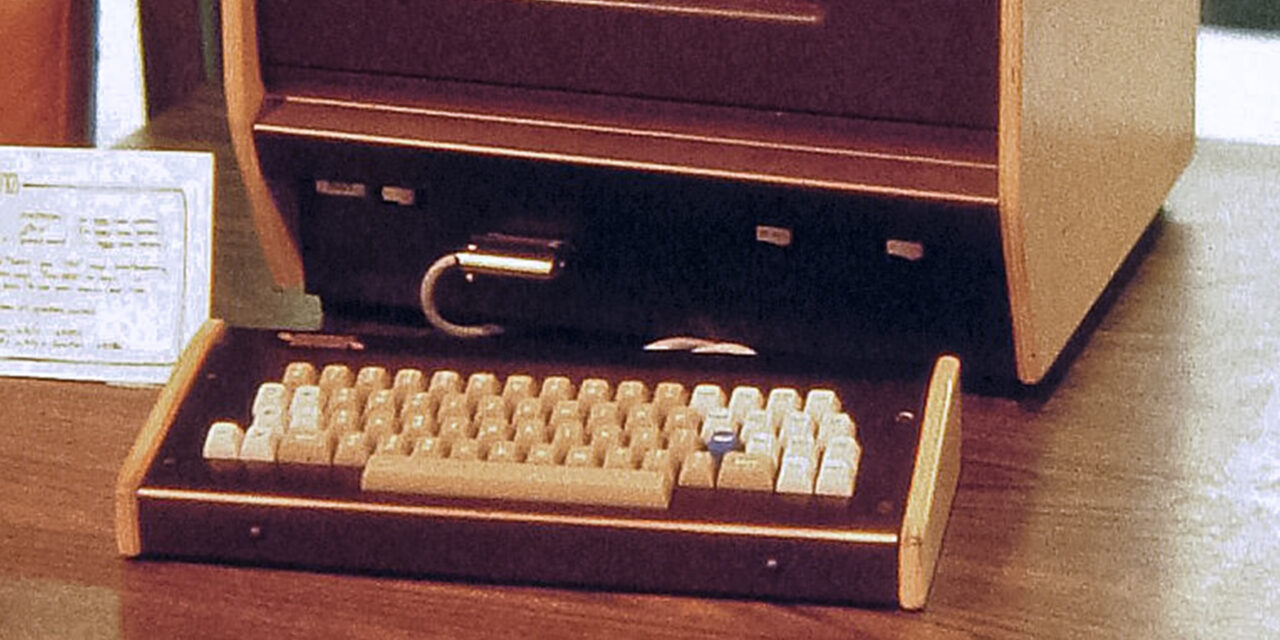
Donald Bitzer was an electrical and computer engineering professor at the University of Illinois who ran their Computer-based Education Research Laboratory (CERL). In 1960, Bitzer and his lab created the computer-based learning system PLATO (Programmed Logic for Automatic Teaching Operations) which Watters’ (2014) refers to as the introduction of many aspects of online learning we use today, such as discussion boards, chat, and even games. What’s more, Bitzer’s work on PLATO led him to co-invent the modern plasma display, an invention for which Bitzer was inducted into the National Inventors Hall of Fame. Yet these technical contributions are not why I selected him; it is because of his methods that are revealed through an article he wrote in 1973 and a panel discussion he was a part of in 2010.
In his article, Bitzer (1973) provides examples of ways PLATO could be used to enhance teaching, and they are all applied to promote student exploration and discover, facilitating learning in ways that would fit individual learning needs. At a conference, Bitzer was part of a panel discussion about the culture of CERL, and it was evident that Bitzer fostered a culture of inquiry and experimentation. His innovations and lab aimed to provide students with learning through exploration; a goal that I think is sometimes lost through attempts to automate the learning process. Despite the eventually demise of PLATO, these principles that underpinned Bitzer’s work would influence technology developed in subsequent years by CERL alumni like Ray Ozzie, and I’m sure there are countless untold impacts we will never know about.
“The real winner is the student. The patience, availability, and nondiscriminatory nature of the computer makes computer-based education attractive to all types of learners. Students can learn in a manner best suited to them at a pace that they determine—a pace that, on average, requires less time to learn material than when it is presented in an ordinary classroom manner. This means that more, not less, time is available for human discourse and genuine personal interaction with the teacher.” (Bitzer, D. L., 1973, p. 178)
Bitzer, D. L. (1973). Computer Assisted Education. Theory Into Practice, 12(3), 173–178. https://www.jstor.org/stable/1475324
Computer History Museum (2010, June 3). PLATO@50: A Culture of Innovation [Video]. YouTube. https://www.youtube.com/watch?v=mIy_wB70Z3k
Watters, A. (2014, June 18). Un-Fathom-able: The Hidden History of Ed-Tech #CETIS14. Hack Education. http://hackeducation.com/2014/06/18/unfathomable-cetis2014
Photograph by Mtnman79, distributed under a CC BY 3.0


![Pinpoint the media debate in current events [Rod & David]](https://malat-webspace.royalroads.ca/rru0153/wp-content/uploads/sites/169/2020/09/Activity5-440x264.jpg)


David, thank you for this introduction to Bitzer; great post.
I have a particular interest in personalized learning as well, so I appreciate you taking the time to visit a little bit of history with PLATO. You mention Watter’s perspective on PLATO and how it has impacted today’s learning technology – I’m curious to know what specifically drew you to write about PLATO?
While reading Watters’ article, Un-Fathom-able, I found intrigued by early computer-based education that came directly from education, rather than being an adoption of outside technology. Then I saw how both the hardware and software developed over the next few decades. As mentioned, they invented the modern plasma screen but they also invented a touchscreen for PLATO in 1964. A touchscreen in 1964?! It sounds crazy. The games, ascii art, screen-sharing all seemed so incredible and made me want to learn more about who created it. From what I read, the initial purpose for it is poorly defined. Some places talk about the GI bill that brought so many more people into higher ed. Others talk about the need to reduce the costs of education. In many ways it was the same need as we see in education today. Get more people educated with less effort and cost. And as I read about Bitzer I found him to be intriguing as both an educator and engineer. Rather than just talking about how to use technology, he led a team to create the technology from scratch in order to meet fundamental educational needs that were not just gimmicky. He writes about using logic and rules for computer education, rather than simply right/wrong answers, in order to provide guidance for a student. He wasn’t just about creating technology to make the job easier for teachers, but to make education better for students. I talked about this a bit in the book discussion on Saturday, about how this focus is sometimes lacking in the technology we adopt in education, and that perhaps the desire to automate and streamline reduces the student’s ability to explore and discover. Sorry. That was a bit longer than I thought it would be.
David, it seems like Donald Bitzer does not fit into any criteria of being a member of a marginalized community and yet you picked him anyway. I considered writing about someone I was truly inspired by but he also did not fit any criteria, so I chickened out which I regret now. I can’t show enthusiasm in my writing if I don’t feel it, so my post turned out to be bland and uninspiring. A great opportunity for self-reflection though. I used to be more disagreeable in personal and professional life, but lately I’ve been trying to find a more balanced approach, which seems to come to me at the cost to my creativity and authenticity. Is it ever possible to find a comfortable compromise between being yourself and conforming to social expectations ? i don’t know…
Aw man, I hoped nobody would call me out on that! From my reading of the assignment, I thought that the “marginalized community” side was something we could pursue but wasn’t required. I had wanted to find someone that fit that criteria but when I found myself inspired early on by what I was reading I thought that learning through that interest would fit the assignment best. I also have difficulty balancing being authentic to who I am and trying to be what other people need, or want, me to be. Even in an assignment like this where I want to find someone who should be brought forward as an example and inspiration, but at the same time I have found someone who inspires me. Do I reject the figure I find inspiring to hunt for an unsung hero? I don’t know what that balance looks like, and I think that is incredibly apparent from my ramblings that make up this reply.
Didn’t mean to call you out ! it’s just your posts are often a source of self-reflection for me. Your struggles and frustrations are somewhat unique, even your temperament/personality is not common among teachers. I guess since you came into the field from a different profession and because I am not an instructor, I find your path very interesting to follow.
Thank you so much, Denys. I often feel a bit out-of-place among other instructors because of the scenic route I took to this profession. It is encouraging to hear that my perspective may be useful to someone. I really appreciate this.