A glimpse into the future of K-12 classrooms: What 2030 could have in store for public education

In our final assignment for Foundations of Learning and Technologies, we were asked to predict the future of education, learning, and teaching in 2030. Here is my speculative future for K-12 education. Enjoy!


To predict the future, one must look to the past. In the near future, education continues to evolve and iterate around awareness of respectful design (Grandoit-Sutka, n.d.). Over time this concept grew into the dominant force shaping the future of K-12 education. The idea of respectful design was formed in response to various societal concerns that were present in the early 2000s-2020s. Using this timeframe as evidence, the future of teaching, learning, and education in the K-12 public education system will use respectful design in response to those decades’ societal concerns, specifically awareness of diverse perspectives and environmental awareness in teaching and learning (Grandoit-Sutka, n.d.). What is presented here is a potential glimpse into the not-so-distant future of 2030; a place where society has taken a critical look into its past and attempted to instill measures to promote positive change. 

The term respectful design is not so much a definition as a way of being; it revolves around respect: respect for cultures, environment, gender, and abilities (Grandoit-Sutka, n.d.). Regarding design and education, respectful design reflects these varied perspectives (Grandoit-Sutka, n.d.). The classroom of 2030 promotes inclusivity by choosing technology tools that are diverse and equitable, promoting the ideals of respect for all (MacGilchrist et al., 2020). One technology tool in use in the 2030 classroom is open educational resources (OER). OER are free online materials used for educational purposes and are of varied mediums; they also follow the standards of retention, reuse, revision, remixing, and redistribution (Liao, 2018). Some examples of OER in the 2030 classroom are lesson plans, online textbooks, and videos (Liao, 2018). OER reflects respectful design in that it is available to everyone, regardless of socioeconomic status, and removes barriers to diverse perspectives, allowing an open platform for everyone (MacGilchrist et al., 2020). Not only does it allow for diverse content, but OER is customizable (Liao, 2018). Teachers in 2030 are adapting and choosing OER to suit their classes’ cultural and diverse makeup and abilities. Students now have access to more voices from varied backgrounds, leading to a more holistic worldview and different ways of thinking. 

Another aspect of respectful design is illustrated in the 2030s use of technology usable for all, including differently-abled students. In the 2010s and 2020s, concerns were raised about technological barriers for students with diverse needs (Kaczorowski et al., 2022). Educators in the classroom of 2030 are assessing technology to ensure that it reflects many abilities. Teachers are required to take courses in respectful design, either during their initial introduction into education or as part of professional development opportunities. In these courses, they receive training in accessing and implementing frameworks that help reflect the current class culture, ensuring that all students are included. Furthermore, technology is evaluated consistently to ensure that it is culturally reflective, accessible to all abilities, and supported by pedagogy (Kaczorowski et al., 2022). 

 An example of a respectful design framework is seen in Figure 1 (see Appendix A). This framework illustrates a collaborative and respectful design approach when selecting representative technologies. For example, it is collaborative between teachers, parents and students, allowing multiple perspectives for integration. It also calls for a review of the technology itself, ensuring that no inherent biases or assumptions are present in the technologies’ design or functionality. This framework’s explore and alter stages ask educators to examine other options that may increase diverse perspectives. This can tie back to OER, which is also being used in the classrooms of 2030. Finally, advocating to publishers and designers about inclusivity and respectful design allows inclusivity and diversity to be at the forefront of organizations’ minds. Because of leaders advocating for change during the 2020s, OER and respectful design are now commonplace in the K-12 classrooms of the future. 

Teaching and learning in 2030 reflect another societal concern of the early twenty-first century: environmental impact. Growing anxiety about extreme weather, limited natural resources, and climate change were at the forefront of peoples’ minds throughout this time (Government of Canada, 2022). Nevertheless, the 2000s-2020s neglected to see the harmful effects of digital technology on the environment. As Selwyn stated in the late 2010s, society had an “…entitled sense of digital abundance.” (Selwyn, 2021, p.501). There was little regard for the effects of consistently replacing technology and its associated hardware devices. This was to become more apparent in the mid to late 2020s, as costs continued to rise for raw materials and access to limited natural resources became problematic; the unsustainable pace of growth in technology became known (Selwyn, 2021). To mitigate the increasing demand on the environment, select school districts in British Columbia (BC), Canada, began pilot projects focusing on “computing within limits”; a mindset that focuses on technology supporting well-being while remaining within global environmental limits (Nardi et al., 2018).

Select BC classrooms in 2030 have instituted several measures that fit the “computing within limits” ideal (Nardi et al., 2018). Firstly, teachers now attend off-campus meetings or conferences online through remote video conferencing software. By meeting virtually instead of taking transit, there are decreased environmental costs, although not entirely negated (Nardi et al., 2018). Secondly, purchasing decisions on technology for classrooms and schools will focus on durability and quality, not necessarily following the current fad (Selwyn, 2021). This means that many technological tools are refurbished, helping to dispel the decades’ previous notion of limitless technology and putting less strain on our resources and reducing the amount of e-waste (Selwyn et al., 2020). Finally, when acquiring technology in 2030, school districts, administrators, and purchasers are working towards mandatory implementation of Electronic Product Environmental Assessment Tools (EPEAT) to assess the impact of technology purchases on the environment (United Nations, n.d.). The continued development of the EPEAT ecolabel database provides comprehensive criteria for environmentally conscious technologies, while also listing technologies that have been allocated an EPEAT ecolabel certification (Global Electronics Council, n.d.). This allows school districts easy access to a multitude of verified products that meet environmentally sound criteria. By assessing the environmental impact of technologies, school districts can make greener choices to help alleviate the strain on our environment (Selwyn, 2021).

By implementing respectful design practices in K-12 classrooms in 2030, schools recognize the need to address and change the societal issues of the early 2000s-2020s, though these changes do not come without challenges. Even though OER and respectful design principles are being promoted and implemented in 2030s classrooms, not all teachers have bought in. Teachers may not take advantage of the professional development opportunities offered, and often state that there is not enough time to implement these new ideas, leading to inconsistent implementation (Delaney, 2011). 

Another challenge faced by 2030s classrooms is the computing within limits ideal. Although schools are purchasing refurbished technology and focusing on sustainability with more durable, reliable products, these efforts make little impact on the environment (Selwyn, 2021). For significant changes to happen, a societal shift in our behaviours and actions must occur (Selwyn, 2021). These kinds of significant shifts in global communities could take generations to develop. 

The future looks promising in the K-12 classrooms of 2030. This generation attempts to address the issues of the past by implementing core aspects of respectful design. K-12 classrooms use OER to reflect the diversity of their classrooms while promoting varied perspectives and removing barriers. Educators are ngaged in implementing respectful design frameworks that allow for varying abilities, perspectives, and class compositions. Finally, select future classrooms are involved in sustainable technology practices that are cognizant of the harmful effects of technology on our environment. Yet these future classrooms of 2030 are far from perfect. Challenges remain with teacher training and buy-in, and efforts to employ more sustainable technology have insignificant environmental effects. Despite these challenges, what remains optimistic about the 2030s is that they are willing to look critically at the past and take action to secure a better future. 

References

Delaney, M. (2011, November 1). Training teachers to implement technology. EdTech Magazine. https://edtechmagazine.com/k12/article/2011/11/training-teachers-integrate-technology

Global Electronics Council, (n.d.). Overview of the EPEAT ecolabel. https://www.epeat.net/about-epeat 

Government of Canada, (2022, May 20). Climate change adaptation in Canada. https://www.nrcan.gc.ca/climate-change-adapting-impacts-and-reducing-emissions/what-adaptation/10025 

Grandoit-Sutka, A., (n.d.). Elizabeth (Dori) Tunstall on designing for respect. deem journal. https://www.deemjournal.com/stories/dori-tunstall

Kaczorowski, T., McMahon, D., Gardiner-Walsh, S., & Hollingshead, A. (2022). Designing an Inclusive Future: Including Diversity and Equity With Innovations in Special Education Technology. TEACHING Exceptional Children, 0(0), https://doi.org/10.1177/00400599221090506

Kaczorowski, T., McMahon, D., Gardiner-Walsh, S., & Hollingshead, A. (2022). Reflective cycle for selecting technologies representative of diverse learners [Infographic]. TEACHING Exceptional Children, 0(0), https://doi.org/10.1177/00400599221090506

Liao, Y. (2018). Open Educational Resources. In A. Ottenbreit-Leftwich & R. Kimmons, The K-12 Educational Technology Handbook. EdTech Books. Retrieved from https://edtechbooks.org/k12handbook/oer

Macgilchrist, F., Allert, H., & Bruch, A. (2020). Students and society in the 2020s. three future ‘histories’ of education and technology. Learning, Media and Technology, 45(1), 76–89. https://doi.org/10.1080/17439884.2019.1656235 

Nardi, B., Tomlinson, B., Patterson, D.J., Chen, J., Pargman, D., Raghavan, B., & Penzenstadler, B., (2018). Computing within limits. Communications of the ACM, 61 (10), 86-93. https://doi.org/10.1145/3183582

Selwyn, N., Hillman, T., Eynon, R., Ferreira, G., Knox, J., Macgilchrist, F., & Sanch-Gil, J.M. (2020). What’s next for Ed-Tech? Critical hopes and concerns for the 2020s. Learning, Media and Technology 45 (1),  https://doi.org/10.1080/17439884.2020.1694945

Selwyn, N. (2021). Ed-Tech Within Limits: Anticipating educational technology in times of environmental crisis. E-Learning and Digital Media, 18 (5), https://doi.org/10.1177/20427530211022951

United Nations, Department of Economic and Social Affairs, Sustainable Development, (n.d.). The electronic product environmental assessment toolhttps://sdgs.un.org/partnerships/electronic-product-environmental-assessment-tool


Appendix A

Figure 1

Reflective cycle for selecting technologies representative of diverse learners

Note. This image was created to illustrate the process of selecting technology based on diverse perspectives and abilities. From “Designing an Inclusive Future: Including Diversity and Equity With Innovations in Special Education Technology”, by T. Kaczorowski, D. MacMahon, and A. Hollingshead, 2022, TEACHING Exceptional Children, 0(0), (https://doi.org/10.1177/00400599221090506). 

Predicting the future of education and learning: 2030

For our final assignment in our course about foundations of learning and technologies, we are being asked to predict the (near) future of education, learning, and teaching in the year 2030. My future is one based on the pessimism of the 2010s and early 2020s but will attempt to instil hope and optimism. 

The future of education for 2030 is responding to the variety of societal crises of the 2010s and early 2020s. I will base my predictions around the past and tie historical events to future projections. For example, I will be discussing the effects of COVID-19, creating more flexible learning options, such as flipped classrooms and blended learning (Statti & Villegas, 2020). 

Next, I will reference the 2010s and 2020s, illustrating the beginning of diverse perspectives with movements such as Me Too, Black Lives Matter, and Canada’s Truth and Reconciliation Commission. The class of 2030 will reflect these diverse perspectives by employing “respectful design” (Tunstall, 2017 in MacGilchrist, 2020) and increased attention to differently-abled students (Kaczorowski et al., 2022). 

Black Lives Matter – We Won’t Be Silenced: copyright Alisdare Hickson, CC BY-NC 2.0

Another topic the 2030 education system will be addressing is equity. Both K-12 and higher education are relying more and more on open educational resources (OER), although the market is not yet saturated (Educause, 2021). With increased flexibility of blended learning options, students can access their classes through any device, consequently cutting technology costs at a school level and decreasing access issues with lower-income students (Educause, 2021): more equity for all.

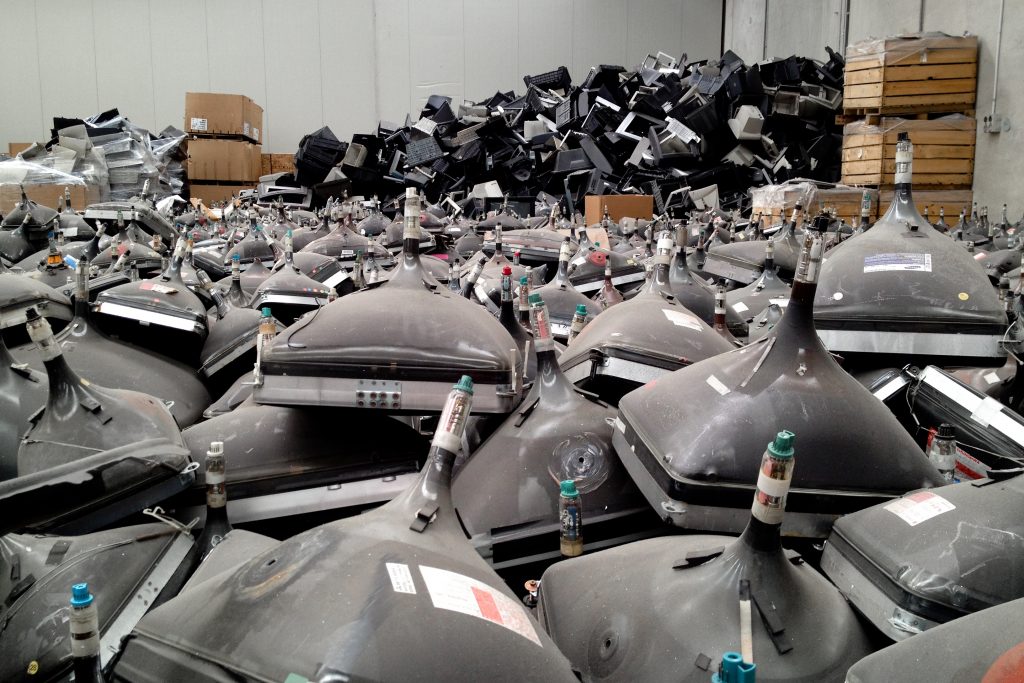
Finally, I will discuss the 2010s and early 2020s climate crisis; with increased concerns from our population about environmental concerns, the classrooms of 2030 will focus on Nardi et al.’s idea of “computing within limits” (2018). The 2030 educational system will place less concern on keeping up with the current ‘fad’ technology and instead look into sustainability in technology by purchasing more durable, high-quality products and refurbished technology, creating less ‘e-waste’(Selwyn, 2021). 

E-Waste: copyright Edit Klein, CC BY-NC 2.0

I will use other articles to provide complementary views to support my outlook on the future. Overall, the future is looking bright and attempting to respond to social demands of flexibility, diversity, equity, and a greener future. 


References

Educause. (2021). 2021 Educause Horizon Report: Teaching and learning edition. https://library.educause.edu/resources/2021/4/2021-educause-horizon-report-teaching-and-learning-edition

Kaczorowski, T., McMahon, D., Gardiner-Walsh, S., & Hollingshead, A. (2022). Designing an Inclusive Future: Including Diversity and Equity With Innovations in Special Education Technology. TEACHING Exceptional Children, 0(0), 1-8. https://doi.org/10.1177/00400599221090506

Macgilchrist, F., Allert, H., & Bruch, A. (2020). Students and society in the 2020s. three future ‘histories’ of education and technology. Learning, Media and Technology, 45(1), 76–89. https://doi.org/10.1080/17439884.2019.1656235 

Nardi, B., Tomlinson, B., Patterson, D.J., Chen, J., Pargman, D., Raghavan, B., & Penzenstadler, B., (2018). Computing within limits. Communications of the ACM, 61 (10), 86-93. https://doi.org/10.1145/3183582(2018). Computing within limits. Communications of the ACM, 61 (10), 86-93. https://doi.org/10.1145/3183582

Selwyn, N. (2021). Ed-Tech Within Limits: Anticipating educational technology in times of environmental crisis. E-Learning and Digital Media, 18 (5), https://doi.org/10.1177/20427530211022951

Statti, A., & Villegas, S. (2020). The use of mobile learning in grades K–12: A literature review of current trends and practices. Peabody Journal of Education, 95 (2), 139-147. https://doi.org/10.1080/0161956X.2020.1745613

A critical view: the importance of questioning the ‘hype’ around technology and learning

For this assignment, we were asked to write a collaborative blog post with one of our colleagues in the Master of Arts in Learning Technology program. The post was to be based on two pieces of published materials that demonstrated characteristics of techno-deterministic thinking. Published pieces could be from mass-media articles or media releases by technology companies. We chose an article from Forbes magazine, and another from the Microsoft Canada website. 

Photo by Marvin Meyer on Unsplash. 2018, February 23.

We were to summarize the claims in each piece, then comment on how we believed Richard Clark and Robert Kozma would respond to each piece. Clark and Kozma are respected researchers in Education Technology (EdTech,) and hold opposing views on technology’s ability to influence learning. 

Forbes, a well-known publisher and magazine, claims that technology in education can lead to better results in their article “Twelve ways technology can yield better educational outcomes”. This statement goes against Clark’s claims that media and technology do not result in any learning benefits (Clark, 1994). Clark’s position is that attributes of technology and media are replaceable by other means and, therefore, not influential to learning (Clark, 1994). The Forbes Technology Council counters Clark’s assertion by claiming that technology allows students to apply their knowledge and improve outcomes by employing self-assessment measures, creating personalized learning, and connecting with teachers and peers (Forbes Technology Council, 2021). Many of Forbes’ claims to improve educational experiences from technology focus on student engagement; Clark would take issue with this as he consistently claims that it is not the technology or media responsible for learning but rather the instructional method that is employed (Clark, 1994). Clark would argue that one could reproduce student engagement without technology, illustrating that technology is not influential in learning.

On the other hand, Kozma would side with Forbes’ claims that technology impacts learning because of the student’s cognitive and social interaction with the technology (Kozma, 1994). Forbes states that technology improves student engagement, connection, and collaboration by offering interactive learning opportunities like augmented reality, the creation of real-world simulations, and a game-play approach to learning (Forbes Technology Council, 2021). Essentially, Forbes is illustrating students’ interactivity and engagement with technology. This connects to Kozma’s position on technology and learning. Kozma would argue that because students are actively engaging and interacting with technology cognitively and socially, their learning is indeed being positively affected (Kozma, 1994). Kozma also states that to understand the connection between learning and technology better, one must look at how students use the capabilities of technology to aid in their learning (Kozma, 1994). Forbes’ provides multiple (although cursory) examples of this, including e-sports to foster connections, using augmented reality to simulate real-world interactions, and using subtitles on videos for differentiated learning (Forbes Technology Council, 2021). Kozma (1994) believes in the potential of technology in learning, which is echoed in the article, “The key to using technology for improvement is to focus on what can be done rather than replicating what has been done” (Osinick, 2021, as cited in Forbes Technology Council, 2021). 

Forbes’ article about the benefits of technology can be viewed in two different ways, as evidenced by Kozma’s and Clark’s assertions that either support or counter the benefits of technology. This illustrates a need to continue assessing and questioning technology use in our learning environments. 

In the blog post published on the Microsoft Canada website and titled “Unimaginable Circumstances, Teachers are Using Technology to Help Reach Students” and attributed to the president of Microsoft Canada, we are told how the company’s products such as OneNote, Teams, and Flipgrid met and exceeded K-12 needs in the early days of the Covid 19 pandemic, and how the Microsoft products continued to be used when in-class instruction resumed in the fall of 2020. 

Photo by Jeremy Bezanger on Unsplash. 2021, November 1

Using a Catholic private elementary school in Ontario as a case study, we learn as well through a video testimonial by one of the school’s teachers, who is also a credentialized Microsoft Innovative Educator (MIE), how technology played a role in helping students keep up with their coursework, and to generally thrive in the online learning environment.

The article’s author tells us that when in-class instruction resumed, the Microsoft products continued to be used, and continued to be a catalyst toward students’ engagement with their coursework. We are also told that technology can provide all students with equitable learning environments.

In her testimonial, teacher Kaylyn Dorland says, “When we’re able to use technology in the classroom, it helps to level the playing field. And when students feel they have the confidence and the support in the tools that they are using, it changes the game for everybody.” Which could lead the reader to conclude, as Dorland does in her conclusion, “When you use technology, it not only increases student engagement, but it also increases the amount of fun the students are having, but I also think it increases the fun that I get to have as a teacher.”

This post and testimonial align with Kozma’s assertion that media does influence learning and can thereby lead to innumerable educational benefits such as increased student confidence, engagement, which in tandem can lead to student success. On the other hand, the Microsoft post runs counter to Clark’s assertion that media and its attributes do not have learning benefits simply on their own, and instead require assistance to have any effect. 


References

Clark, R. E. (1994). Media will never influence learning. Educational Technology Research and Development, 42(2), 21-29. http://www.ucs.mun.ca/~bmann/0_ARTICLES/Media_Clark.html 

Forbes Technology Council (2021, January 26). 12 ways technology can yield better educational outcomes. Forbes. https://www.forbes.com/sites/forbestechcouncil/2021/01/26/12-ways-technology-can-yield-better-educational-outcomes/?sh=59855ae2157a 

Kozma, R. B. (1994). Will media influence learning: Reframing the debate. Educational Technology Research and Development, 42(2), 7-19. http://citeseerx.ist.psu.edu/viewdoc/summary?doi=10.1.1.167.4904 

Peesker, K. (2020, Dec. 10). In Unimaginable Circumstances, Teachers are Using Technology to Help Reach Students. Microsoft News Centre Canada. https://news.microsoft.com/en-ca/2020/12/10/in-unimaginable-circumstances-teachers-are-using-technology-to-help-reach-students/

Mikaela Jade: Bringing attention to Indigenous knowledge through technology

Indigenous educational technology is not yet a universal term in the ed-tech field, but it soon could be with the help of Mikaela Jade. Jade is an Indigenous Cabrogal woman from Australia who has deep connections with the land (Ball, 2022). Her initial career was as a park ranger in Australia where she soon realized that many visitors were unaware of the significance of the land from a First Peoples’ perspective and wanted to share this knowledge with others in a meaningful, relevant way. Her experience at university led her to an interest in augmented reality (AR) and the development of Indigital, an “Indigenous Edu-Tech company” (Indigital, n.d.). Indigital uses technology to educate and connect with both indigenous and nonindigenous people, focusing on a First Peoples’ cultural knowledge of the land (Questacon, 2017). Indigital’s goal is to also provide opportunities for indigenous peoples to gain access to a digital world (Indigital, n.d.).

Image retrieved from https://indigital.net.au

Jade illustrates the importance of perspective in a digital world. She identifies as both woman and indigenous, two relatively underrepresented groups in the ed-tech field (Lynch, 2018). Jade discusses her female leadership role, amongst other topics, in the podcast “The Leadership Lessons”, a series that showcases successful and influential women (Chowdry, 2021). As part of an underrepresented group, she shows the potential to provide unique perspectives, address potential biases, and illustrate that marginalized groups have a place in technology (Mone, 2017). There is evidence that diversity in technology can allow for innovative, creative, and effective problem-solving, and Jade illustrates this as the founder and CEO of Indigital (Mone, 2017). 

Jade’s innovative work with AR to share Indigenous knowledge can serve as an example for other countries to follow (Questacon, 2017). She discusses AR in an interview with NEC’s ‘Women in Technology” series (Ball, 2022). By implementing technology to share stories, Jade is marrying old-world knowledge with new-world technologies, bridging the gap between ancient and modern. Digitizing indigenous knowledge also helps to preserve history and allows easy access to key information (Lodhi & Mikulecky, 2010). Jade’s work with Indigital provides a template for others to build upon, an important first step in being able to share indigenous knowledge using relevant technologies.


References

Ball, C. (2022, March 6). NEC Women in Tech Series – Mikaela Jade, CEO and Founder, InDigital [Video]. YouTube. https://www.youtube.com/watch?v=Mvk6xFbYTnA 

Chowdry, S. (Host). (2021, July 1). Pursue the big idea regardless of your previous experience (Season 4, episode 4) [Audio podcast episode]. In The Leadership Lessons. Agenda Media. https://shows.acast.com/the-leadership-lessons/episodes/pursue-the-big-idea-regardless-of-your-previous-experience

Indigital (n.d.). Indigital. https://indigital.net.au/ 

Lodhi, S., & Mikulecky, P. (2010). Management of indigenous knowledge for developing countries. In V. Mladenov, K. Psarris, N. Mastorakis, A. Caballero, & G. Vachtsevanos (Eds.), Communication and management in technological innovation and academic globalization (pp.94-98). WSEAS Press. https://www.wseas.org/multimedia/books/2010/Tenerife/COMATIA.pdf

Lynch, M. (2018, Dec. 11). Analyzing ed-tech’s diversity problem. The Tech Edvocate. https://www.thetechedvocate.org/analyzing-edtechs-diversity-problem/ 

Mone, G. (2017). Bias in Technology. Communications of the ACM, 60 (1), 19-20. https://doi.org/10.1145/3014388

Questacon (2017, July 6). Indigital-using AR for Aboriginal storytelling [Video]. YouTube. https://www.youtube.com/watch?v=noPFpWMdWcA 

Further pondering regarding Weller’s “25 Years of Ed Tech”

After reading the middle of Weller’s (2020) book, I connected more and more to some of the technologies he described. Chapter eleven (open educational resources: OER) resonated with me as being the most currently relevant topic.

Weller (2020) spends chapter eleven discussing the importance of OER and its significance in ed-tech. As part of the open education movement, I believe that OER is extremely relevant as it attempts to remove the barriers to content sharing, which increases accessibility. Creating licences through mediums like Creative Commons allows content to be shared while maintaining rights to the creator and allowing resources to be adapted and changed, increasing the potential for creating new and relevant content (Weller, 2020). OER’s relevance today is in promoting accessibility and removing technology barriers, allowing access to as many people as possible. As Catherine Cronin states in her discussion about Weller’s book, OER is not just about open resources but about promoting and allowing room for diverse opinions and voices from marginalized groups (Cronin in Pasquini, 2021a). This ‘openness’ is reflected in our society today in many ways, from the Truth and Reconciliation act in Canada to the Black Lives Matter movement; OER and open educational practice (OEP) gives room for all voices. 

As well as being relevant, Weller’s book also provides some insights into potential conflicts. One such aspect is his chapter regarding Twitter and social media. Weller (2020) highlights the benefits and potential of social media, saying it “…provides ed tech with… a set of tools and possibilities…” (p.114). He mentions that using social media comes with risks, but this chapter’s overall tone is one of optimism and possibility (Weller, 2020). 


This file is licensed under the Creative Commons Attribution-Share Alike 4.0 International license. Author: Today Testing https://todaytesting.com/free-social-media-marketing-free-images

In my workplace as a K-12 teacher, social media platforms have essentially been established as hindrances to education. They have not even been truly considered because of the considerable risks associated with them (bullying, data management, privacy, etc.). In the audio podcast between chapters, Laura Pasquini and her guests, Chrissi Nerantzi and Sue Beckingham, discuss some of the dangers of social media. Nerantzi mentions that social media sites are exclusive and favour the voices of privilege: older white males (Nerantzi in Pasquini, 2021b). Pasquini (2021b) also touches on the larger, money-making corporations that fund and back many social media sites, which raises questions about data management, privacy, and purpose. These issues, as well as others, create a well-founded wariness in the K-12 educational system. 

Although I understand the risks of young adults using social media, Weller brings to light some benefits, such as collaborative learning and student engagement, that have potential in the K-12 system (Weller, 2020). It is also important to note that young adults are incredibly adept with social media, as it is being used consistently and constantly (AACAP, 2018). I cannot help but wonder if our education system considered some potential benefits and what the impact would be on our students’ learning. Do the benefits of social media outweigh the risks for the K-12 system? 


References

American Academy of Child and Adolescent Psychiatry (AACAP). (2018, March). Social media and teens. https://www.aacap.org/AACAP/Families_and_Youth/Facts_for_Families/FFF-Guide/Social-Media-and-Teens-100.aspx#:~:text=Seventy%20five%20percent%20report%20having,not%20including%20time%20for%20homework

Pasquini, L. (Host). (2021a, January 21). OER (No. 12) . In Between the chapters. Transistor. https://25years.opened.ca/2021/01/27/between-the-chapters-oer/

Pasquini, L. (Host). (2021b, February 25). Twitter and social media (No. 17) . In Between the chapters. Transistor. https://25years.opened.ca/2021/02/28/between-the-chapters-twitter-social-media/

Weller, M. (2020). 25 Years of Ed Tech. Athabasca University Press. https://doi.org/10.15215/aupress/9781771993050.01 

Initial thoughts on Weller’s “25 Years of Ed Tech”

For our new course, we are taking a look at the history of educational technology (ed tech), specifically the influence of the internet on higher education. Weller’s 25 Years of Ed Tech (2020)  has provided some insights into the beginnings of technology in education. 

One aspect I found particularly surprising was the relatively keen interest from higher education in the early years of the internet. As a university student myself (1999-2003 was my first degree), my institution was somewhat lagging regarding implementing technology and/or differing structure. Others too, have noted higher educational institutions slow movement to adapt and change (Lewington, 2019). So when Weller described Open Universities and their adoption of early internet technologies like Bulletin Board Systems (BBS) such as CoSy in the mid 1990s, it made me question my assumption that Universities lacked the initiative to embrace new technologies or ideas (Weller, 2020). That being said, in his introduction Weller (2020) is quite clear that he is being subjective and speaking mainly from his experiences in the UK, meaning that geography can play a huge role in institutional structures and willingness to change. This is a concept that I would like to explore further. 

Another aspect of Weller’s book that I found interesting was his chapter regarding learning theory and ed tech, specifically constructivism. He devoted a lengthy chapter to the ‘hype’ of constructivism on the implementation of technology in education. Weller (2020) illustrated educators’ keen interest in constructivism and online learning, as this learning theory centered around experiential learning that was student centered. He quotes King’s catchy phrase to elaborate on the shift in pedagogy: “…the professor, instead of being the ‘sage on the stage’, functions as a ‘guide on the side,’” (King, 1993, as cited in Weller, 2020, p.29). Weller goes on to elaborate on specific pedagogies that fit under the constructivist learning theory. It is clear from Weller’s (2020) description and evidence that constructivist learning theory played a significant role in online learning, but were there any other theories that were being discussed? Weller makes a comment that constructivism was the overwhelmingly popular choice for e-learning, but did that mean that other pedagogies were overlooked because of the immense interest in constructivism (2020)? Also, as web-based learning progressed, were other pedagogies and theories being explored? I have not yet read the entirety of Weller’s book, so perhaps he addresses this more towards the end. 

So far, I am learning the importance of looking back in order to move forward. 


References

Weller, M. (2020). 25 Years of Ed Tech. Athabasca University Press. https://doi.org/10.15215/aupress/9781771993050.01 

Lewington, J. (2019, April 24). Why are Canadian universities so slow to adopt digital learning? Maclean’s. https://www.macleans.ca/education/why-are-canadian-universities-so-slow-to-adopt-digital-learning/