For our final assignment in our course about foundations of learning and technologies, we are being asked to predict the (near) future of education, learning, and teaching in the year 2030. My future is one based on the pessimism of the 2010s and early 2020s but will attempt to instil hope and optimism.
The future of education for 2030 is responding to the variety of societal crises of the 2010s and early 2020s. I will base my predictions around the past and tie historical events to future projections. For example, I will be discussing the effects of COVID-19, creating more flexible learning options, such as flipped classrooms and blended learning (Statti & Villegas, 2020).
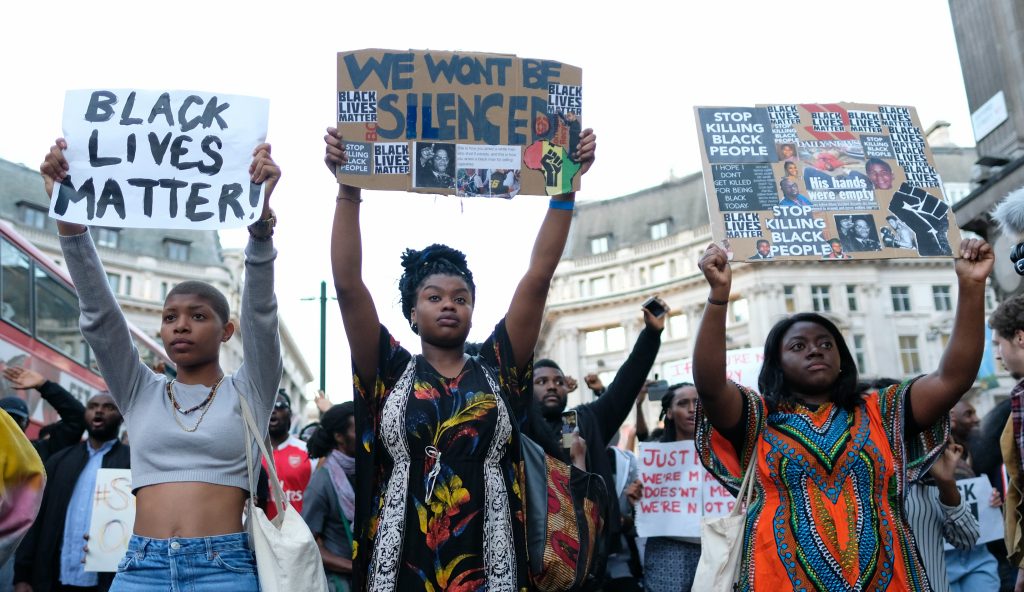
Next, I will reference the 2010s and 2020s, illustrating the beginning of diverse perspectives with movements such as Me Too, Black Lives Matter, and Canada’s Truth and Reconciliation Commission. The class of 2030 will reflect these diverse perspectives by employing “respectful design” (Tunstall, 2017 in MacGilchrist, 2020) and increased attention to differently-abled students (Kaczorowski et al., 2022).
Black Lives Matter – We Won’t Be Silenced: copyright Alisdare Hickson, CC BY-NC 2.0
Another topic the 2030 education system will be addressing is equity. Both K-12 and higher education are relying more and more on open educational resources (OER), although the market is not yet saturated (Educause, 2021). With increased flexibility of blended learning options, students can access their classes through any device, consequently cutting technology costs at a school level and decreasing access issues with lower-income students (Educause, 2021): more equity for all.
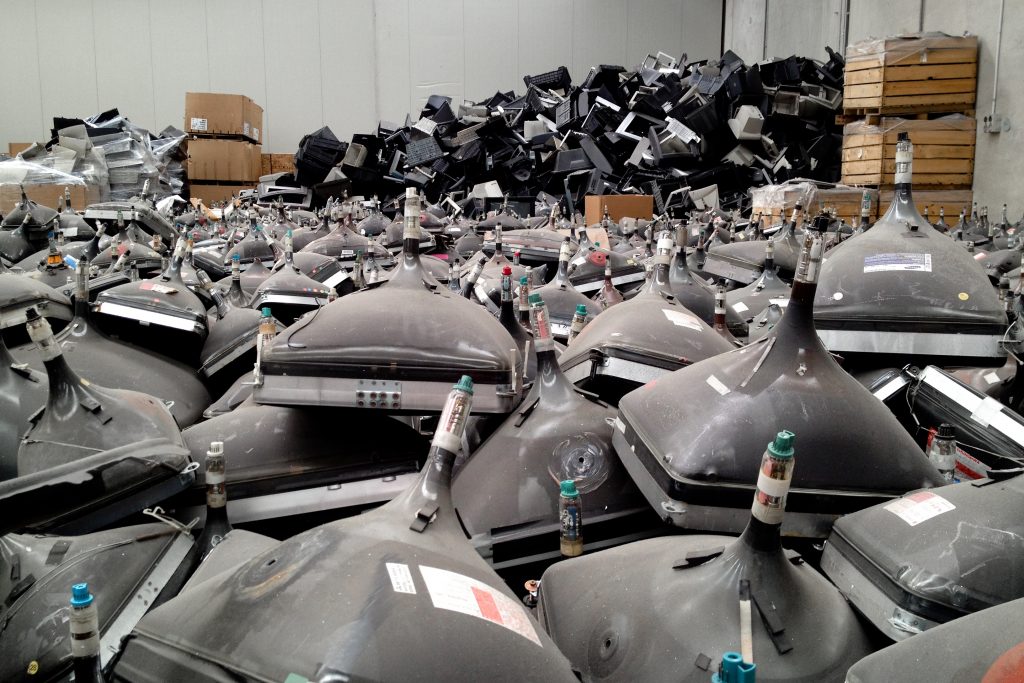
Finally, I will discuss the 2010s and early 2020s climate crisis; with increased concerns from our population about environmental concerns, the classrooms of 2030 will focus on Nardi et al.’s idea of “computing within limits” (2018). The 2030 educational system will place less concern on keeping up with the current ‘fad’ technology and instead look into sustainability in technology by purchasing more durable, high-quality products and refurbished technology, creating less ‘e-waste’(Selwyn, 2021).
E-Waste: copyright Edit Klein, CC BY-NC 2.0
I will use other articles to provide complementary views to support my outlook on the future. Overall, the future is looking bright and attempting to respond to social demands of flexibility, diversity, equity, and a greener future.
References
Educause. (2021). 2021 Educause Horizon Report: Teaching and learning edition. https://library.educause.edu/resources/2021/4/2021-educause-horizon-report-teaching-and-learning-edition.
Kaczorowski, T., McMahon, D., Gardiner-Walsh, S., & Hollingshead, A. (2022). Designing an Inclusive Future: Including Diversity and Equity With Innovations in Special Education Technology. TEACHING Exceptional Children, 0(0), 1-8. https://doi.org/10.1177/00400599221090506
Macgilchrist, F., Allert, H., & Bruch, A. (2020). Students and society in the 2020s. three future ‘histories’ of education and technology. Learning, Media and Technology, 45(1), 76–89. https://doi.org/10.1080/17439884.2019.1656235
Nardi, B., Tomlinson, B., Patterson, D.J., Chen, J., Pargman, D., Raghavan, B., & Penzenstadler, B., (2018). Computing within limits. Communications of the ACM, 61 (10), 86-93. https://doi.org/10.1145/3183582(2018). Computing within limits. Communications of the ACM, 61 (10), 86-93. https://doi.org/10.1145/3183582
Selwyn, N. (2021). Ed-Tech Within Limits: Anticipating educational technology in times of environmental crisis. E-Learning and Digital Media, 18 (5), https://doi.org/10.1177/20427530211022951
Statti, A., & Villegas, S. (2020). The use of mobile learning in grades K–12: A literature review of current trends and practices. Peabody Journal of Education, 95 (2), 139-147. https://doi.org/10.1080/0161956X.2020.1745613
This would be a cool paper that I would enjoy reading! If I were to give feedback, I’d say pick one topic and flush it out. Personally, I like respectful design and would be fascinated to learn more about it. We only have 1,200 words to work with.
Hi Terry,
Great work! I agree with Sarah that I think you should focus on one topic for the sake of this paper 1,200 word paper. I look forward to seeing what you choose to write about!