Tools, Tech & Learning: The Impact of Technology Debate

by: Radhika Arora & Lara Higgins

Spurred on by the COVID-19 pandemic, the world has seen an abrupt shift towards digital adoption, with an abundance of Edtech startups racing to design the most impactful EdTech learning tool. The great media debate between Richard Clark and Robert Kozma is perhaps more relevant today than it was when it began in 1993, with Robert Clark stating that media “are mere vehicles that deliver instruction but do not influence students achievement any more than the truck that delivers our groceries causing changes in nutrition” (Clark, 1983, p. 445). Kozma’s rebuttal was presented in his 1994 article “Will Media Influence Learning: Reframing the Debate,” where he argued that media in itself does not possess magical qualities and better learning in education.  He proposed shifting the focus onto the design and implementation of these tools, integrating them into evidence-based models of design to improve education and training. Clark and Kozma’s valuable theoretical and practical perspectives are interesting lenses through which to view current-day innovations in EdTech.

In the article ” Exploring Opportunities and Challenges of Artificial Intelligence and Machine Learning in Higher Education Institutions” by Valentin Kuleto, Milena Ilić, Mihail Dumangiu, Marko Ranković, Oliva M. D. Martins, Dan Păun, and Larisa Mihoreanu, the authors dive into how artificial intelligence (AI) and machine learning (ML) are making a significant impact on colleges and universities. They examine the benefits and opportunities of practical applications of AI and ML within higher education institutions. This includes the deployment of AI-driven chatbots to provide real-time support to students, utilizing AI-based analytics to gain insights into student performance patterns, behaviours, and engagement, and implementing ML algorithms to personalize learning materials and enhance teaching and learning experiences.

They also investigate the challenges associated with implementing AI and ML, issues related to data privacy, algorithm bias, the need for faculty training, and potential job displacement. Kuleto et al. also consider the ethical issues with implementing AI and ML, such as the responsible use of student data, addressing algorithmic biases that might disadvantage certain groups of students, and ensuring transparency in decision-making processes. This study shows that AI can make a big positive change in how students learn in college. It says that colleges and tech companies should be open to trying new things to stay competitive and meet students’ changing needs. Kuleto et al. also recommend more research to find practical ways to use AI in education, especially in countries with fewer resources.

With how rapidly technology changes, Clark might have acknowledged that the emerging trends offer intriguing possibilities for personalized and adaptive learning experiences. There would still need to be more careful considerations to ensure that these tools are thoughtfully integrated into pedagogical practices rather than relying solely on their technological allure. There is a need for a balanced approach. While AI and machine learning hold great promise, they are not a magical solution to all educational challenges. The effectiveness of these technologies must depend on how they are designed, implemented, and integrated into pedagogical practices.

Kozma sought to reevaluate the discussion around the influence of media on learning. The focus should not only be on whether the media has influenced learning but rather on effectively integrating it into the education process. It is crucial to align technological advancements with pedagogical goals. Media and technology should be seen as tools that educators can leverage to enhance learning outcomes. For AI and machine learning, this means thoughtful integration into instructional design. The article by Kuleto et al. contributes to this ongoing conversation; we need to consider the need to harness the potential of AI and ML while focusing on effective instructional design and realistic access for all learners.

Another interesting evolution in EdTech is the emergence of fully online distance education in K-12, along with the use of virtual reality (VR) as a medium for content delivery.   In his recent September 19, 2023 article and podcast episode for EdSurge, “Will Virtual Reality Lead More Families to Opt-Out of Traditional Public Schools,” Jeffrey R. Young introduces the Optima Academy Online, founded in 2022 in Florida by Erika Donalds. What’s unique and arguably radical about this charter school is that it’s touted as the world’s first fully online virtual school. Children in grades 3 to 8 spend 30 to 40-minute intervals experiencing VR lessons, with breaks in between for online peer connections, body movements or snacks.  Morning lessons delivered through VR headsets are followed by independent coursework in the afternoons, with the option to connect virtually to teachers, tutors or peers.  According to Erika Donalds, the school was established largely in response to COVID-19, and to the growing school-choice-movement.  According to Donalds, the traditional in-person, bricks-and-mortar models can’t respond fast enough to a growing demand for education, choice in delivery model, or individual student learning needs. Surely, Clark and Kozma couldn’t have imagined that educational technology would develop at such an alarming rate and in such innovative ways. Clark would most likely have arguments to share around replaceability, accessibility and the separation of method and medium in research methodology, while Kozma would argue for a greater focus on learning design and research into the learning impacts of digital mediums while calling for a paradigm shift in research methodology that guides educational research.  

At the core of Clark’s argument is the concept of replaceability.  He states that if the results of a learning outcome can be replicated using a single or combination of other mediums, regardless of the digital or analogue tools used to support the learning, then the cause can not be attributed back to one single learning tool. It is the instructional content and method that is embedded in the medium that influences the learning, rather than the medium itself (Clark, 1984, p. 1). As a result, it could be that Clark’s response to the emergence of a distance learning school leveraging virtual reality as the main medium for curriculum delivery is more about the flexible delivery or novelty of the new medium than scientific proof that the design model produces better learning outcomes for the learners than traditional or other digital mediums (Clark, 1984, p.4). Further to this point, he would argue that in an environment of competing complex social, economic and environmental problems and limited resources to solve them,  it is our responsibility to choose methods that are most cost-effective (Clark, 1994, p. 5). A new fully online school that leverages VR for the delivery of elementary school curriculum along with the traction that the school-choice-movement is gaining, supports Kozma’s call for new models of learning design and greater research and focus on media theory. With the proliferation of digital tools and environments in education along with the increased need to develop digital literacy, there is indeed an urgency to generate scientific data to inform choices moving forward (Kozma, 1994, p.7).

Contrary to Kozma’s position that EdTech is a design science and not a natural science, there is a need to understand the effect that digital technologies have on the health and wellness of children and adult learners.  This is supported by Stanford VR researcher Jeremy Bailenson’s concerns around the still unknown cognitive effects of long-term VR use with children in K to 12 over weeks, months and years (Bailenson, as cited in Young, 2023, para 14). His VR lab has implemented a 30-minute maximum for VR sessions with adults, finding that use can result in some users suffering from headaches, nausea and even reality blurring, which is the difficulty differentiating between reality and VR simulation (Bailenson, as cited in Young, 2023, para 15). This need to gain a better understanding of the impact that technology has on our well-being could lend support to Clark’s notion of separating method and medium in research, as opposed to Kozma’s stance on their integration. 

Regardless of what side of the Clark versus Kozma debate you fall on, hopefully, we can all agree on the need for technology-enhanced pedagogies and andragogies that contribute to the development of digital literacy skills to support learner success in the digital age. In addition, the debate emphasizes the need for technology to enhance, not replace effective teaching and learning. Kozma’s concluding statement seems to ring true as we find ourselves in post-pandemic enlightenment, “In what ways can we use the capabilities of media to influence learning for particular students, tasks, and situations?” (Kozma, 1994, p. 19). As education continues to evolve, this topic reminds us that it is a broader conversation on understanding that technologies such as AI, ML and VR serve as digital tools and environments to amplify educational outcomes and help to address the issue of equality.

References

Clark, R. E. (1983). Reconsidering Research on Learning from Media. Review of Educational Research, 53(4), 445–459. https://doi.org/10.3102/00346543053004445

Clark, R. E. (1994). Media will never influence learning. Educational Technology Research and Development VO, 42(2), 21. doi.org/10.1007/BF02299088

Kozma, R. B. (1994).Will media influence learning: Reframing the debate. Educational Technology Research and Development, 42(2), 7-19.

Kuleto, Valentin, et al. “Exploring Opportunities and Challenges of Artificial Intelligence and Machine Learning in Higher Education Institutions.” Sustainability, vol. 13, no. 18, 18 Sept. 2021, p. 10424, https://doi.org/10.3390/su131810424.Young, Jeff.R. “Will Virtual Reality Lead More Families to Opt out of Traditional Public Schools? – EdSurge News.” EdSurge, 19 Sept. 2023, www.edsurge.com/news/2023-09-19-will-virtual-reality-lead-more-families-to-opt-out-of-traditional-public-schools.
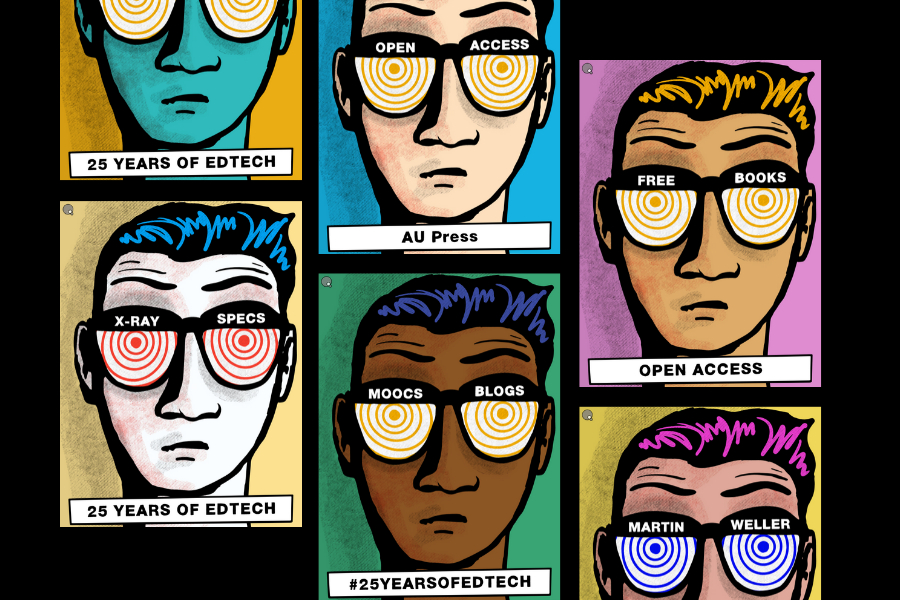
25 Years of Tech – Reflect on Reading – 2005

Given my background in IT, I always find it intriguing to explore fresh perspectives on the ever-changing landscape of educational technology. Having delved more into the chapter of 25 years of Tech from Weller’s perspective one theme that particularly piqued my interest was the role of videos in education. The potential of video-based learning resonated with me on multiple levels.

Video-based learning has undergone significant evolution in recent years, offering a range of flexible formats, from instructional to animated to simulative. Videos are versatile tools that provide an interactive, visual, and auditory means of education, catering to a diverse audience with varying learning preferences. Their reliability and accessibility make them suitable for students of all ages and socioeconomic backgrounds, thus enhancing inclusivity and reach.

I’ve personally witnessed the positive impacts of well-crafted educational videos. When I assumed a leadership role within my team, I recognized that using videos was an effective way to share information among team members as a learning option compared to traditional methods such as written materials or manual step-by-step instructions, videos proved to be more engaging and effective. They not only encouraged active learning but also provided clarity on complex concepts, leading to a deeper understanding of the subject matter. Additionally, videos facilitated just-in-time learning, removing barriers by providing access to content at any time. Particularly in the corporate world, where scalable and cost-effective training solutions are in high demand, videos possess the potential to become the default medium for instruction in the future.

Reference

Weller, M. (2020, February). 25 Years of Ed Tech. AU Press—Digital Publications. 
https://read.aupress.ca/projects/25-years-of-ed-tech  .

25 Years of Tech – Reflect on Reading – Ch 1-8

It is very interesting to see where Weller’s opinion starts on the beginning of his view of 25 years in tech. In the first eight chapters of “25 Years of Ed Tech” by Martin Weller, it takes a historical look at the evolution of educational technology. His perspective is unique to the fact of what he considered the most impactful moments of technology. Here are some key points and observations I noted in these chapters:

1. Historical Perspective: The emergence of digital technology in education, and showing how it has evolved over the past 25 years. It’s surprising to see how far technology in education has come and how quickly it has advanced.

2. Evolution of Online Learning: Weller emphasizes how online learning has grown from its early stages to become a vast and continually evolving ecosystem. It’s compared to a living language that changes and adapts with time, driven by educational innovations and technological advancements.

3. Challenges to E-Learning: One surprising revelation is the initial resistance to e-learning in higher education and how the academic community was concerned about the influence of private companies and the commercialization of academics. There was a widespread assumption that face-to-face learning was superior and that online education was of lower quality. This idea of in-person education being inherently better still continues today despite the advancements in online education.

4. Relevance of Past Concerns: Some concerns raised about the web are still relevant. These concerns include the difficulty of governing or censoring the web and the topic of AI and its effect on whether to embrace or reject it.

If one were to write a similar book, the choice for me would be around 1995, which personally marked a more significant point for me when the internet began to have a substantial impact on education. It was a period when online learning and digital technologies started to gain traction and change the landscape of education. Therefore, beginning the story of educational technology around 1995 allows for an exploration of the developments and challenges that have shaped the field over the past 25 years.

Reference

Weller, M. (2020, February). 25 Years of Ed Tech. AU Press—Digital Publications. 
https://read.aupress.ca/projects/25-years-of-ed-tech  

Jane McGonigal – People in the Field

Jane McGonigal is a renowned game designer and accomplished author, holding a Ph.D. in Performance Studies. With a Ph.D. in Performance Studies, she currently holds the Director of Game Research and Development position at the non-profit organization Institute for the Future. She is a leading advocate for gamification, applying game design principles and mechanics to non-game contexts, such as education and workplace settings. One of her notable projects is “SuperBetter,” designed to help individuals build resilience, recover from challenges, and achieve personal goals.

McGonigal is also renowned for her captivating TED talks, with “Gaming can make a better world” being an interesting watch. In this talk, she poses intriguing questions about the transformative power of games: “What about games makes it impossible to feel that we can’t achieve everything? How can we take those feelings from games and apply them to real-world work?” (TED, 2010). Jane has many inspiring achievements, and her most influential book, “Reality Is Broken: Why Games Make Us Better and How They Can Change the World,” explores the positive impact of games on individuals and society. It delves into game engagement psychology and how games can be applied to real-world challenges.

I chose Jane because her focus on using games for education is vital in today’s digital age. With both simple mobile games and complex virtual worlds, her advocacy for gaming as a learning tool is highly relevant. It is vital for the new generation of learners, referred to as “iPad kids,” who can significantly benefit from the educational potential of modern games.

You can explore more about Jane on her website: You Found Me

References

McGonigal, Jane. Reality Is Broken: Why Games Make Us Better and How They Can Change the World. Google Books, Penguin, 20 Jan. 2011, books.google.ca/books?id=yiOtN_kDJZgC&lpg=PT10&ots=fkniQP6XTt&dq=jane%20mcgonigal&lr&pg=PT30#v=onepage&q=jane%20mcgonigal&f=false. Accessed 18 Sept. 2023.

—. “You Found Me.” You Found Me., you found me., 2018, janemcgonigal.com/.

“Social-Emotional Learning, Mental Health & Resilience Training.” Superbetter.com, SuperBetter, LLC, superbetter.com/. Accessed 16 Sept. 2023.

TED. “Gaming Can Make a Better World | Jane McGonigal.” www.youtube.com, Youtube, 17 Mar. 2010, www.youtube.com/watch?v=dE1DuBesGYM&ab_channel=TED. Accessed 1 Nov. 2022.

Pause & Ponder: Reflections in Podcasts- George Veletsianos

First, I would like to thank Dr. George Veletsianos for taking the time to answer some of our questions in our final class assignment.

One of the questions posed was, “What foundational research studies or areas of research around adult learning and technology should an aspiring research practitioner or designer explore, and why? If this question was asked pre-COVID-19, would the answer differ, and why or why not? “

Listening to Dr. Veletsianos’s podcast, much emphasis was placed on not limiting our reading and to always keep exploring and expanding our research. Reading synthesized material and summarizing research will help us grow into good researchers. These summaries give us a big picture of what’s going on. Reading these lets us learn about trends, gaps in what we know, and what needs more research. 

Another point that stuck out was how tech and teaching Influence each other. Technology and teaching are not separate things. They can change each other. Typically, teachers come up with ways to teach and then pick the right technology. Dr. Veletsianos said, “PowerPoint may change my teaching, but my teaching may also dedicate how I use PowerPoint.” (2023). Sometimes, new technology can change how we teach, and learning about this relationship shows us how to make the most of technology and teaching.

These are just a few points that stuck out to be taken into consideration when thinking about how technology changes teaching to understanding the best ways to use our resources for learning. By reading and learning from research, we can become pros at using technology to help people learn better.

Veletsianos, G. (2023, August 14). LRNT 522 Questions & Answers about Research by George Veletsianos: Teams One, Two, and Three Responses.

https://www.dropbox.com/scl/fi/d5f7kv8ywckl1me78vha2/Input-Device-Recording-20230814-0908.mp3?dl=0&rlkey=yb5fw0xw7irx86zezrbxdgrhw

Assignment 2 – Mobile Learning

Team quality highly values your insights and feedback. Please don’t hesitate to share any thoughts or perspectives you might have on Mobile Learning. Additionally, if you have any questions or comments regarding the topic discussed, we would be more than happy to provide further clarification or delve deeper into any specific areas of interest. 

Activity 3 | What makes a good research question?

There are many things to consider when considering what makes a good research question. A good research question is fundamental for leading meaningful and effective research. Here are 2 key patterns that I have seen when it comes to the characteristics of a good research question:

Be clear and focused: A good research question should be clear and concise, focusing on a specific subject, statement, or problem within the broader area. It should avoid being too general or too limited, ensuring that the research remains manageable and attainable (Bell, n.d.).

Reference

Bell, T. (n.d.-b). LibGuides: Developing your essay: 2. What focus will you take in the work? Libguides.royalroads.ca. Retrieved July 1, 2023, from https://libguides.royalroads.ca/developing_essay/focus

The Pros & Cons of Digital vs. Paper Note Taking & Reading

By Christopher Ross, Radhika Arora, & Tracy Tang

The tools we use can have a significant impact on our success. In the era of technology, academia now heavily involves the use of electronics to teach and share information. As we learned in the course debate, Digital Learning Environments are varied and can differ from one another.

With academia’s taking advantage of digital options and allowing students to be able to access resources more freely, there is concern that digital learning will have the consequence of newer generations losing skills to read and write without technical assistance and support.

 An example of newer generational loss in seen in some countries is the ability to write cursive. Students are now being taught how to type on the keyboards. In this post, we’ll examine the positive and negative nature of traditional paper and digital use for note-taking and reading as it applies to educational environments.

Digital Note Taking

Digital note-taking is the practice of taking notes with digital tools which can include a variety of technologies such as audio, video, photography, text, data visualization, and illustration with the assistance of electronic devices.

Benefits of Digital Note Taking

Collaboration 

A key benefit of digital note-taking is the ability to share information quickly between students and adapt the information immediately for those with and without learning disabilities. “Use of digital note-taking tools may allow students with learning disabilities to better use working memory, visuals, and auditory learning capacities to complement information processing during lectures and review.” (Belson et al, 2013 p.13) 

Security

The ability to store digital notes electronically and collaborate with others also leads to the ability to assemble documents online and have a backup of those materials to fall back on. This can take the form of multiple copies but also multiple different versions which enables learners to branch off into alternate avenues with the knowledge they can return to earlier work.

Efficiency

Data entry with digital note-taking is often faster and allows for easier input compared to traditional pen-and-paper approaches. While it’s impossible to predict individual learners, “the average American can type 40 words per minute but can only handwrite 13 words per minute.” (Robare, 2021).

Other Benefits of Digital: Reading & Writing 

  • Able to customize device settings – Font, size, color, and brightness (light or dark screens) 
  • Clear and organized writing – easy to read through
  • Automatic corrections of spelling, grammar, & syntax
  • Swiftness of predicted text completion
  • Linking of other documents, websites, graphics, diagrams, and tables or videos
  • Ease of duplication of text, images, and documents
  • Timesaving in editing & alleviate the stress of locating words or phrases
  • Able to hold a large amount of data and information in one space
  • Easier to move, organize and sort notes
  • Eco-friendly

Disadvantages of Digital Note Taking

Accessibility in Learning

With digital note-taking, the limits of screen size add an extra dimension of complexity for students with visual impairment or learning impairments. The simple act of redistributing notes in a meaningful way for people on the autistic spectrum, or similar non-traditional processes can become cumbersome and challenging within a locked visual environment. As the authors discuss in the article Developing a Holistic Approach for E-Learning Accessibility, “there is a need for a more sophisticated model for addressing e-learning accessibility which takes into account the usability of e-learning, pedagogic issues and student learning styles in addition to technical and resource issues.” (Phipps and Swift, 2004)

 Understanding of Digital Technology 

With the rapid change of digital technology, there is a need to offer training support for less technologically focussed individuals including older adults.

“Rogers and colleagues found that older adults were less likely to use automatic teller machines (ATMs) than younger adults. However, the majority of the older people in their sample indicated they would be willing to use ATMs if trained to do so.” (1996)

Digital Equity

Requiring and mandating students to use digital devices for coursework can present issues with access and equity. From social class to a simple lack of access due to geography or reliability, dependency on technology by its nature can lead to inequity in a digital space.

 “No matter how powerful in educational terms a particular medium or technology may be, if students cannot access it in a convenient and affordable manner they cannot learn from it” (Bates, 2019).

 “[Shirley] Malcom points out that lowered cost and greater physical access to computers will not by themselves be sufficient to improve the lot of disadvantaged students.” (Nickerson, R. S., & Zodhiates, P. P, 2013)

Other Disadvantages of Digital: Reading & Writing 

  • System and software can differ per user changing the look of notes and text
  • Not always straightforward to use
  • In a collaborative space not easy to distinguish who wrote, changed, or edited documents 
  • Unless publicly shared there can be access and permission issues
  • Eye strain and fatigue
  • Distracting – Ads, banners, pop-ups, graphics, and design flaws in certain websites
  • Plagiarism and copyright issues
  • Can be expensive, fragile and has a limited lifespan
  • Concern about access to internet, electricity, and battery life
  • Impersonal & formal
  • Locked to the display screen of the electronic devices
  • Not easy to spread multiple documents, pages, text, and seamlessly move through them

Written Notes

Written note-taking is an important skill for everyone to master, it can include written text as well as illustrations and drawings by hand.

Advantages of Written Notes

The Encoding Hypothesis

“The encoding hypothesis suggests that the processing that occurs during the act of note-taking improves learning and retention.” (Mueller and Oppenheimer, 2014, p.1159) essentially theorizing that the acts of listening, processing, and summarizing during the moment of learning add benefit in the retention of knowledge.

Learning Style Freedom

Unlike the nature of digital note-taking, written notes allow for learners of different styles to quickly access shortcuts they’ve developed over a lifetime. Shortcuts such as indents, symbols, choices of inks or formatting codes that are known only to themselves. These shortcuts allow individual learners to manage information both within a single note and on a larger scale by organizing notes into formats that can’t easily be replicated within a digital environment.

For example, the placement of coloured sticky notes or highlights on text to amplify meaning or organizing large collections of notes in a graphical manner with circles of knowledge spread across a tabletop.

Simplicity

Whatever benefits students can gain from building digital skills does not translate equitably across all students due to reasons of economic, cultural, and social status. One distinct advantage of written notes is their simplicity which is often overlooked in our desire to over-emphasize the power of digital skills.

 “One challenge is that approaches to digital skills overemphasize the role of basic operational skills (e.g., how to install apps or use Internet browsers) despite indications that it is a combination of skills, including the social and creative (e.g., sense of self-efficacy in using social networks, capacity to create digital content) that generate positive tangible outcomes (Helsper et al., 2015).”

Flexibility for Learners

Learners should be encouraged to build literacy and critical thinking about the different information and communication technologies available. Then they can decide to choose/use/adapt the tools that support the way they learn best. 

 “I decide whether to adopt new devices and software/apps/services based on their value to me.” Beetham, H. (2015, Nov 10)

Other Advantages of Paper: Reading & Writing  

  • Handwriting is more expressive of a person’s emotions, and personality and is unique to the individual
  • Inexpensive & disposable
  • Tangible and portable
  • Easier to mark up, highlight, draw & doodle
  • Greater freedom to write anytime and anywhere
  • Larger real estate to spread papers and see the big picture
  • Able to switch between different writing tools – pencil, pen, marker, etc.…
  • Less tiring to read large amounts of text
  • Simpler to write formulas & math equations 
  • Easier to work through thought process more critically
  • Freedom of movement and location
  • Better comprehension on spelling, grammar, and flow process
  • Awareness of each individual’s work in collaborative spaces

Disadvantages of Written Notes

Time-Consuming

The primary disadvantage of written notes is that they can be time-consuming to create, as well as laborious to search through at a later date.  Additionally, the sharing of written notes is dependent on the transfer of physical content, requiring duplication and transportation, or one party to read the content to another which can introduce a variety of errors in tone, urgency, or understanding.

Document Security

Without proper care and maintenance, handwritten notes can easily be smudged, torn, damaged or become illegible through the simple passage of time. The neglect of these aspects can lead to the permanent degradation of the notes, leaving their contents inaccessible to future reference.

Accessibility to Other Readers

Handwritten notes, especially those transcribed in a hurry, can lack the formatting and structure needed to easily convey ideas to other readers in an effective manner. The shortcuts described earlier as an advantage for written notes can also compound this fault as those meaningful clues are lost without the cipher.

Other Disadvantages of Paper: Reading & Writing  

  • It can be more difficult to correct and edit using dictionaries and thesauruses
  • Can become messy and disorganized
  • Slower & discomforting to the hand
  • Handwriting is not easily readable – e.g., Doctor’s notes 
  • Restricting and heavy – e.g., Multiple textbooks back and forth to many classes

Digital and Paper Comprehension

 In an article by Kazanic. Z “Results indicate that student still prefer traditional paper instead of digital screen for their reading activities” (2015, P.1), we see the use of paper and digital is not mutually exclusive, each individual has their own preference on which tool works better for them in writing and reading. 

 Fortunati & Vincent states “the life cycle of a document includes a close intertwining of paper and digital versions: digital for searching, paper for integrating multiple sources; paper for planning, digital for drafting; paper for editing/proofreading, digital for finalizing; mostly digital for distribution and workflow; paper for reading (especially longer documents) and digital for archiving/filing.” (2014, P.1). You can see that the use of digital and paper can work hand in hand with one another. A hybrid environment when it comes to learning has a greater advantage rather than focusing on one side of the spectrum.

Conclusion

In conclusion, written and digital note-taking each has advantages and disadvantages. Each method is effective for different styles of learning and brings its own unique challenges. Taking the time to evaluate each will help students find the right balance of effectiveness and usability for the individual and through trials will help each person find the perfect system for their individual needs. Learning designers, administrators, instructors, and those who will be influencing the type of tools students must use, or have access to, should consider issues of access and equity when making these decisions in course design and delivery.

References

A Brave New World: Technology & Education. (2018). Trends Shaping Education Spotlight 15. OECD.org. https://doi.org/10.1787/9789264284395-en

Belson, S. I., Hartmann, D., & Sherman, J. (2013). Digital Note Taking: The Use of Electronic Pens with Students with Specific Learning Disabilities. Journal of Special Education Technology, 28(2), 13–24. https://doi.org/10.1177/016264341302800202

Fortunati, L., & Vincent, J. (2014). Sociological insights on the comparison of writing/reading on paper with writing/reading digitally. Telematics and Informatics, 31(1), 39–51. https://doi.org/10.1016/j.tele.2013.02.005

Jensen, M. M., Thiel, S.-K., Hoggan, E., & Bødker, S. (2018). Physical Versus Digital Sticky Notes in Collaborative Ideation. Computer Supported Cooperative Work (CSCW), 27(3-6), 609–645. https://doi.org/10.1007/s10606-018-9325-1

Kazanci, Z. (2015). University Students’ Preferences of Reading from a Printed Paper or a Digital Screen ― A Longitudinal Study. International Journal of Culture and History (EJournal), 1(1), 50. https://www.academia.edu/33908699/University_Students_Preferences_of_Reading_from_a_Printed_Paper_or_a_Digital_Screen_A_longitudinal_Study

Kelly, B., Phipps, L., & Swift, E. (2004). Developing a Holistic Approach for E-Learning Accessibility. Canadian Journal of Learning and Technology / La Revue Canadienne de l’Apprentissage et de La Technologie, 30(3). https://www.learntechlib.org/p/43221/

McLaughlin, R., & Kamei-Hannan, C. (2018). Paper or Digital Text: Which Reading Medium is Best for Students with Visual Impairments? Journal of Visual Impairment & Blindness, 112(4), 337–350. https://doi.org/10.1177/0145482×1811200401

Mueller, P. A., & Oppenheimer, D. M. (2014). The Pen Is Mightier Than the Keyboard: Advantages of Longhand Over Laptop Note Taking. Psychological Science, 25(6), 1159–1168. https://doi.org/10.1177/0956797614524581

Nickerson, R. S., & Zodhiates, P. P. (2013). Technology in Education: Looking Toward 2020. In Google Books. Routledge. https://books.google.ca/books?hl=en&lr=&id=NzmcYzz4Y0EC&oi=fnd&pg=PR3&dq=Nickerson

Robare, G. (2021, September 7). On handwriting. The Princetonian. https://www.dailyprincetonian.com/article/2021/09/handwritten-versus-typed-class-notes#:~:text=Typing%20is%20far%20faster%20than

Rogers, W. A., Fisk, A. D., Mead, S. E., Walker, N., & Cabrera, E. F. (1996). Training Older Adults to Use Automatic Teller Machines. Human Factors: The Journal of the Human Factors and Ergonomics Society, 38(3), 425–433. https://doi.org/10.1518/001872096778701935

Visual Network

For this assignment, I took some time to review my networking map and then rewatched Dave Cormier’s work to understand how I wanted to map this out. I still was unsure of how I wanted to approach this Visual Map. I took some time to review other cohorts’ blogs and see what direction they seem to take. Each person has a very interesting way of approaching this activity.

After a bit of sleuthing and exploring I was ready to start. I used the Kuma platform as it is very user-friendly and easy to jump into it right way. I broke down my quadrants of networks into groups of people I interact with. Family, Friends, School, Work & Online connections. I then added the categories of networks I use.

After having layout my bubbles, I choose one quadrant first and thought about which of the categories I use to engage them with. Once I had powered through all quadrants, it is amazing to see how much overlap there was and how one connection can be used more frequently among groups and how some can be singular in their usage.

My most connected was seen to be WhatsApp and my least connected group to a quadrant was One Drive.

As we progress through this degree and explore new tools I am interested to see the changes in usage towards the end of this program.

To view map larger click link below:

Radhika Arora Visual Map Large

Digital Identity and Presence

Since I stepped into the fore of technology and its uses, one piece of advice that has stuck with me since my diploma years is on being aware of your presence online and how much you share and what you give out to the world wide web. Because once it’s online it’s very hard to remove it. The exercise of mapping the use of my typology, gave me a moment of pause, as I consider what I use consistently, how I interact with it and what I use infrequently and how my use differs there. I find that in a majority of the networks I use, I am a resident as I maintain certain personas different from my IRL self. 

Up until now I mostly maintain a presence of anonymity of my existence by having personas. However, a select few networks showcase more of the real me, those networks are LinkedIn and my personal and work emails. Kelly Schryver’s (2013) blog asks the question “Will you be ‘Googled Well’? “ and I can confidently state that yes I can be googled well as I have maintained a high level of privacy when it comes to my keeping my digital footprint private

Up till now, I have maintained a quiet presence, after reflecting and seeing my map I find myself considering the questions asked in the conclusion of the article by White and Cronu, “‘What am I going there for?’, ‘What am I hoping to achieve?’, ‘Which place best serves my purpose?’, ‘How long do I intend to stay?’, ‘Have I got the skills that I need?’ and ‘Am I happy to be on my own, or would I prefer to be in company?’ (2011). “

I find that I fall short in maintaining connections virtually as it can become quite cumbersome and tiring to be consistently engaged once my query and purpose have been satisfied. I am mostly content on my own but I have had desires to do more creative things online which would open more opportunities to be seen and heard. 

To overcome this hurdle one of the first steps that has been taken is this MALAT program and it being fully online. I am now engaging more in forums, virtual discussions, synchronous meetings, and the creation of an academic blog. 

 A few of the desires I have had are:

  • To open a digital downloads store to start a passive income stream using my graphic design skills and start cultivating them more. 
  • To start a stream channel which showcases things of interest or guidance and maintain it consistently as the 1-2 attempts I made ended up with me falling off the map and never coming back.

However, to start with a more measurable goal I will:

  • Maintain the MALAT blog frequently 
  • Learn more about WordPress as an add to my graphic design skill
  • Connect more in discussions and join more guest speaker events 
  • Learn and play around more with creative digital environments such as Canva & mid-journey

I am excited to embrace the opportunity to step outside my comfort zone and challenge myself and my personal growth, and actively immerse myself in the learning process.

References

Schryver, K. (2013, February 5). Guest Post | Who Are You Online? Considering Issues of Web Identity. The Learning Network. https://archive.nytimes.com/learning.blogs.nytimes.com/2013/02/05/guest-post-who-are-you-online-considering-issues-of-web-identity/

White, D. S., & Le Cornu, A. (2011). Visitors and Residents: A new typology for online engagement. First Monday, 16(9). https://doi.org/10.5210/fm.v16i9.3171