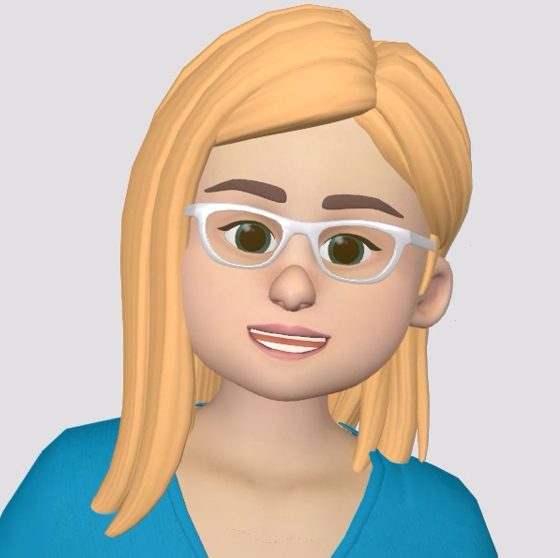
Image source: created by Russell, M via Zoom
During my initial blog exploring AI-enabled tutors, I mentioned that I get enthralled by new tech tools. However, I would now describe my enthusiasm as cautiously optimistic when learning about the impact of all the latest AI tools embracing the marketplace. This blog highlights the bumpy road of inquiry into AI-enabled tutors.
In my initial blog and learning plan, I highlighted my interest in exploring the effectiveness and efficiencies gained from AI-enabled tutors, particularly in trades education. As my team started on this journey to explore AI-enabled tutor and chatbot technology, we wrote about our eagerness to dive into the research on our first Team 3 blog. After further investigation, we found that this was when the road became bumpy. My team could not locate open educational resources with courses to trial that included AI-enabled tutors.
Due to this challenge, the team shifted to investigating how AI Agents are created using an activity from Middlebury College (2024) called Demystifying AI. After making my AI Agent, I was underwhelmed by the unattractive image you can view on our Team 3 final blog. A significant takeaway from the activity is the importance of learning how to develop prompts to generate quality-worthy agents skillfully. Bowen and Watson (2024) reiterated the discovery by emphasizing that “two complaints about AI responses are that they are either wrong or boring,” which is a result of “poor prompting” (p. 48).
Have you noticed the intertwining terminology from tutors, chatbots, and agents? In a systematic literature review, David et al. (2023) highlighted additional terms like conversational agents and bots. Next, I will introduce the term avatar.
My Zoom avatar (see above) image quality is a massive improvement over the one shown previously on the Team 3 blog. Moreover, the Zoom avatar was created through a paid subscription. As my team found that learning agents embedded in courses are through paid subscriptions, this inquiry had me pondering other alternatives.
For instance, since this agent-like character technology is currently enterprise subscription-driven, could text-only options suffice for learning? I was enlightened by the presentation and blog from Team 1 as they highlighted the use of platforms like ChatGPT for customizing learning experiences. Therefore, as part of my investigation, I am trying this free software from Contact North | Contact Nord (2024) called AI Tutor Pro to learn more about its effectiveness in student engagement.
Therefore, my question now is …
Could free text-only-based tutoring software effectively engage students on a path to success? I am picturing the scenario much like math students use calculators; however, the tutor is not providing direct answers like a calculator. The tutor is on students’ mobiles, assisting and coaching students on the side through formative engagement, as I believe feedback is crucial for effective learning. Furthermore, instead of teachers being worried about being replaced by bots (Selwyn, 2019), I speculate teachers would appreciate the assistance.
I am keen to learn your feedback as I explore further. Thanks!
References
Bowen, A. J. & Watson, C. E. (2024). Teaching with AI: A practical guide to a new era of human learning. John Hopkins University Press.
Contact North | Contact Nord. (2024). AI Tutor Pro. https://www.aitutorpro.ca/
Middlebury College. (2024). It’s not AI, It’s Memorex AI – Demystifying AI.
Selwyn, N. (2019). Should robots replace teachers? AI and the future of education. Polity Press.
Brenna
I really pinged on your qualification of a text-based assistant. There really is something that feels less threatening about the text environment (to me, anyway) than our uncanny friends. I often wonder about how modality shapes these experiences. I haven’t read enough to know, but it *feels* to me like there is a difference. But then again, I have had very frustrating experiences with text-based customer service bots, too.
Marni Russell
Thanks for your response, Brenna. I am intrigued to explore this topic of text-only engagement further. I see Tracy responded on the Team 3 blog about flashbacks regarding Clippy and having the option to disengage. When I asked my partner about Clippy, he spoke negatively about the paperclip. In turn, I liked the enthusiastic paperclip helper popping on my monitor. The concept of having choices is a good one. I think back to Anne-Marie talking about being taught by Scooby-Doo. I too would enjoy learning from the mischievous dog.
Cheers,
~M
Asha
Marni, your journey from enthusiastic exploration to cautious optimism in the realm of AI-enabled tutors is compelling. The distinction you make between various terms like tutors, chatbots, agents, and avatars is particularly insightful and highlights the diversity of AI applications. It’s intriguing how these terminologies overlap and diverge, impacting our understanding and expectations of AI tools. Your point about the potential of free text-only-based tutoring software to engage students effectively is thought-provoking as they could possibly provide a non-intrusive form of guidance.
That being said, I feel like your blog is a reminder that while we try to keep up with technological advancements, its integration into education must be critically examined to ensure it serves its purpose effectively and equitably. Looking forward to seeing how your exploration unfolds!