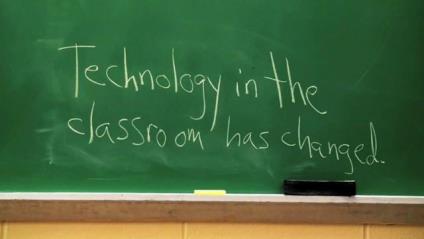
Before delving into Weller’s 25 Years of Ed Tech (2020), my knowledge of Learning Management Systems (LMS) and wikis was limited, and I was unaware of their significant role in the evolution of educational technology. The revelation that Wikipedia, a platform I had always assumed was curated solely by experts, is actually open for all to edit was a delightful surprise. The fact that it relies on a diverse community of volunteers, from all walks of life, to add, update, or revise content was truly eye-opening. This unique structure not only makes Wikipedia a valuable resource but also underscores the importance of information reliability, as anyone can edit the content, potentially leading to inaccuracies.
In 25 Years of Ed Tech, Weller (2020) presents the argument that educational technology’s evolution is woven with social and cultural contexts, which I found compelling because it challenges the view of the field. His critique of the unfulfilled promises of early e-learning platforms, particularly Bulletin Board Systems (BBS), is interesting, what platforms did they use back then? Initially, I viewed educational technology as mainly propelled by technological innovation. However, Weller’s focus on broader factors like societal needs, pedagogical theories, and economic influences has enriched my understanding of the field’s history, leading me to adopt a more critical perspective on current technologies.
If I were to write a similar book on educational technology, I would begin after 1994, as the period following this year provides a more enriched context due to the expansion of the Internet and the introduction of online learning platforms and mobile technologies, which have significantly transformed education. This period provides a more comprehensive landscape to explore and analyze the impact of technological advancements on learning. Additionally, writing after 1994 allows for examining the evolution of educational technology and its practical applications over time. The rapid technological changes, such as the rise of AI in education, and their implications on pedagogy and access to education offer a more compelling basis for a relevant book, as they present new challenges and opportunities that need to be addressed in the field of educational technology.
References
Weller, M. (2020). 25 Years of Ed Tech. Athabasca University Press.

4 September 2024 at 1:14 pm
Isn’t the fact that Wikipedia can be edited by anyone amazing? In the past I have actually made this an assignment for my class, where they do independent research and write up something to post. Then we wait and see how long it takes for someone else to edit our work. It is such a fun activity and the kiddos learn so much from it.
8 September 2024 at 3:22 pm
Hi Lauren,
I am still amazed about wikipedia, and I would like to explore this more as I am curious as to how it can be done. Your Wikipedia assignment highlights a creative and engaging way to help students understand both the collaborative nature of Wikipedia and the critical importance of research and accuracy in public information sources. I believe this opportunity will give learners firsthand experience in contributing to a global knowledge base, which is empowering. They learn not only about the topics they research but also about the collaborative editing process, peer review, and the importance of sources. I can also see this activity serve as an opportunity to discuss critical thinking and digital literacy which no one can ever get enough of.
I am very interested in how long did it take your students to begin making edits? I can imagine each of them would likely walk away with a deeper respect for the responsibility involved in contributing to shared knowledge platforms like Wikipedia.
6 September 2024 at 9:39 am
I love how Weller really makes us rethink the forces behind educational technology! It’s easy to assume that it’s all about innovation, but the way societal needs and economic influences shaped ed tech is so eye-opening. It’s interesting to consider how, beyond the cool tools and platforms, the real push came from a need to address things like expanding access to education or adapting to economic constraints. I wonder with the introduction to AI, how it will impact us and how society and the economy will influence it? What do you think?
8 September 2024 at 3:28 pm
Hi Heidi,
I completely agree with your reflection on Weller’s insights about educational technology. He does a great job of revealing how societal and economic factors have significantly influenced the development of ed tech, often more so than technological innovation alone. It’s fascinating to realize that tools we think of as purely innovative were driven by deeper needs, whether to expand educational access or to address budgetary constraints.
As for AI, I think we’re already seeing similar patterns emerge. The excitement around AI often centers on its cutting-edge capabilities, but societal needs and economic pressures will likely steer its development. For instance, AI could address the growing demand for personalized learning in large, diverse classrooms (activities, exams, tests, assignments, etc.) or help institutions struggling with staff shortages by automating administrative tasks. There is so much more about AI that we still don’t know, and I feel we are just at the beginning stages. I share your curiosity about how AI’s future will unfold, especially given how intertwined technology, society, and the economy have always been in shaping education. Do you think AI has the potential to bridge educational gaps, or could it widen them further?