Educational Technology Didn’t Start in 1994: A Reflection on Weller’s 25 Years of Ed Tech
Reading Weller’s 25 Years of Ed Tech made me wonder less about when educational technology began and more about what actually qualifies as EdTech. Weller begins his history in 1994, while acknowledging that his starting point and yearly selections are deliberately subjective (Weller, 2020, pp. 6–7). Fair enough, although 1994 still feels somewhat era-centric to those of us who had already been staring into glowing computer screens for more than a decade.
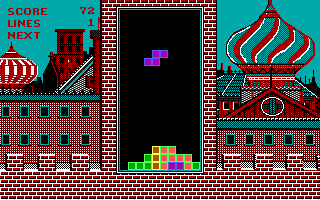
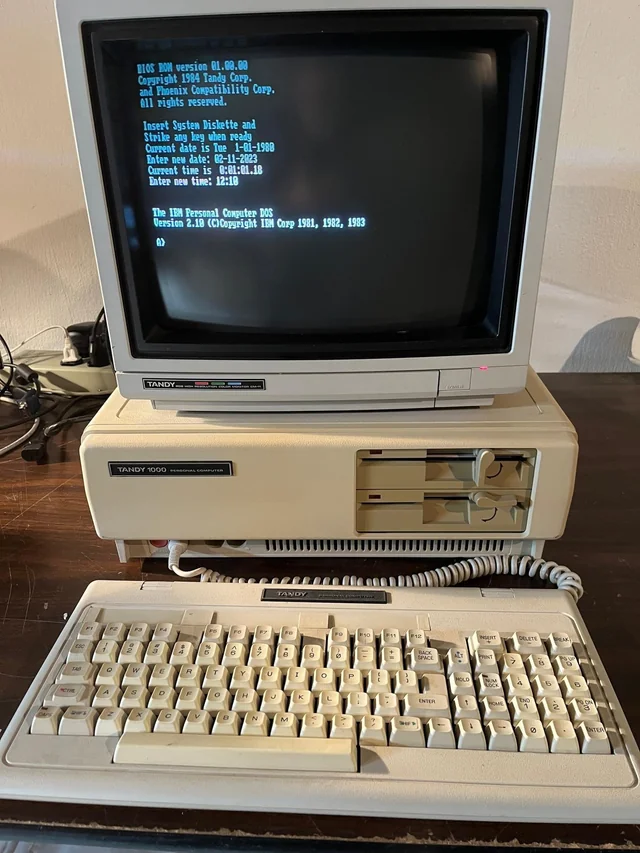
My EdTech experience began in Grade 4 in 1982 with a Commodore PET. We learned simple BASIC programming and played Castle Adventure, issuing typed commands and trying to figure out what the computer wanted from us. I later spent hours on a friend’s Commodore 64, where we also experimented with BASIC, before eventually getting a Tandy 1000 SX, on which I conducted extensive competitive beta testing of freeware Tetris.
Computers were hardly the only technology in school. We had 16mm films, overhead projectors, and televisions and VCRs wheeled into class on enormous steel carts that appeared capable of surviving a structural collapse. These were mostly passive learning experiences, but watching something was still considerably richer than another book or handout. The projector and VCR changed how information was presented to me; the computer changed what I could do with it. It created interaction.
That distinction stood out in Weller’s discussion of constructivism. The web offered learners opportunities to create, collaborate, and discover rather than simply receive information (Weller, 2020, p. 29). But Weller also cautions that simply putting learners online—or giving them a forum—doesn’t magically produce good learning design (Weller, 2020, pp. 29–30).
Perhaps that is EdTech’s recurring problem: we keep inventing increasingly sophisticated ways to deliver the same education. For me, the interesting question isn’t when EdTech began. It is when technology stops merely delivering knowledge and gives learners a better way to wrestle with it.
AI Use Disclaimer: I used generative AI to help organize my thoughts, challenge some of my ideas, and clean up the writing. The experiences, reflections, extensive Tetris beta testing, and conclusions are my own.
Leave a Reply