Activity 2 | Reflect on reading (Blog)
Seeing parallels between educational technologies and the underlying learning theory of Constructivism was the most compelling aspect of the first third of 25 Years of Ed Tech (Weller, 2020). Just like in research, where methodologies are informed by a paradigm, or worldview, educational technology choices are also made based on an instructor’s lens of how learners learn (Weller, 2020). I will be stepping into the role of a sessional instructor at a post-secondary institution in January and have found myself reflecting on my own beliefs about learning as an integral part of preparing my course syllabus. These beliefs will directly impact my students, from the educational technology that they will engage with and perhaps even their relationship to it.
A surprising point made by Weller (2020) was the causal connection between technology in 1997 and post-secondary instructors considering educational theory for the first time. I was unaware of the increased reflexivity of educators as an outcome of technology prior to my engagement with this text (Weller, 2020). This seemed to be a pivotal moment for ed tech with important ramifications for contemporary post-secondary classrooms.
I was also surprised by Weller’s (2020) assertion that had technological affordances been greater, such as mightier bandwidth, the constructivist approaches to e-learning favoured at the time may not have been adopted. Instead, more instructivist, authoritarian approaches that the author identified as having “resilience” may have been encouraged (Weller, 2020, Chapter 4, para. 1). This was interesting because unlike my earlier observation that the paradigm informs the tech, this example showed that the tech, in fact, guided the paradigm.
Finally, Weller (2020) described “educators sought to match the nature of the environment of the web to education” (Chapter 4, last paragraph). Weller’s discussion in this chapter caused me to consider Artificial Intelligence (AI) as fundamentally at odds with a constructivist approach. This left me wondering whether AI will give rise to new paradigms in education or will new paradigms in education give rise to AI?
References
Weller, M. (2020). 25 years of ed tech. Athabasca University Press. https://doi.org/10.15215/aupress/9781771993050.01
This comment is meant for Elizabeth, in regards to my citations. I’ve started reading resources like academic chapters, books and articles on my e-reader. I love this as rather than carrying around physical copies and having to be intentional about the readings that I pack, I have them all on the e-reader. Unfortunately, this new strategy can mess up pagination as the page depends on how big the text setting is… I’m wondering if when citing Weller in my post above, are the parenthetical citations I used in the post above, ie. (Chapter 4, last paragraph) acceptable or would your preference be that I cross-reference with a source that includes the pages? Thank you for your guidance!
Jenna,
Your question about whether AI and constructivism might be at odds resonates with something I have seen in live webinars for patient education. In theory, a live clinician teaching in real time, with polls built in, should create the kind of dialogic, socially constructed understanding Weller (2020) describes as central to constructivist approaches. In practice, I have found the anonymity of the polls creates its own barrier: some participants misunderstand the privacy features and stay silent to protect their anonymity; others get frustrated with the platform and disengage rather than ask questions. So even a “live” and theoretically interactive format can end up functioning closer to one-directional delivery. This makes me wonder whether the medium itself, not just AI, can quietly push teaching toward instructivism even when it is designed with constructivist intentions. Curious whether you have come across similar gaps between a tool’s design intent and how learners actually use it.
Kelly
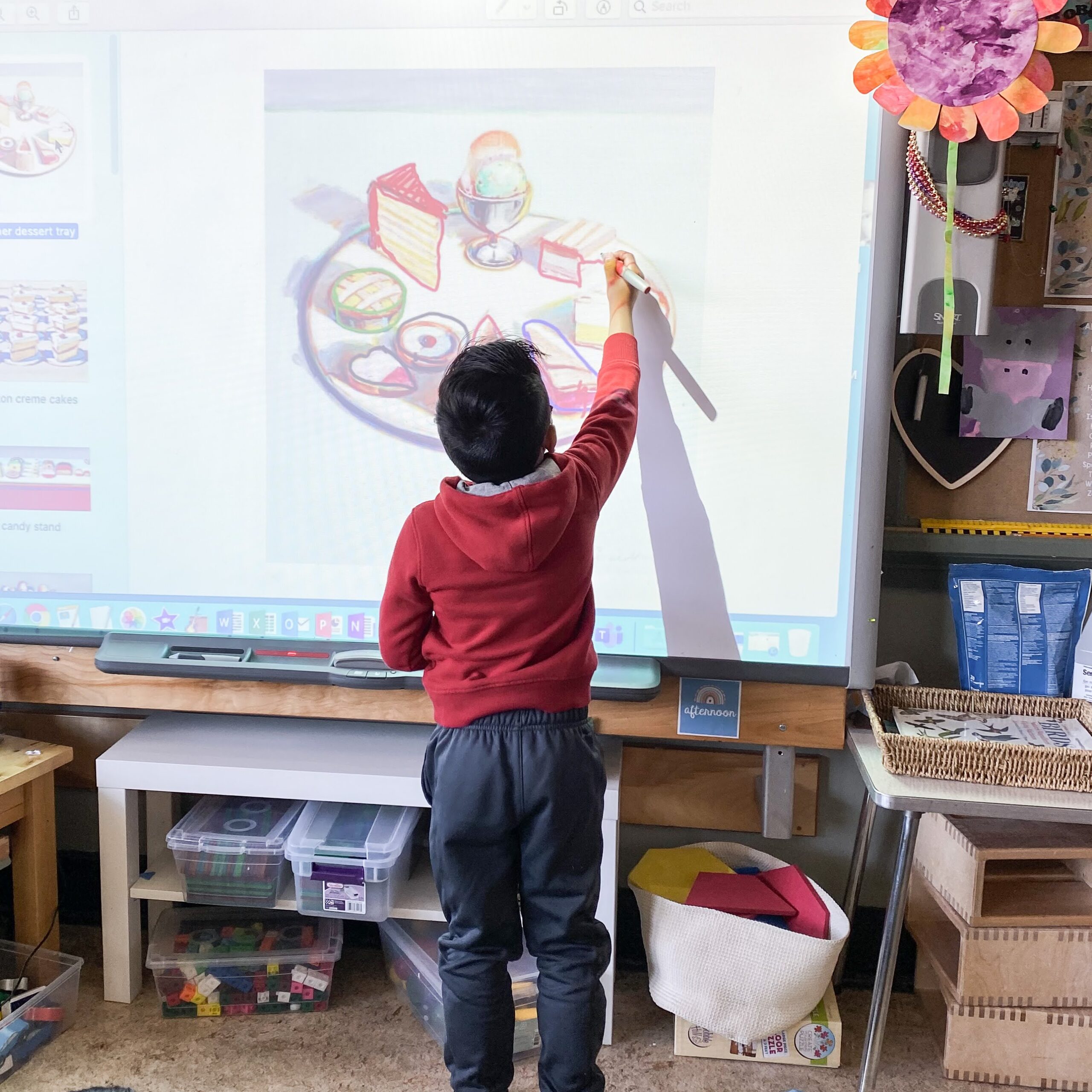
Oooh good question! I’m thinking about Smartboards which are a common tech within primary school classrooms. While meant to be interactive (it is in the name afterall– interactive whiteboards!) many teachers just use it as a contemporary overhead projector that is a key tool in their Instructivist toolbox, especially when paired with a powerpoint!
As far as your example, I wonder also if the exact wording of the poll questions need to be designed to elicit deeper connections and higher order thinking skills that foster the kind of meaning making that builds knowledge. Or perhaps, the polls are worded in such a way that prevents the students from wanting to engage? For example, knowledge based questions that just feel like a mini quiz? Does the outcome of the poll impact the way that the material is presented by the clinician? I think too often interactivity is presumed to construct knowledge without taking a closer look at whether it actually is helping learners build knowledge and form connections.
Thanks for engaging with my post 🙂