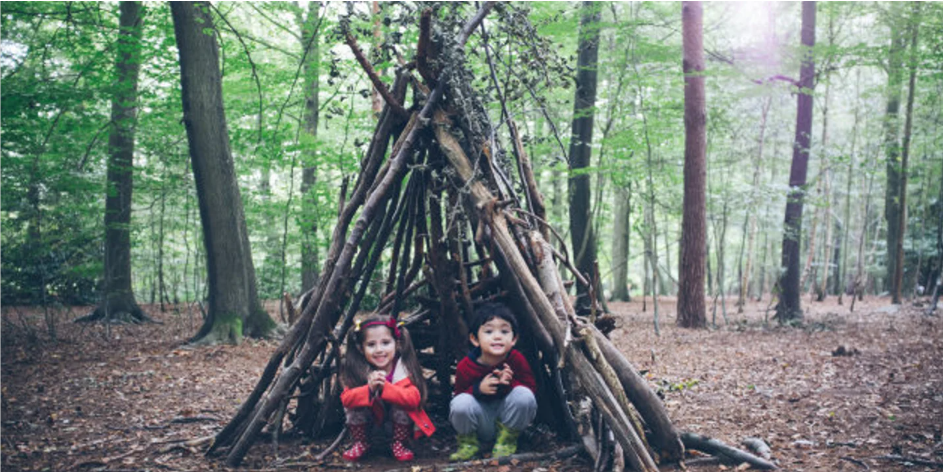
Adam was building a tower with sticks and stones when he suddenly pauses as something catches his attention. Ms. Chantal notices this shift in Adam as he silently observes a bird building a nest in preparation for its babies. Ms. Chantal gently walks towards Adam and sits next to him. Adam asks, “What’s this bird doing?” Ah, this sparked curiosity and Ms. Chantal seized the opportunity to teach, a moment technology or AI cannot. As she explained what the bird was building in preparation for her little ones, Adam smiled and told her he was building a tower too, very similar to what the bird was doing. His curious little brain was able to make a connection to nature and learn through this humbling experience. Ms. Chantal smiled as she took a deep breath and wondered how technology once was thought as the revolutionary innovation to teaching.
Selwyn et al. (2020) uses social science fiction to predict what might schools be like in 2030. In the eyes of this blog author, social science fiction is utilized to present an optimistic outlook of education in 2035 with a focus on the original technology, nature (Kyriacou, 2025). As awareness builds on understanding the silent epidemic students are experiencing, a push to revert to human-centric educational environments and tools can be predicted.
Within forest schools, organic exploration and teaching happen which are in tune with our human nature. Within a digitized learning environment, educators become more reliant on platforms and systems that obstruct creativity, flexibility and human interaction in the educational process (Selwyn et al., 2020).
References
Kyriacou, N. (2025, January 31). How forest schools are helping kids recover from screen overload. UNESCO. https://www.unesco.org/en/articles/how-forest-schools-are-helping-kids-recover-screen-overload
Selwyn, N., Pangrazio, L., Nemorin, S., & Perrotta, C. (2020). What might the school of 2030 be like? An exercise in social science fiction. Learning, Media and Technology, 45(1), 90–106. https://doi.org/10.1080/17439884.2020.1694944
Selwyn, N. (2024). On the limits of artificial intelligence (AI) in education. Nordisk tidsskrift for pedagogikk og kritikk, 10, 3–14. https://doi.org/10.23865/ntpk.v10.6062
Transparency Statement: Generative AI, ChatGPT, was used to create the reference list and in-text citations only. All thoughts and ideas were created by the author.
Leave a Reply