Steve asked the question, “When you undertake a research project, what are the first steps you take to get things rolling? (Getting the whole process moving seems very overwhelming.)”
That is a terrific question, and I appreciated Dr. Veletsianos’ discussion.
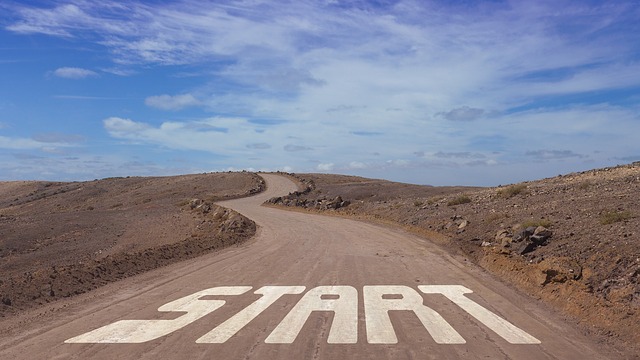
Gerd Altmann, Pixabay, CC0
There were two comments he made that particularly resonated with me (paraphrased):
- A project doesn’t happen in a vacuum, and sometimes there are years of thought involved before it happens.
I was wagging my head in agreement when he explained this idea. Of course. It’s unlikely that anyone would do a significant amount of research, much less a full-blown study, without having a substantial interest in the topic. I know there are topical areas that may be of greater or lesser interest in themselves, but that’s not the same as embarking on a formal research effort where you’re seeking to extend the body of knowledge on a particular topic.
On a personal level, I found this idea very comforting. I am not a linear thinker. It’s far more likely for me to have an idea that bubbles and percolates, with many of those bubbles fizzing off into their own explorations before I can express it in any sort of structured way.
- For a new project, or one based on prior work, understanding the big idea leads to formulating the research question.
George gave a few example questions: What am I trying to answer? How are people feeling about x? Why are people doing y? What is the relationship between variable a and variable b?
The concept of letting the big idea lead you to a research question was the prime takeaway for me. I have always had the instinctive need to research whatever I’m doing—whether that’s understanding the building code requirements for a fireplace installation, or how AES 256-bit encryption works, or how parathyroid hormones work in canines compared to humans. I have realized that I placed “academic research” on some sort of mythical pedestal, and hopefully, with enough research and reflection, I’ll see that it’s not a mystery per se, but a fascinating new area to explore and understand.
References
Altmann, Gerd. (Photographer). (2014). Image of Road [digital image]. Retrieved from https://pixabay.com/photo-1668916/
Veletsianos, G. (Author). (2017, August 10). George Veletsianos on Research [Audio podcast]. Retrieved from
August 20, 2017
Hi Donna. I think the saying “Rome was not built in a day” fits well here. I like how you pulled Dr. Veletsianos’ statement on how research can be years in the making before it formally begins. I think we have to keep in mind that in most cases, researchers won’t start with a fully thought-out ‘perfect’ research question, but the process is organic and the question should be molded based on new information and circumstances. Research is not always a linear path, which should suit people with non-linear thinking like yourself.
August 21, 2017
How true! Your description of research as organic makes a lot of sense to me, and something I’ll incorporate into my overall impression of this massive subject.