A learning and application of Dr. George Veletsianos’s recording, answering two graduate students’ questions on research.
 A learning and application of
 In listening to the recording, there are many ways that Dr. Veletsianos’s experience in both the field of research as well as learning and technology contributes value to his research processes.
Veletsianos (2017, 1:30) mentions that his research proposals can sometimes have “years of thinking” behind them. He talks about how he can get ideas for research questions from observations made in his academic experience. He also mentions being familiar with the available research and knowing where the gaps exist, that his research may be able to fill (Veletsianos, 2017, 7:12).
In addition, Veletsianos (2017, 3:42) can think of a new project or could base a project on prior work. Lastly, he suggests that others may be asking questions that further research may be able to answer. He adds that more background work is usually required to determine the suitability of these questions for his own research (Veletsianos, 2017, 4:05).
Application:
While graduate students may not share the amount of research experience in this field, we may be able to employ similar strategies to Dr. Veletsianos. These strategies could lead us to research questions for our final papers or theses.
Like Dr. Veletsianos, through life and career experience, graduate students may have:
- made a multitude of observations on diverse topics that we’ve been faced with,
- become experts on several types of research,
- knowledge on gaps in research that exist, when we haven’t been able to find an answer to a question;
- work or life projects from which we can draw knowledge or ideas for a research question from, and
- talked to others that have asked questions that have interested us and/or incited us to look into further.
These strategies may direct us to an ideal research question for the final research paper, consulting project or thesis – whichever exit pathway out of the RRU Master’s in Learning and Technology program we may choose.
Tip – Get your mind around the big ideas you have for a research project, then formulate research questions. With more research, pinpoint your specific interests around those questions. (Veletsianos, 2017, 2:17; 3:27)
References
Veletsianos, G. (2017, August 10). George Veletsianos on Research [mp3 recording]. Royal Roads University.
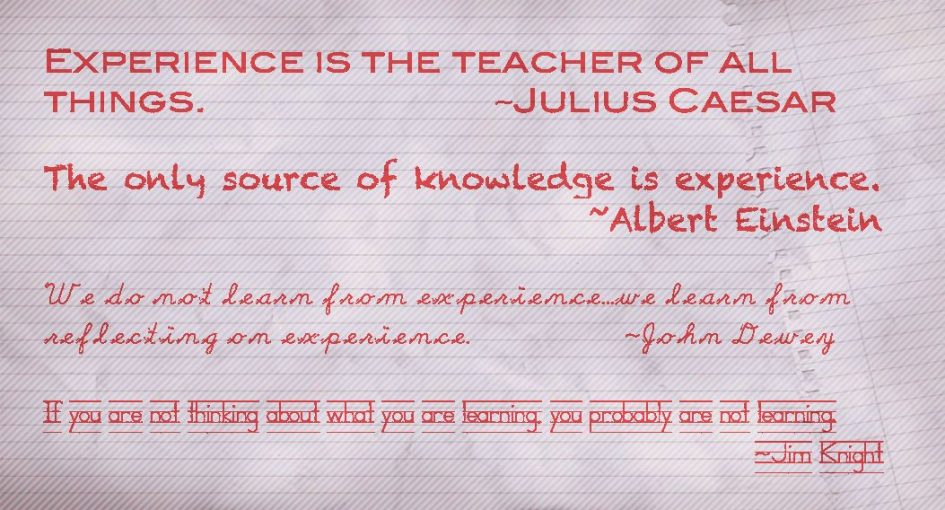
Image Source – “Experiencing, Learning, Reflecting” by Denise Krebs is licensed unde CC BY 2.0

Leave a Reply