
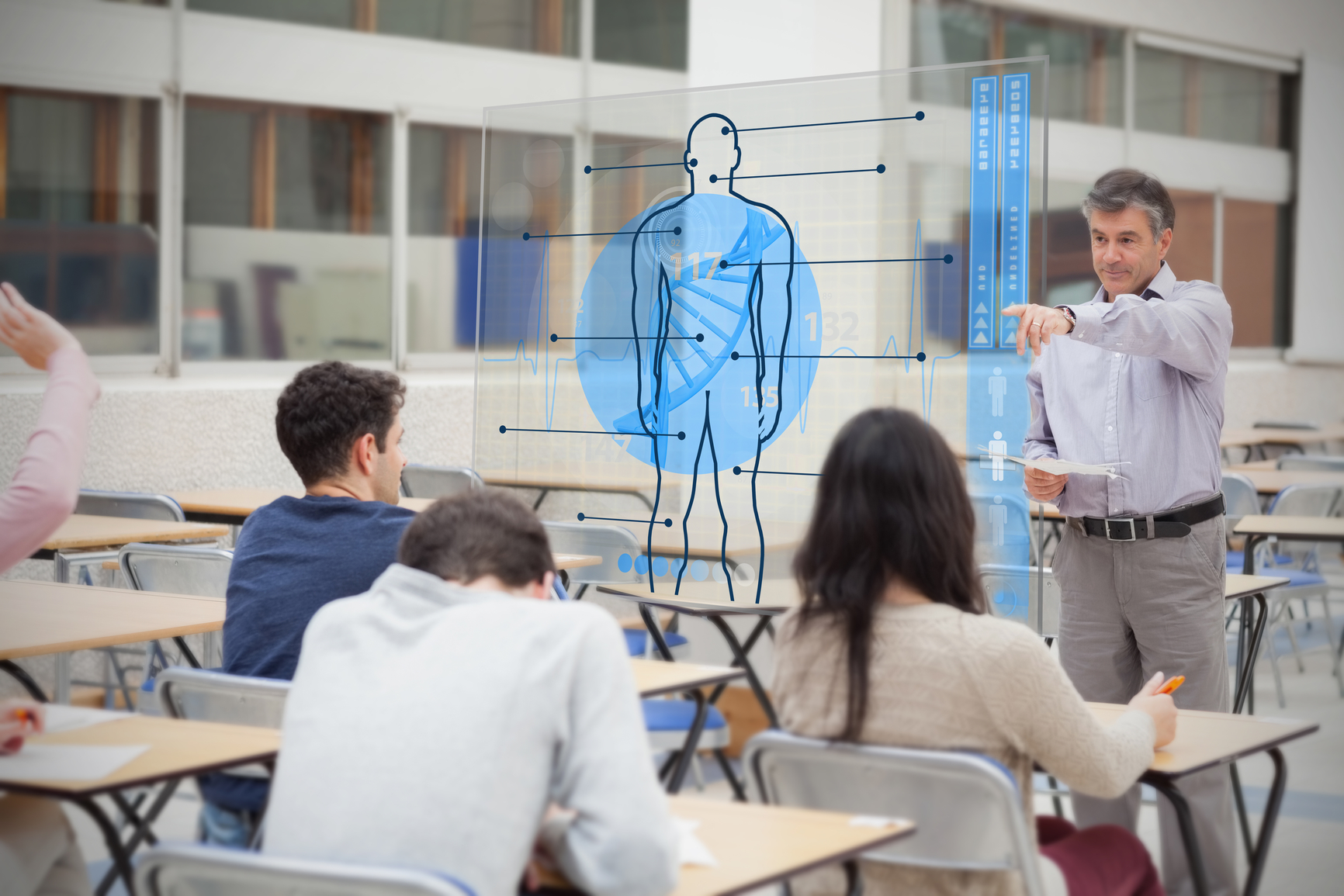
Changes that will shape the classroom of the future: Making Education fully Technological
When it comes to the great media debate between Clark and Kozma, there was a time when Clark would have had the upper hand. Clark’s ideas that media are “mere vehicles that deliver instruction but do not influence student achievement…” (1983, as cited in 1994, p. 445) would hold true in an age where lectures may just be transferred to video or at the very most a computer simulation could mimic a situation that could easily be shown in front of a class. As time and education have changed so has the media that we use today in our classrooms and the usefulness of this media.
It would seem that Dunwill may find more in common with Kozma than with Clark if they were to meet. Dunwill’s article discusses four changes that will shape the classroom of the future and in it brings about some interesting points that may have Clarks face turn red. Dunwill first outlines how the layout of the school will change. While most of the changes are aesthetic and are there to help students focus their attention, items such as interactive projectors, private workstations and group collaboration stations may be bringing about what Kozma predicted:
This capability presents the prospect of interactive video integrated with access to large multimedia databases distributed among people in offices, classrooms, and living rooms all over the world. (1994, p. 2)
With YouTube and Interactive video, we see Kozma’s predictions come to fruition.
Dunwill goes on to discuss Virtual and Augmented Reality. Classes that generally have no access to field trips are now able to visit art galleries or museums and as Dunwill (2016) points out in his article, “the students are each given a pair of inexpensive virtual reality headsets that have been constructed largely from cardboard and a glove.” This expense seems to defy Clark’s argument that “the designer can and must choose the less expensive and most cognitively efficient way to represent and deliver instruction” (1994, p. 2). It would seem that having access to virtual and augmented reality may open up new worlds to students who may never have been able to have access before.
As the article continues to discuss Massive Open Online Courses (MOOCs) and other online options, such as Khan Academy, Dunwill again mentions that students have free access to courses that contain interactive video elements and if they are motivated enough can move beyond a typical education in the time it takes to finish high school. It is interesting that Dunwill also mentions that the use of media could also be a form of assessment for some students. Instead of having to put together a traditional research paper, the student could show evidence of learning by recording a video or using web tools to create timelines. It seems as though media is not just a delivery method anymore but can is used as an assessment tool.
As the article concludes, the author is careful to point out that media/technology is not going to replace teachers. There will always be students and professions to which a more traditional educational experience is necessary. Dunwill cautions that educators need to start thinking about how the entire model of education needs to be redesigned to become more centred on the student. It echoes Kozma’s statement:
The combined capabilities of these media and the access to a range of social situations and processes that they bring provide designers with powerful new tools that they can use to construct their designs. (1994, p. 22)
There was a time when media was a mere vehicle for the delivery of information, yet as we see philosophies of education change, so too are we seeing how useful media can be to education. The question is no longer does media influence education but instead the focus should be on how can we design our courses so that it becomes media becomes a much more interactive element for our students.