
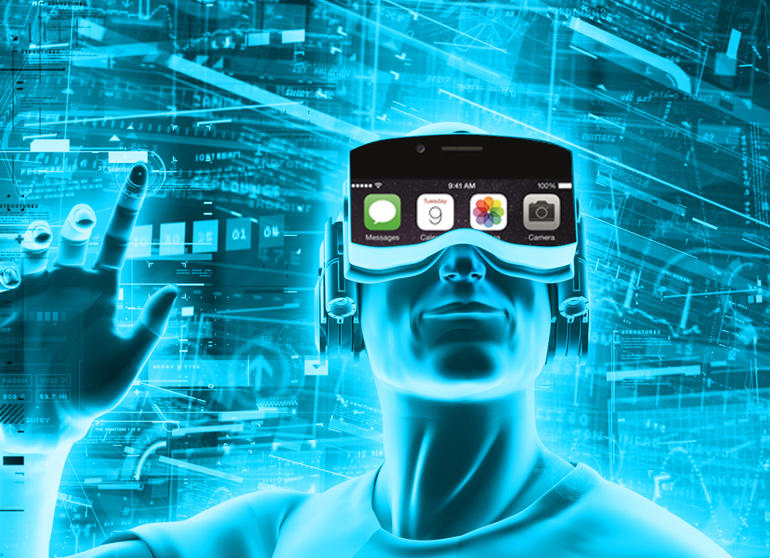
The Next Web: 7 tech innovations that are drastically changing the way people learn
Clark (1994) wrote that media would never influence learning, and as a response, Kozma (1994, p. 2) expresses that we, the people, the instructional designers need to ‘forge’ the connection between media and learning; if we don’t their educational contribution will be minimal. Miller (2017) seemingly agrees with Kozma and claims that the seven tech innovations mentioned in the article are significantly changing the way people learn. As Kozma (1994, p. 3) described “[t]he medium is an inert conveyor of an active stimulus to which the learner makes a behavioral response.” These innovations will influence learning when thoughtfully integrated into the instructional design in the planning stage.
Miller (2017) listed practical scenarios for 3D printing, gamification and VR as excellent examples for learning by doing, aka experiential education, which captures attention and helps to spark imagination and learning. Data-tracking is used in every field in our lives and can serve education very well as algorithms and “big data” can guide both blended and online program development. Analyzing data provides the possibility for a customized learning experience, and it already proved its impact in reducing the dropout rate. Massive open online courses have increased accessibility to learning, allowing anyone with an internet connection to attend classes, even at graduate level.
There is a debate whether it “democratizes” the education or not; however, they place more responsibility on the students to take care of their education and search out things that can help them instead of being told what to do by their instructors. The introduction of different tablets at school allows teachers to facilitate the classroom rather than manage the learning of the students. Learners have greater engagement with their learning, collaboration with peers’ increases, and teachers can monitor individual progress effectively. Skype is not a new technology, it is now 15 years old, but by connecting learners with teachers and tutors, including Virtual Field Trips, talks from Guest Speakers, and live collaboration projects, it provides greater engagement with learning, collaboration with peers’ increases, and teachers can monitor individual progress effectively. When students are put in charge of their learning, they become more engaged and have a higher chance of retaining what they study. By creating more opportunities for everyone to learn through engaging, hands-on experiences, these tech innovations can improve education for all.
The new media, the innovations people have developed serve a crucial and valuable part in being able to share learning resources across the world and between diverse demographics, but it still requires sound instructional design and methodology (Kozma, 1994). It is vital to understand, especially when choosing to invest in new technologies for instruction, that the work and effort necessary to develop content will not be reduced. 3D printing, simulations, artificial intelligence, Skype and MOOC are exciting as well as a cost-effective way of teaching. What can we call an influence on education if not these?
Could these tools be replaced by other tools and methods, or other delivery forms? Certainly. Is this what Clark (1994) meant by media being “mere vehicles” of delivery in learning? Did he consider whether other tools and methods would provide the same level of engagement, motivation, and timeliness for learners? Probably not this way, as these innovations were not present then.
References
Bessette, L. S. (n.d.). Are apps becoming the new worksheet?. Retrieved from http://hybridpedagogy.org/apps-becoming-new-worksheet/
Clark, R. E. (1994). Media will never influence learning. Educational Technology Research and Development, 42(2), 21-29.
Dunwill, E (2016, March 16). 4 changes that will shape the classroom of the future: making education fully technological. Retrieved from https://elearningindustry.com/4-changes-will-shape-classroom-of-the-future-making-education-fully-technological
Definition of influence by Merriam-Webster. (n.d.). Retrieved from https://www.merriam-webster.com/dictionary/influence
Kozma, R. B. (1994). Will media influence learning: Reframing the debate. Educational Technology Research and Development, 42(2), 7-19.
Miller, L. (2017). 7 tech innovations that are drastically changing the way people learn. Retrieved from https://thenextweb.com/contributors/2017/09/11/7-tech-innovations-drastically-changing-way-people-learn/
Morris, N. & Thomas, A. (2017, March 15). Is digital technology changing learning & teaching? The big debate from digifest 2017. Retrieved from https://www.jisc.ac.uk/news/is-digital-technology-changing-learning-and-teaching-15-mar-2017#