
Dr. Veletsianos challenged the Masters of Art in Learning and Technology (MALAT) cohort class to create an independent search on the history of education technology. As I reflect on decades of personal education; watching mans first flight to the moon, pencil to paper, flash cards, etch boards, radio and TV educational programs. Today, the continued educational evolution of the Internet, computer and online collaborative classrooms have allowed me to see a broader perspective.
This blog provides three examples; a Google search highlighting a surprising history of educational technology and a YouTube video from 2013, the Designing University Teaching for the 1stCentury, both presented by our very own Tony Bates from British Columbia. The next search was processed through Wikipedia, which compares and contrasts the history of educational technology. Each search has opened my initial tunnel vision of the history of educational technology.
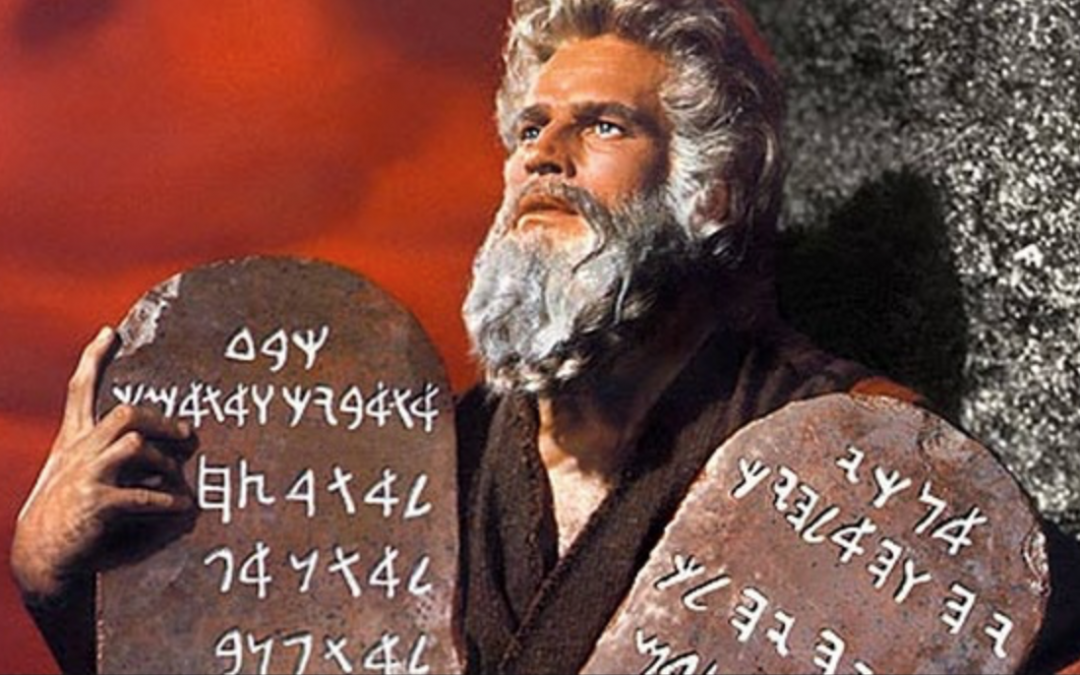
Tony Bates provides a great example of Charlton Heston playing Moses in the movie The Ten Commandments. The scribed stone of The Ten Commandments is a historical timeline where education in technology originated, which goes back to 2,500 years ago and beyond (“short history of educational technology | Tony Bates,” 2014).
Tony Bates also provides a taped YouTube video, which highlights the added value in online class over face-to-face lecture. Tony indicated, in a 13-week class, three lectures per-week, ten-percent of students asked questions, versus, online 100% of student mostly participate (Designing University Teaching for the 1st Century with Tony Bates, 2013). Not only are there lessons to be learned through history, but it also shows us how education in technology was scaffold from scribed tablets of The Ten Commandments. As the technology evolved to pencil to paper, personalized computers, iPods, online learning platforms and Learning Management Systems (LMS), are successfully continued improvements, which support us globally.
A Wikipedia search provides examples how e-learning can be both synchronous and asynchronous. Synchronous learners participate in class at the same time. E-learning can be face-to-face and online professor and student Skype classroom. Building on social skills to listen and ask questions of classroom cohort (“Educational technology,” 2018). Asynchronous allows the student to participate whenever it is more convenient for them. Students use educational tools such as blogs, Padlet communication boards, emails, social networking and virtual classrooms (“Educational technology,” 2018).
I found that I initially had tunnel vision when it came to the history of educational technology. Each search exposed another layer of progressed history of educational technology. I was able to reflect by using a timeline, initially connecting it with my age, and personal educational experiences. The research provides the value history has in the evolution of educational technology. Where would we be today without the stone tablets, they guided us to where we are today with the Internet and computers. Today academic institutions are able to provide and support both synchronous and asynchronous learning environments, which supports each type of learner. Today’s researchers expose the gaps, demands, and successes to develop new innovative technologies to feed our current and future educational programs and student interests.
References
A short history of educational technology | Tony Bates. (2014, December 10). Retrieved from https://www.tonybates.ca/2014/12/10/a-short-history-of-educational-technology/
Designing University Teaching for the 1st Century with Tony Bates[Video file]. (2013, May 2). Retrieved from https://www.youtube.com/watch?v=65RAW7QlQZ8
Educational technology. (2018, September 7). Retrieved from https://en.wikipedia.org/wiki/Educational_technology


Recent Comments