Page 4 of 5

In starting to explore the legacy of Seymour Papert, I feel that I have just started to see the tip of the iceberg. He was a monumental figure, some have even referred to him as the “father of educational computing.”… Continue Reading →

Photos used with permission. Leigh and Sue’s reflection, Activity 5 The history of graffiti stretches all the way back to the days when humans lived in caves. People are constantly making meaning in our everyday lives. Graffiti is… Continue Reading →

Choosing a learning theory to inform instructional design needs to be based on the needs of the learners (Ertmer & Newby, 2013; Merrill, 2002). In my current role teaching French as a Second Language (FSL) in elementary (K-8) classrooms, cognitivism… Continue Reading →
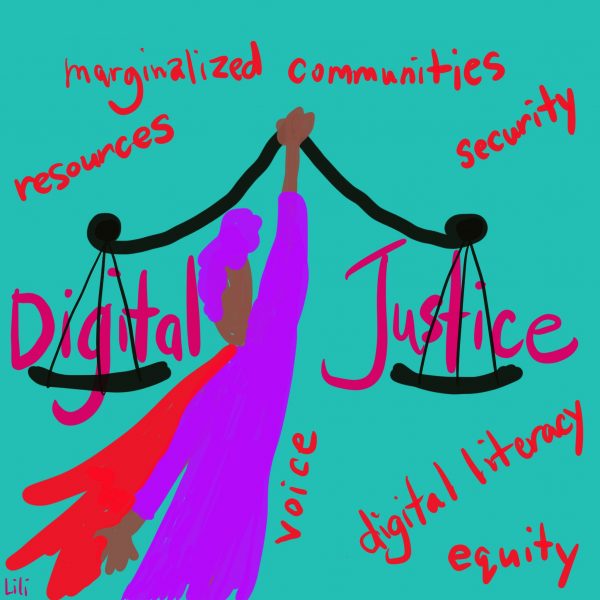
With so many incredible people that are a part of the past and present of digital learning environments and educational technology, with so many big ideas, critical perspectives, fascinating coding and creative abilities, trying to choose ONE to write about… Continue Reading →

Continuing to explore the history of educational technology, but more specifically over the last 100 years, numerous lessons surface. As an educator in K-12 environments, one lesson from the past that I can apply to my work is that educational… Continue Reading →

In my search to understand the history of educational technology, I was amazed by the different starting points of this history. Some sources started as far back as cave paintings in 30,000 BCE, while many pointed to Gutenberg’s creation of… Continue Reading →

The digital mapping of my connections was an interesting and challenging activity! Interesting, to visualize how connected I am to different sources (nodes) through personal and professional interests. This activity was challenging because I chose to use Kumu for the… Continue Reading →

Activity 2 | PART A of Assignment 1: Create, Cultivate, and Reflect on your Digital Presence As part of our LRNT521- Digital Learning Environments, Networks, Communities course, I have developed a plan to cultivate my digital presence and identity. I… Continue Reading →

The act of creating a Visitor/Resident typology, presented as an alternative to Prensky’s (2001) Digital Natives and Digital Immigrants typology, was thought-provoking. White and Le Cornu, (2011) in the Visitor/Resident typology present us with useful distinctions about how we behave… Continue Reading →

The Complexity and Importance of Open Educational Practices The Virtual Symposiums (2017-2019) facilitated by Royal Roads University’s (RRU) Faculty of Education and Technology are a collection of powerful connections to digital learning environments, networks, and… Continue Reading →