Principles are important to the continued and successful design process and improve the overall experience of the user (Design Principles FTW, 2020). The following are universal principles that reflect best practices for learning, technology, and design. The following eight design principles are most pertinent to design for public, distributed learning school. The alliteration of the eight simple words also intentional to improve retention and recall.
1) Sound: Sound design is “free from flaw, defect, or decay” (Merriam-Webster, n.d.). While it is impractical to believe that a design can be perfect, the aim for perfection is valuable. This aim is best met when the design meets the intended purpose in an authentic way. In this sense, it follows the same principle to promote instruction (Merill, 2002).
2) Safe: Safe design means users do not need to worry about making the technology inoperable (Badashov, 2017). The design can also be safe in that it does not isolate or offend users. Safety is a particularly important measure in K to 12 education where users are minors and more vulnerable. Safety is also relevant to cognitive theories that state that activation of the flight or flight response decreases our mental capacity.
3) Simple: Bandashov also recognizes the important of simplicity in design. His example from the UK government states how “[t]he people who most need our services are often the people who find them hardest to use” (2017). If the design is not simple, users will quickly dismiss the design.
4) Smart: The main goal of instruction design is to improve “the efficiency and effectivess” of the learning process (Rothwell et al., 2015, p. 5). Therefore, a smart design is intuitive to improve its ease of use and avoid deterring a user’s progress or increase their frustration.
5) Supported: In instructional design, the design needs to be supported within the whole organization, by administrators and educators at a minimum. Technology also requires supports to maintain the system and proceed with subsequent versions, correct fixes, and support users. This could be in the form of a help desk or adequate training. This value of a community of learners and leaders within a network of learning is supported by the connectivist model (Dron, 2014).
6) Soft: A soft design can adapt and react to user feedback or changing needs. Greater malleability offers greater options for innovation and change (Dron, 2014). A design that is adaptable will have more staying power. Similarly, technology is a fast-paced industry and adaptability is essential to staying relevant.
7) Space: White space, the unused portion of a document (Merriam-Webster), is necessary in visual design as it allows for rest and processing time. This is equally important in instructional design. Processing time for the user improves cognition and retrieval. A busy design is distracting to the user and can also reduce our other design principles such as “Simple” or “Sound”.
8) Shared: Shared design is accessible for all users. This includes those with learning or financial challenges. Just as technical designs should meet the current W3C world accessibility protocols, instructional designs must meet varying learner needs. A design can also be shared among relevant groups through open licensing to spur considerate debate (Baker III, 2020) and continued growth and problem solving. By participating in open sourced/common resources design can also practice and model the value of open (Morgan, 2019).
References
Badashov, A. (2017, February 8). Design Principles Behind Great Products. https://medium.muz.li/design-principles-behind-great-products-6ef13cd74ccf
Baker III, F. W., & Moukhliss, S. (2020). Concretising design thinking: A content analysis of systematic and extended literature reviews on design thinking and human‐centered design. Review of Education, 8(1), 305-333.
Cambron, T., (2016, May 24) Designing better experiences for people facing anxiety. Model View Culture (37). https://modelviewculture.com/pieces/designing-better-experiences-for-people-facing-anxiety.
Design Principles FTW. (2020). What are Design Principles Anyway? https://www.designprinciplesftw.com/what-are-design-principles
Dron, J. (2014). Chapter 9: Innovation and change: changing how we change. In Zawacki-Richter, O. & T. Anderson (Eds.), Online distance education: Towards a research agenda. (pp. 237-265). Athabasca, AB: AU Press.
Merriam-Webster (n.d). Merriam-Webster Dictionary. https://www.merriam-webster.com
Merrill, M. D. (2002). First principles of instruction. Educational Technology Research and Development, 50(3), 43-59.
Morgan, T. (2019). Instructional designers and open education practices: Negotiating the gap between intentional and operational agency. Open Praxis, 11(4), 369-380.
Rothwell, W. J., Benscoter, B., King, M., & King, S. B. (2015). Chapter one – An overview of Instructional Design. In Mastering the Instructional Design Process: A Systematic Approach. (pp. 1-16). Hoboken, New Jersey: John Wiley & Sons, Inc.
W3C. Accessibility Principles. https://docs.google.com/document/d/1aVlQupEr92bP_mYc9Oy1q1TYGWlsaG76NrXhXBS-5gI/edit#
**Edited, January 18th to add LRNT 524 category.
Read More
Design Challenge: The Solution
By Sandra Norum and Kristin Beeby
Introduction
As partners in this design challenge, we (Kristin and Sandra) were able to imagine a prototype to address a problem we both see as pertinent to our current employment focus. With Kristin as a senior secondary teacher and Moodle administrator at a public distributed learning (DL) school and Sandra as the learning specialist teacher at the same site, it was a relatively smooth process to align the two needs. The design process brought to light a challenge both educators have been facing for many years; students with mental health concerns choose distributed learning (DL) but often have the lowest completion and grades of the student population, despite being a growing percentage. The imagined solution is an overlay program that can be plugged into any course. This plugin software would consist of four pillars of research-based mental health strategies paired with known learning frameworks. This plugin (working title; LearningWellness) would hopefully work toward helping educators address increasing anxiety and depression among secondary students in DL environments while at the same time giving the students the skills they need. While current global events undoubtedly exasperate this need, these mental health concerns have been an increasingly difficult issue among youth for many years. Below is outlined the imagined prototype and how it might alleviate low completion and achievement rates in students with mental health concerns by improving community connectedness and strengthening student coping mechanisms.
To address the need to support students with mental health issues, we developed a plugin prototype that consists of four pillars to be integrated into online courses. These elements are essential practices, such as mindfulness exercises, journaling, counselling, and community-building. The goal is to build strategies for students to better manage mental illness and provide support for teachers working with them.
Figure 1 – Mock Moodle Plug-in description catalogue page
 |
Moodle Plugin: LearningWellness |
| Description |
LearningWellness is a Moodle plugin that allows mental wellness tools into your courses. The tools include mindfulness activities, journaling and goal setting. This plug-in can be supported by local community mental health and youth workers. |
| Current Version |
Prototype 1.0 (01032021) |
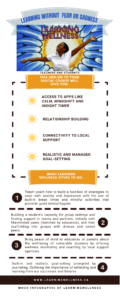
Figure 2- Mock-up of Infographic for LearningWellness
The Context for LearningWellness
The context for this design challenge is a BC secondary DL school that delivers provincial curriculum courses using Moodle 3.8. This DL school is often referred to as the school of first choice and last resort. Students chose DL to avoid conflicts with peers or staff. Other students choose it as the anxiety of the brick-and-mortar building is too great. The current pandemic has also meant that many families have chosen DL to avoid the face-to-face environment. Other than deciding to attend a DL school, other students enroll after being expelled from the only non-alternative, brick-and-mortar high school in the district. Due to enduring budget cuts, the DL school has lost many supporting staff, such as an education assistant, counsellor, and full-time administration. These cuts have put more pressure on the teaching staff to address students’ mental health issues. This has led to feelings of hopelessness among all members of this school community. The isolation and increased screen time for online learning also are negatively associated with mental health. This prototype could potentially combat these issues while providing skills for students’ mental wellbeing.
Pillar One: Built-in Mindfulness
Mindfulness is the newest buzzword of our current world zeitgeist, and working with students and mental health concerns, it would be amiss to not pave the solution with its findings and supports. Recent research is shining a positive light on how mindfulness practices can help young people engage in their schoolwork and manage anxiety and depression (Borquist-Conlon et al., 2019). In this prototype design, this plugin program would build in specified breaks in learning and guided mindful activities that need to be completed to unlock continuing coursework (this would be a slow build-up with positive reinforcement to strengthen buy-in). Pairing with known platforms like Calm, Insight Timer and Mindshift, who have already shown proven successes in these areas, would be beneficial.
Pillar Two: Teamwork Capacity
The use of journaling and mindfulness tools in the LearningWellness plugin is meant to lead students to the point of working in small, face-to-face groups. In order to scaffold to small group work, students would first be invited by the mental health clinician to meet on or off-site. Once the rapport is developed, face-to-face interactions can be expanded to include the teacher and peers with similar struggles. This scaffolding of strategies aligns with similar theories such as Tompkins and Barkin’s “act-brave ladder” (2018). External motivating factors such as activities, outings, and meals can provide rewards for positive behaviours and not perpetuate avoidance behaviours. The group meetings allow students to not only learn from their experiences, an important part of mindfulness (Yeganeh & Kolb, 2009) but learn from others’ experiences too. Recognize the importance of community-based programs (Christensen et al., 2010).
Pillar Three: Monitoring
A critical aspect of this prototype add-on software would be a monitoring system. The educators using the program, already too busy, cannot also monitor all aspects of the usage and data it provides. With mindfulness, goal setting and breaks built-in, a caring adult on the other side of the screen has positive benefits for struggling youth (National Scientific Council on the Developing Child, 2015). Many community-based and even Ministerial programs are available (Government of Canada, 2020), but what the youth need is connectivity. This prototype proposes that socially, community-driven programs are connected to this add-on and offer services through linking portals. This way, the student has access and is automatically connected to (as soon as they are identified as needing this additional support) all the local mental health programs in his/her area. It also gives the teacher peace of mind that other caring adults are looking out for these vulnerable youth.
Pillar Four: Journaling and Goal Setting
Journaling and goal-setting promote self-reflection and more effective use of mindfulness strategies such as goal-setting and behaviour monitoring. The idea here is that student journals could achieve multiple functions, such as reflection, goal-setting, and communication. Journaling is frequently used in counselling to help manage positive self-care habits such as proper diet and sleeping. Journaling also allows youth to identify and correct negative thoughts (Tompkins & Barkin, 2018). Other benefits of journaling include a channel for communication between students, educators, or community support. Communication through journals can also provide early warning for more drastic interventions. Students also recognize and celebrate growth and accomplishments through journaling, which would then motivate them to continue. Journaling plugins already exist for Moodle; however, the learning wellness plugin will also incorporate the following features.
LearningWellness Focus Group
Thank you for taking the time to read our prototype outline. For us (Kristin and Sandra) to evaluate our design, we invite the following discussions:
- Would educators be willing to add yet another layer to already often robust online Learning Management Systems? If not, why?
- What’s missing? In your perfect learning world (as an educator or student), what would you like to see embedded for wellness into coursework?
- Please share any experiences (positive or negative) with wellness EdTech that you have had.
References
Borquist-Conlon, D. S., Maynard, B. R., Brendel, K. E., & Farina, A. S. J. (2019).
Mindfulness-based interventions for youth with anxiety: a systematic review and meta-analysis. Research on Social Work Practice, 29(2), 195–205.
Cascio M., Botta V., & Anzaldi V. (2013), The role of self-efficacy and internal locus of control in online learning. Journal of e-Learning and Knowledge Society, 9(3), 95-106.
National Scientific Council on the Developing Child (2015). Supportive relationships and active skill-building strengthen the foundations of resilience: Working Paper No. 13. Retrieved from www.developingchild.harvard.edu.
Tompkins, M. & Barkin, J. (2018). The relaxation and stress reduction workbook for teens: cbt skills to help you deal with worry and anxiety. New Harbinger Publications. https://royalroads.on.worldcat.org/oclc/1006521264.
Appendix A
Tools of Interest
For Further Reading
Read More
Mindmap created at Mindmeister
To display my design tools I created a mindmap using Boling and Gray’s categories (2015, as cited in Lachheb & Boling, 2017). This process was interesting in that it forced consideration of my design strategies rather than my usual instinctual process. As far as methods, my teacher training, mostly included starting with the end task or outcome, similar to McTighe’s Backwards Design Model described by Moore (2016). Other than that formal training, teachers are mostly left to their own devices. As I’ve been teaching for several years many of the processes of design are fluid and ingrained.
In reflecting on my practice in learning design, I see that the collaboration piece is more substantial than I would have originally assumed. Also, I find that most of my choices are situational, rather than rationalist, as divided by Lachheb and Boling (2018). In part, this more of a result of pragmatism in choosing tools that are accessible in the sense of availability and ease-of-use for students and teachers alike.
This process has also shown that much of my design process is around adapting, streamlining, and standardizing courses taken from the Western Canada’s Learning Network. In the DL school I work at, we value standardization and consistency within our program to limit student frustrations and increase the predictability of the course. There are many working parts to the design process and so the mind map above is just one snapshot.
References
Lachheb, A., & Boling, E. (2018). Design tools in practice: instructional designers report which tools they use and why. Journal of Computing in Higher Education, 30(1), 34-54.
Read More
When selecting a learning design (LD) model, there must be consideration of context and delivery format. We also know that learning design is socially and culturally situated (Campbell & Schwier, 2014 and Ertmer & Newby, 2013). Without these features, learners would be unwilling to participate in the learning process. The technological developments and importance of learner motivation are an important reason for moving away from behaviorism. The goal should not be to change behavior but rather learning and applying higher level skills.
It seems from the readings that many design decisions are based on the educator’s persistent antagonists, time and budget. Following this, pedagogical perspectives influence the decisions of design. Most importantly, “leveraging organizational and individual strengths” (Rothwell, Benscoter, King & King, 2015) seems the most all-encompassing trait of learning design.
The role of innovation is crucial as learning is dependent on context. As Dousay (2017) notes “Every instructional design project is unique every time” (p. 1) Therefore a designer must be willing to adapt to a changing context. ADDIE, a frequent model used by various fields of instructional design, has been criticized for lacking guidance and broad scope (Bates, 2015). In response to these challenges flexible, or agile, designs such as , Anderson’s VUCA environment (volatile, uncertain, complex, ambiguous) (Bates, 2015).
This model is too complex for the day-to-day design of K to 12 schools. An alternate that Dousay outlines is Carr-Chellman’s Instructional Design for Teachers (ID4T). The strengths, according to Akbulut (2011) are that this model guides instructors towards having students achieve the learning goal, but also guides instructors in using the resources already available. In short, there are strengths and weaknesses to each design model so it seems a clear goal is to have a deep repertoire of LD models to choose from.
References
Akbulut, Yavuz (2011). Instructional design for teachers: Improving classroom practice. The Turkish Online Journal of Distance Education 12(1).
Bates, T. (2015). Chapter 4.3 The ADDIE Model. In Teaching in the digital age. BCcampus. http://opentextbc.ca/teachinginadigitalage
Campbell, K., & Schwier, R. A. (2014). Chapter 13: Major movements in instructional design. In Zawacki-Richter, O. & T. Anderson (Eds.), Online distance education: Towards a research agenda. Athabasca, AB: AU Press.
Dousay. T. A. (2017). Chapter 22. Instructional Design Models. In R. West (Ed.), Foundations of Learning and Instructional Design Technology (1st ed.). Available at https://edtechbooks.org/lidtfoundations.
Ertmer, P., & Newby, T. (2013). Behaviorism, Cognitivism, Constructivism: Comparing critical features from an instructional design perspective. Performance Improvement Quarterly, 26(2), 43-71.
Rothwell, W. J., Benscoter, B., King, M., & King, S. B. (2015). Chapter One – An Overview of Instructional Design. In Mastering the Instructional Design Process: A Systematic Approach. Hoboken, New Jersey: John Wiley & Sons, Inc.
Read More
When steering educational technology towards the future, we hope to follow the road towards solutions. This essay sets to provide one potential future in response to our present context. This year presented a unique social, educational, political, and environmental setting. The first global pandemic in over a century, COVID-19, inundated the world and measures were introduced to protect citizens. In British Columbia (BC), schools and businesses quickly shifted to a distant model with parents working alongside their children learning at home. Within the first two months of the pandemic approximately 400,000 British Columbians lost their jobs (CBC 2020). The United Nations called a “global education emergency” (Fore, H. as cited in Feuer, 2020, first paragraph) as students discontinued school. Political instability lead to elections as governments need economic recover and families choked on the smoke of forest fires. Amidst this worry, there remains hope for the future.
Considering this climate, goals for a positive future must steady the turbulent present. This potential future attempts to meet goals for educational technology and increase equality while decreasing pollution (Macgilchrist, Allert, and Bush, 2020). Research has identified technology’s role in providing more equal opportunity and quality of education (BCCampus, 2020). BC’s Ministry of Education (2020) aims to provide consistent success among vulnerable students. Even Canada’s chief public officer (Tam, as cited by D’Amore, 2020) suggests a future where planning is centered around equality. Imagine a potential future where centralized, open educational resources, and internships to refurbish technology provide equal access to equal education in BC’s secondary schools.
The solutions of 2030 begin after the pandemic when governments move to recover the economy. First the minimum age to work in BC is increased to 18, thus forcing adolescents back into the classroom and parents back to work. The pandemic demonstrated that employees and students can work remotely. People with mobility limitations or chronic illnesses now maintain employment. Students also have more choice. Open educational resources (OER), centralized content, internships, refurbished technologies, and supportive policies are implemented. Philanthropic programs that were previously in the community are structured within schools. Programs like Computers for Kids and Free Geeks now use students for labour. BC’s secondary curriculum changed in 2018-19 which reduced required. Future grade 11 and 12 students will complete the language and math fundamentals (Friedman, 2020), but then get to choose four to six internships in the elective subjects of their choice.
For flexibility and equality sake, it is important to consider equal access to quality teaching and resources (BCCampus, 2020). The ministry’s proposed funding-model change and the lack of contract language for Distributing Learning (DL) teachers has already shifted DL towards centralized content (Barbour & LaBonte, 2019). In another ten years, all teachers will draw from centralized content. Having content available means teachers can focus on the relevant skills of the future and less on content specific materials. The other side to centralized content is having this content openly available. In the future, teachers create and share content (Mishra, 2017). OER also benefits students as it can “empower learners as co-producers on their lifelong learning path” (Andrade as cited in Mishra, 2017, p. 376). Similar empowerment can arrive from hands-on, relevant, practical activities, such as internships.
Along with having equal content, there also needs to be equal access to technology. In the future, in technology-related internships, students rebuild outdated hardware or maintain existing infrastructures and programs. There are several benefits to this program. First, there is an economic as school districts no longer must source replacement technologies and technological support (Clapp et al., 2016). The benefits to internships also include better social and community skills, thereby satisfying many of the short-comings researchers identify with educational technology (Muilenburg & Berge, as cited in BCCampus, 2020). The act of working leads to community building and this social engagement further leading to higher retention (Olesova, Yang, & Richardson, as cited in BCCampus, 2020) justifying internships in the future. Kumar (as cited in Friedman, 2020) predicts that the distinction between employers and educators will be lost in the future. He also suggests that experience is more valuable than a post-secondary degree. Students having hands-on experiences with technology could shift us away from society’s obsession with consumerism and waste (Clapp et al., 2016). In 2030 interneships, students gain not only course credit but school store credit to buy their own technology or other needs. An internship program in collaboration with the IT department will help to reduce the amount of technology that is wasted. During the technological internships of 2030 students, guided by teachers and IT professionals, refurbish hardware, and build and maintain school-wide systems similar to “complex adaptive coalitions” (Friedman, 2020, p. 22).
The solution to equitable access to hardware needs to be something other than increased production or corporate funding. Refurbishing technology not only positively impacts the environment by keeping waste from filling landfills or being shipped overseas, but also benefits learning (Fosdick, 2012). Other outcomes of allowing students experience with building and fixing technology include developing agency (Clapp et al., 2016). Afterall, it is with access to technology and “tinkering” that Bill Gates become a technological mastermind (Wallace et al., 1992). Students building or repairing technology could lead to a paradigmatic shift that prioritizes environment conservation over profit (Weaver, 2000). Rather than choosing technology to fix societies problems, we can use society to fix problems caused by technologies of over consumption and consumerism. This future draws from the good will and curiosity in youth but also from the support from policy makers.
In 2030, policy demands students have equal access to learning and technological resources. During the pandemic of 2020, we witnessed how quickly the Ministry of Education was able to set new practices and how school districts and educators met these expectations. True, there was resistance among parents and educators. We know though, that if the government implements environmentally and equitable practices, the majority will comply. Just as the success of OER needs political support through policies (Mishra, 2017) so does equal access to technology through secondary school internships. Public sector spending is already shifting to sustainability (Everdene, 2018). With the support of politicians and ministry level policies, people who profit from inequality and pollution ridden policies will have limited options.
The benefits of this potential future are promising. Parents have steady employment. Schools have higher retention and completion rates. Students have the skills to attain employment after graduation. Also, by empowering our youth through hands-on, practical experiences we ensure that the optimism present in 2030 continues. After 2030 possible extensions of this model would be where employers become more responsible for specific training or skills in between shorter spurts of formal education. Internships could trickle down to lower grades. Maybe secondary students supervise or mentor middle school students. In either respect, by imagining a positive future, we will be motivated to stand by today’s choices.
References
Barbour, M. & LaBonte, R. (2019). State of the nation: K – 12 e-learning in Canada (12th ed). https://k12sotn.ca/.
BCCampus. (2020). Removing barriers to online learning through a teaching and learning lens. https://bccampus.ca/about-us/reports-and-reviews/
BC Ministry of Education. Vision for student success. Government of British Coloumbia. https://www2.gov.bc.ca/gov/content/education-training/k-12/administration/program-management/vision-for-student-success
CBC. (May 8, 2020). “BC lost nearly 400,000 jobs in March and April province says. CBC. https://www.cbc.ca/news/canada/british-columbia/unemployment-bc-covid-19-carole-james-1.5561174
Clapp, E., Ross, J., Ryan, J. O., & Tishman, S. (2016). Maker-centered learning: empowering young people to shape their worlds. https://royalroads.on.worldcat.org/oclc/962753031
D’Amour, R. (October 28, 2020). Canada’s top doctor outlines ‘uncomfortable facts’ on coronavirus inequalities. Global News. https://globalnews.ca/news/7427339/coronavirus-canada-report-tam-inequities/
Everdene, B. (2018). Canadian public spending. Municipal World 128(8), 25-26. https://royalroads.on.worldcat.org/oclc/7870094454
Feuer, W. (Sept 15, 2020). At least 24 million students could drop out of school due to the coronavirus pandemic, UN says. CNBC. https://www.cnbc.com/2020/09/15/at-least-24-million-students-could-drop-out-of-school-due-to-the-coronavirus-un-says.html
Fosdick, H. (2012). Computer refurbishing: environmentally reducing the digital divide. Bulletin of the American Society for Information Science and Technology, 38(3), 58–62. https://doi.org/10.1002/bult.2012.1720380314
Friedman, T. (October 21, 2020 Wednesday). After the pandemic, a revolution in education and work awaits. The New York Times. https://advance-lexis-com.ezproxy.royalroads.ca/api/document?collection=news&id=urn:contentItem:6140-5R41-DXY4-X2WC-00000-00&context=1516831.
Macgilchrist, F., Allert, H. & Bruch, A. (2020) Students and society in the 2020s. Three future ‘histories’ of education and technology, Learning, Media and Technology, 45(1), 76-89, DOI: 10.1080/17439884.2019.1656235
Mishra, S. (2017) Open educational resources: removing barriers from within, Distance Education, 38:3, 369-380, DOI: 10.1080/01587919.2017.1369350
Wallace, J., Erickson, J. (1992). Hard Drive: Bill Gates and the Making of the Microsoft Empire. John Wiley & Sons. pp. 42–46. ISBN 0-471-56886-4 (p. ?)
Weaver, P. (2000). Sustainable technology development. Greenleaf Pub. https://royalroads.on.worldcat.org/oclc/828743287,
Read More



Recent Comments