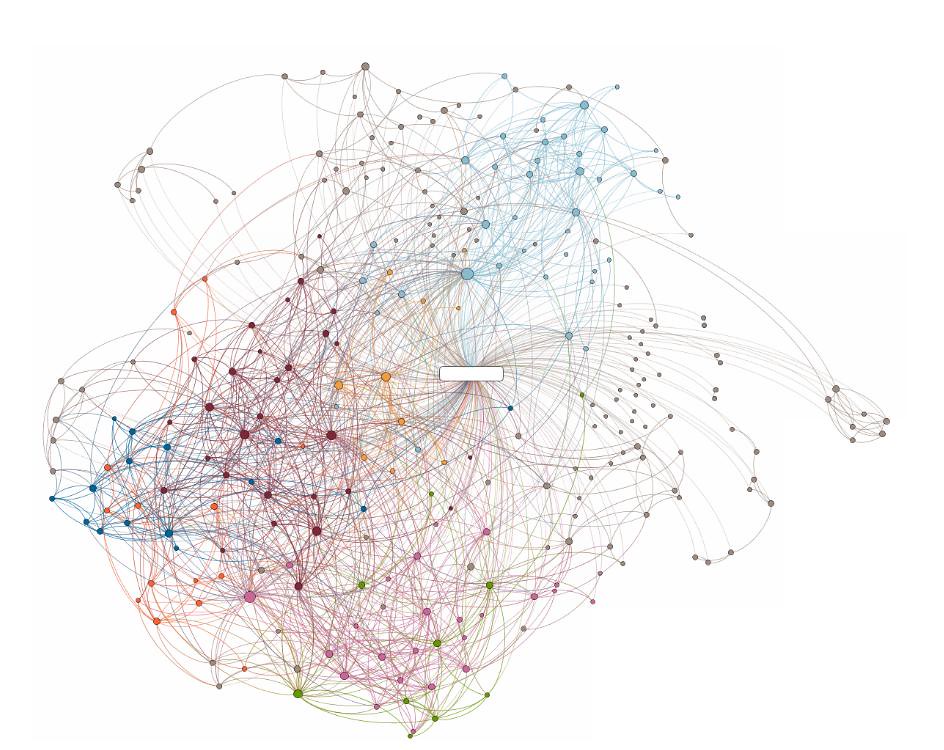
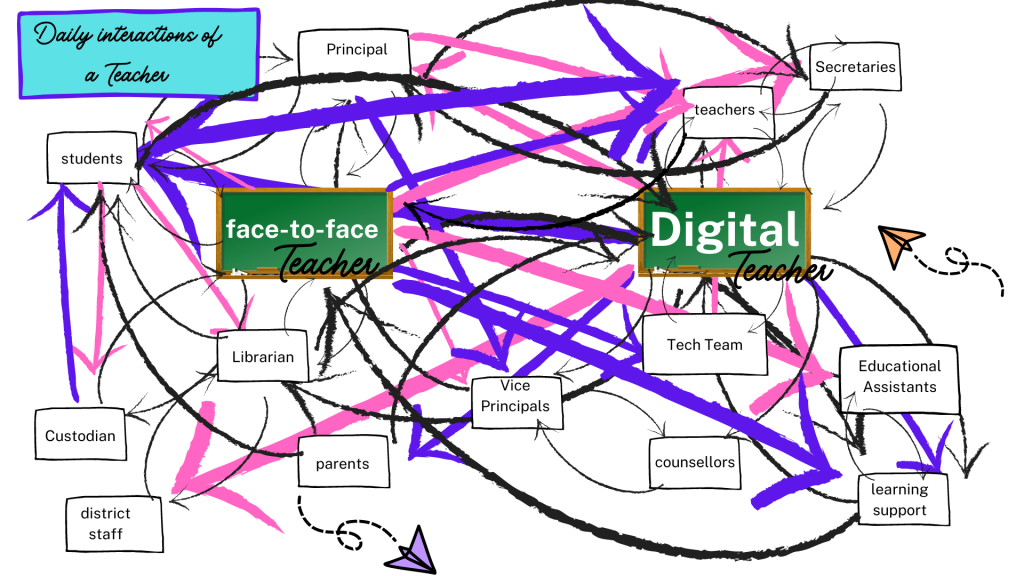
After reading and analyzing the articles, blog posts, and videos for this Unit, I better grasp the importance and impact of creating an online presence and identity.
As a high school educator, the need to balance public and private is essential to me. Yet there is an increased demand for people to have a more significant digital presence, making this idea of identity a little trickier. As Helen Nissenbaum in Danah Boyd’s article states, it becomes a process to “regain a sense of control in a networked society.” (2011, p.12).
To regain control, I need to rethink my traditional thoughts about public versus private. Knowing that I will have a visible digital identity, I will research different tools and strategies to help me curate a professional and personal presence aligned with my values that I can control (Boyd, 2011).
Two primary goals came to mind after reading Helen Beetham’s framework for “digital capabilities for learners”: “Digital communication, collaboration, and participation” as well as “Digital creation, innovation, and scholarship” (2015, p.2).
Goal 1-To be a more collaborative digital citizen
Henry Jenkins’ book “Confronting the Challenges of Participatory Culture” addresses the importance of “participatory culture” in a digital world (Jenkins, 2009). I need to become a more active collaborator online and move away from being a “consumer” to grow my online presence. Participatory culture will allow me to develop a more active role as a “producer”, which ultimately will help my digital footprint develop and grow (Jenkins, 2009, p.12).
I consider myself flexible and understanding; these are valuable skills as a collaborator. I do not, however, have much knowledge about online collaborative tools. This is an area that I will need to explore and research to grow my digital presence this way.
Goal 2-Creating and sharing educational documents in an open setting.
Helen Beetham’s framework for Digital Capabilities correlates to the goal I have to share and collaborate as an educator. She has a statement which mentions acting as, “…a digital change agent” (2015, p.2). By working towards sharing resources, I can then take this knowledge and encourage my colleagues and my students to do the same.
This goal’s ‘Open Setting’ aspect is directly relatable to session at RRU’s Virtual Symposium. He made the connection between the sharing of resources in a regulated way (Creative Commons), leading to more “collaborative, flexible learning.” (Lalonde, 2018).
So by sharing my resources and ideas through mediums like Creative Commons, I can grow my digital presence, mainly because my name and resources can be searchable and usable.
To enhance my visibility and presence in this area, I will have to better understand Open Educational Technology (OET) and Open Educational Resources (OER).
Measuring Success
I believe the ultimate measure of success would be an increased digital presence. Creating an account or space where I can share my resources would be a more tangible measure of growth. As for my collaboration goal, I’d like to create some lessons/breakouts regarding collaborative online tools and practices to share with my colleagues. I can do this through staff meetings or professional development sessions. These efforts could lead to increased effective collaboration and even grow a larger online digital community of teachers in my district, leading to an increased digital presence.
References
Beetham, H. (2015, Nov 10). Building capability for new digital leadership, pedagogy and efficiency. Jisc Building Digital Capability Blog https://repository.jisc.ac.uk/6236/1/Digital_capabilities_learner_profile.pdf
Boyd, D. (2011). Social network sites as networked publics: Affordances, dynamics, and implications. In Z. Papacharissi (Ed.), A Networked Self (pp. 39–58). New York, NY: Rutledge https://www.danah.org/papers/2010/SNSasNetworkedPublics.pdf
Jenkins, H. (2009). Confronting the challenges of participatory culture: Media education for the 21st century. MIT Press. https://doi.org/10.7551/mitpress/8435.003.0004
Lalonde, C. (2018, April 19). Sharing and CC licensing. In E.Childs (Chair), 2018 Virtual Symposium [Symposium].