After reading the middle of Weller’s (2020) book, I connected more and more to some of the technologies he described. Chapter eleven (open educational resources: OER) resonated with me as being the most currently relevant topic.
Weller (2020) spends chapter eleven discussing the importance of OER and its significance in ed-tech. As part of the open education movement, I believe that OER is extremely relevant as it attempts to remove the barriers to content sharing, which increases accessibility. Creating licences through mediums like Creative Commons allows content to be shared while maintaining rights to the creator and allowing resources to be adapted and changed, increasing the potential for creating new and relevant content (Weller, 2020). OER’s relevance today is in promoting accessibility and removing technology barriers, allowing access to as many people as possible. As Catherine Cronin states in her discussion about Weller’s book, OER is not just about open resources but about promoting and allowing room for diverse opinions and voices from marginalized groups (Cronin in Pasquini, 2021a). This ‘openness’ is reflected in our society today in many ways, from the Truth and Reconciliation act in Canada to the Black Lives Matter movement; OER and open educational practice (OEP) gives room for all voices.
As well as being relevant, Weller’s book also provides some insights into potential conflicts. One such aspect is his chapter regarding Twitter and social media. Weller (2020) highlights the benefits and potential of social media, saying it “…provides ed tech with… a set of tools and possibilities…” (p.114). He mentions that using social media comes with risks, but this chapter’s overall tone is one of optimism and possibility (Weller, 2020).

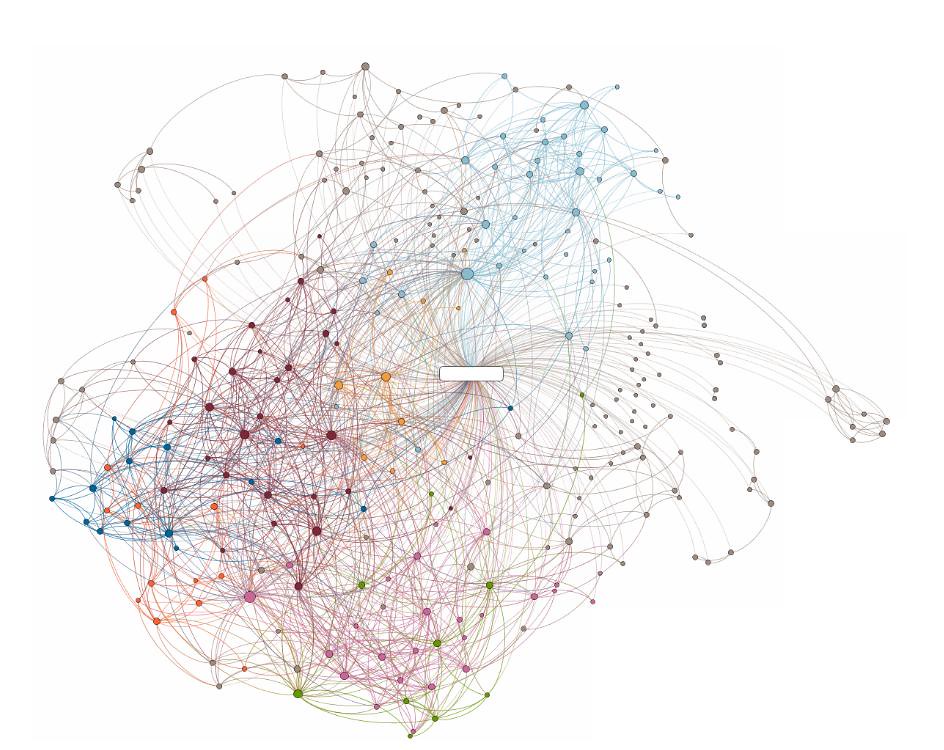
This file is licensed under the Creative Commons Attribution-Share Alike 4.0 International license. Author: Today Testing https://todaytesting.com/free-social-media-marketing-free-images
In my workplace as a K-12 teacher, social media platforms have essentially been established as hindrances to education. They have not even been truly considered because of the considerable risks associated with them (bullying, data management, privacy, etc.). In the audio podcast between chapters, Laura Pasquini and her guests, Chrissi Nerantzi and Sue Beckingham, discuss some of the dangers of social media. Nerantzi mentions that social media sites are exclusive and favour the voices of privilege: older white males (Nerantzi in Pasquini, 2021b). Pasquini (2021b) also touches on the larger, money-making corporations that fund and back many social media sites, which raises questions about data management, privacy, and purpose. These issues, as well as others, create a well-founded wariness in the K-12 educational system.
Although I understand the risks of young adults using social media, Weller brings to light some benefits, such as collaborative learning and student engagement, that have potential in the K-12 system (Weller, 2020). It is also important to note that young adults are incredibly adept with social media, as it is being used consistently and constantly (AACAP, 2018). I cannot help but wonder if our education system considered some potential benefits and what the impact would be on our students’ learning. Do the benefits of social media outweigh the risks for the K-12 system?
References
American Academy of Child and Adolescent Psychiatry (AACAP). (2018, March). Social media and teens. https://www.aacap.org/AACAP/Families_and_Youth/Facts_for_Families/FFF-Guide/Social-Media-and-Teens-100.aspx#:~:text=Seventy%20five%20percent%20report%20having,not%20including%20time%20for%20homework.
Pasquini, L. (Host). (2021a, January 21). OER (No. 12) . In Between the chapters. Transistor. https://25years.opened.ca/2021/01/27/between-the-chapters-oer/
Pasquini, L. (Host). (2021b, February 25). Twitter and social media (No. 17) . In Between the chapters. Transistor. https://25years.opened.ca/2021/02/28/between-the-chapters-twitter-social-media/
Weller, M. (2020). 25 Years of Ed Tech. Athabasca University Press. https://doi.org/10.15215/aupress/9781771993050.01