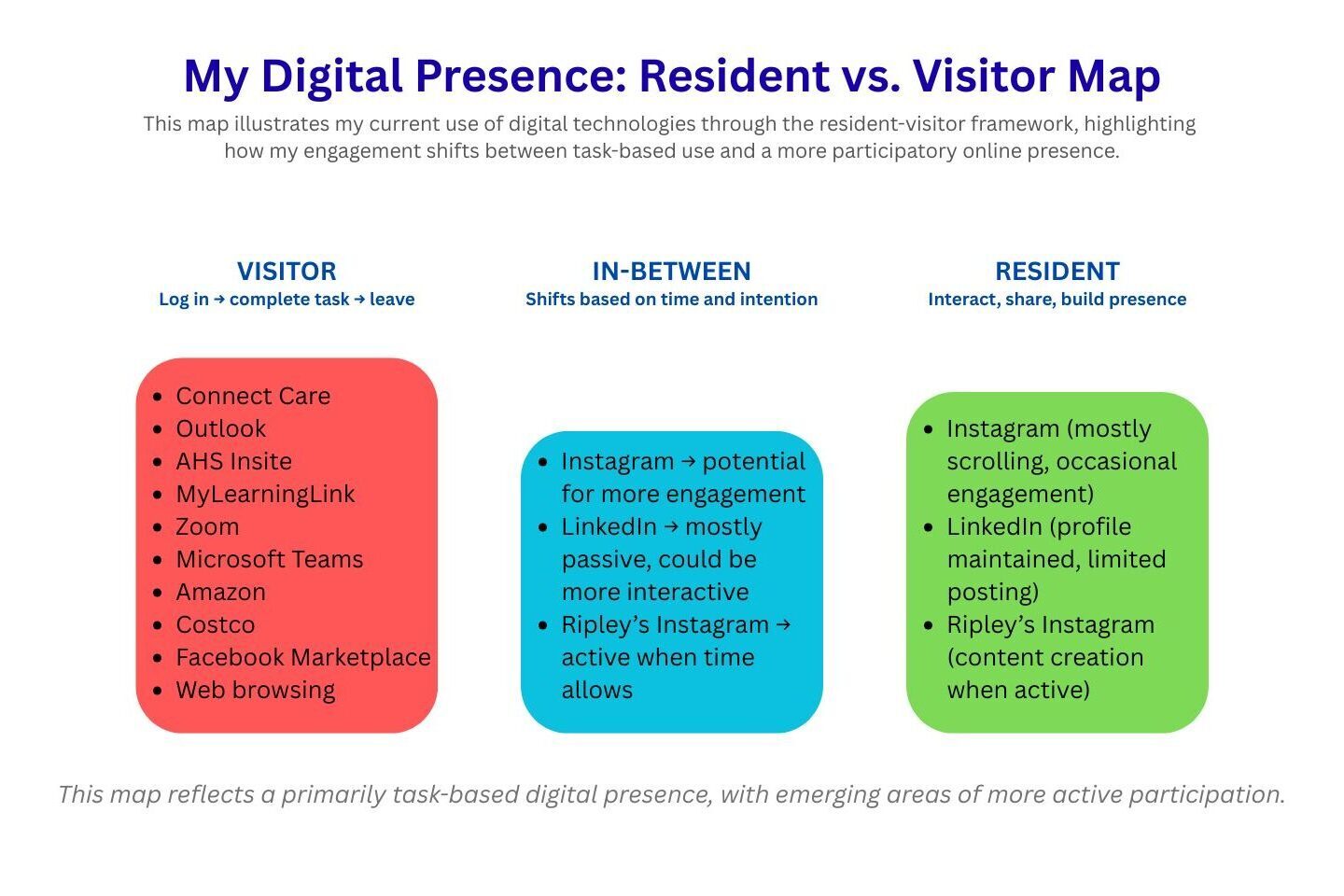
As part of exploring digital identity and presence, I reflected on my use of digital technologies through the resident-visitor framework. This process included both a written reflection and the creation of a visual map (included below) that outlines how I engage with different platforms across professional and personal contexts.
My digital presence is primarily shaped by task-based engagement. In my professional role in healthcare, I regularly use platforms such as Connect Care, Outlook, Microsoft Teams, Zoom, AHS Insite, and MyLearningLink. These tools are primarily used to complete required tasks, communicate with colleagues, and support patient care processes. Within this context, my behaviour aligns strongly with a visitor pattern of engagement, where I access platforms for specific purposes and do not maintain a persistent presence.
In my personal digital life, I use platforms such as Instagram, Facebook (primarily Marketplace), LinkedIn, Amazon, and Costco. My engagement on these platforms is largely passive, focused on browsing and consuming content rather than actively contributing. While I occasionally interact through likes or comments, I would still characterize most of my use as visitor-oriented.
One exception is my involvement with a service dog Instagram account, where I occasionally create and share content. In these moments, I engage more actively with an online community and shift closer to a resident mode of participation. However, this engagement is inconsistent due to time constraints.
To better visualize this balance, I created a simple digital presence map using the resident-visitor framework (see below). The map categorizes my platforms into visitor, resident, and in-between spaces, highlighting how my engagement shifts depending on the platform and intent. This visual representation helped clarify that while I maintain a professional digital identity, it is largely static rather than actively curated.
Reflection on Digital Identity
After completing this exercise, I recognize that my current digital identity is present but largely passive. While I do maintain a professional footprint through LinkedIn and work-related systems, I am not actively shaping or contributing to my online presence in a consistent way. This realization was not surprising, but it did highlight and area for potential growth.
I also briefly considered what appears when searching my own name online, which reinforced that my digital footprint is limited but professional in nature. This further supports the observation that my current engagement aligns more closely with a visitor model across most platforms.
Moving Forward: Goals for My Digital Presence
As I move through this course, I would like to develop a more intentional and sustainable digital presence. My goals include:
- Increasing my active engagement on Instagram in a more purposeful way, rather than primarily passive scrolling
- Sharing content more consistently on Instagram when time allows, particularly in areas that feel meaningful or creative
- Shifting from mostly observing online content to occasionally participating in conversations and interactions
- Exploring ways to use Instagram in a way that feels authentic, balanced, and manageable alongside other responsibilities
- Maintaining boundaries so that digital engagement remains positive and does not become overwhelming
Rather than aiming for constant online activity, my focus is on building a realistic and meaningful presence that better reflects how I engage with digital spaces, while gradually becoming more intentional about participation.
Use of Digital Tools and AI
I also recognize that digital tools, including generative AI, are increasingly part of learning and communication environments. At this stage, I view AI as a supportive tool for brainstorming ideas, organizing thoughts, and refining written communication. My intention is to ensure that my own voice and experience remain central, while using these tools in a responsible and transparent way as my learning evolves.
Conclusion
This exercise has helped me better understand how I currently engage in digital spaces and how those patterns shape my professional and personal identity. While my current presence is primarily task-focused and passive, this reflection has highlighted opportunities to become more intentional in how I participate in digital environments moving forward.
Leave a Reply