Tag Archives: LRNT 522

Copyright Vs. Copywrong

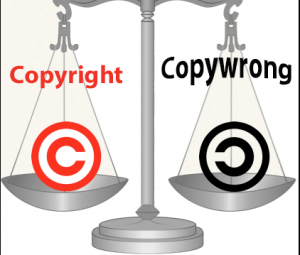
Copyright vs Copywrong. The original image was sourced from the Public Domain from WikiMedia Commons.

The presentation from Melanie Wrobel on copyright reminded me of the muddy waters that are often associated with copyright.  I have attended a few workshops on copyright and honestly, I am still very confused.  I have compiled some resources throughout this enjoyable (gag) journey on trying to master copyright.  Here are some if you wish to investigate (many of these were courtesy of a partnership we have with the great folks at Seneca College).

Image Sites

Video Sites

Another useful resource I have used is ‘tineye’, it is a reverse image search that allows you to upload an image and it will search the web for the other locations of that image on the web.  I find this one to be very helpful if you are trying to determine if the image you are trying to use is an original or not.  https://www.tineye.com/


Also, here is a helpful presentation on working with OER’s and creative commons:

https://www.slideshare.net/clintlalonde/oe-ontario-workshop

…and a site that has some more resources complete with descriptions of their functions http://learning.signpostwebdesign.com/?q=node/2 
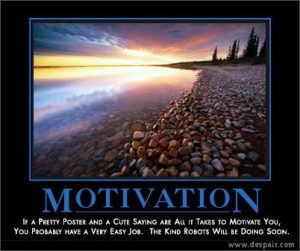
What Motivates Us to Research?

CC BY-SA 2.0 Licence. Retrieved from www.flickr.com

This week’s podcast from Dr. George Velestianos got me thinking about what motivates us to do research?  It’s hard, it’s time-consuming, and did I mention the amount of reading that is necessary in order to perform a thorough research study…just thinking about it makes my head hurt.  Yet, as I write this I am oddly intrigued by the possibility of undertaking a research project myself in order to get some concrete data to support all the anecdotal claims I have been making over the past few years as an educator.

It was not easy to find any research on what motivates us to do research (maybe more research is needed in this area?).  One interesting article I did find polled college faculty who had been published as researchers and found that while many people were motivated by money, either a salary increase or other incentives that were offered to them for undertaking the research (LeBlanc & McCrary, 1990, pp. 67-68) , 42% said that personal satisfaction was the main motivator, followed by rewards for the institution at 21%,  rewards for their discipline at 20%, and approval from others at 10% (pp. 65-66).

I don’t think I’m there yet to be motivated fully by personal satisfaction to jump into a research study, although I do feel a ‘pull’ (maybe a push) to start taking part in formal research.  Hopefully by the time we start our research projects I will find my motivation and be engaged to become part of the world of academic research.

References:

LeBlanc, A., & McCrary, J. (1990). Motivation and perceived rewards for research by music faculty. Journal of Research in Music Education, 38(1), 61-68.

Google and VR…What’s next?!

Image by Martin Pettitt. CC BY 2.0 Licence. Retrieved from www.flickr.com

I just came across an article in the Free Technology for Teachers blog on Google’s recently updated virtual expeditions.  Essentially it allows the user to guide themselves through many of the world’s wonders in a virtual space.

I have utilized Google’s virtual services before in my undergrad at Brock University.  I was taking an elective on introduction to art and came across the Google Arts and Culture Institute where you are able to virtually navigate through many museums from around the world.  I found that this changed my perspective on art and really added to the overall learning experience.  I’m thinking their latest update will provide the same appreciation for millions of students.

Say what you will about Google as a Multinational Corporation…but these tools sure are handy when used for learning.

Teaching Resources


Image courtesy of the College Educator Development Program

I was lucky enough to be a facilitator in the College Educator Development Program (CEDP), a collaboration of six Southwestern Ontario Colleges (Lambton, Fanshawe, Conestoga, St. Clair, Mohawk, and Niagara) that helps develop new full-time faculty.  About a year ago we received funding to develop six online learning modules.  These may or may not be useful to you, but feel free to use.

Creating a Positive Learning Environment

http://www.softchalkcloudcom/lesson/serve/ra9lWoYcw3QVpX/html

Integrating Technology

http://www.softchalkcloudcom/lesson/serve/G8Ot1yPgbi6cTe/html

Intro to Assessment

http://www.softchalkcloudcom/lesson/serve/9YJATpM0rWFq4H/html

Lesson Planning and Active Learning

http://www.softchalkcloudcom/lesson/serve/1eJ4GOXCILsQMu/html

Outcomes Based Education

http://www.softchalkcloudcom/lesson/serve/GfacAMp6soEgVr/html

Teaching Professional

http://www.softchalkcloudcom/lesson/serve/aoTxj7n4qS9FzJ/html

What makes a good research question

Image by Thomas Haynie. CC BY 2.0 Licence. Retrieved from www.phlebotomytech.org.

This is a very good question, and I think that it can mean different things to different people depending on where you land on the research continuum (Johnson & Christensen,  2014, p.32).  If you are conducting qualitative research a good question may be more focused on exploratory components while a quantitative research question may focus on more of a confirmatory approach to your research question (Johnson & Christensen,  2014, p.17).

If I had to pick a few key points that encompass all types of educational research, I would say that a good research question should:

  • be concise in how it is written (doesn’t ramble on)
  • have a specific end goal (something that you intend to measure)
  • relevant to the topic (i.e. if you are studying education, your question should be related to that field)
  • achievable (the questions should be within your abilities)
  • Interesting (there is a need for this in the field of study)

Resources

 Johnson, R.B., Christensen, L. (2014). Educational Research: Quantitative, Qualitative, and Mixed Approaches. Sage Publishing.

Unit 1, Activity 2 – Reflection on your Academic Writing


I agree with my classmate Krista…I wish I would have watched the video’s from RRU library’s regarding writing paragraphs and  APA  before I started LRNT 521!  I found these to be really informative and will be a great resource.

While there are many academic writing resources available online and available through the Royal Roads website, I am going to share two resources that assist with APA as this was my biggest challenge.  The first is one that I used almost every day as I worked through my Bachelors of Adult Education recently, it is the OWL Perdue website (https://owl.english.purdue.edu/owl/resource/560/01/).  This website provides a wealth of resources from everything from citations, referencing and APA styles, it also gives examples of each.

The next one is a citation generator that I used for help to properly reference in APA style.  I found it to be very accurate, however with all things online, make sure to double check before you copy and paste (http://citationproducer.com/apa-citation/).

ENJOY!