Addressing Change

How do leaders address change?
How is it possible to overcome obstacles such as differing opinions, opposing personalities and previous experiences, problems with resources, or unaligned goals and visions? I interviewed three leaders from different careers in hopes of gaining a wider view of “leadership in change regarding digital learning environments”. The three interviewees and I came from different careers, backgrounds and life experiences, and live or lived in various regions of Canada. Our discussion focused on how each of us has developed unique viewpoints and leadership styles based on our experiences and how this affected the way we looked at implementing, participating in, and adapting to change in a digital environment. To help determine what set of questions to ask, and to provide the same reference points to some of the reading material covered with the interviewees from the corporate side of leadership. All interviewees have experiences in implementing change through leadership roles within the industries and organizations where the experiences are found. Interviewing a fellow MALAT student, had the advantages of both us having completed the assigned reading, with all the different viewpoints and theories provided.
Surprisingly, findings that the interviewee perspectives leaned to include many aspects of resource management issues as well as multi-level communication keys in success. In both the consultant and employee interview, I referenced Wiener (2009) to help focus the interview, as he brings in his view from a social cognitive theory perspective. I was intrigued by the way he describes three implementation issues in change efficacy and felt his view could provide a basic overview in relationships in leadership on when to initiate change. Weiner defines efficacy as a judgment of perceived capability to perform a task, in which one asks the questions “Do we know… do we have…, and can we…,” to determine if an organization is ready and willing to accept change. In medicine, efficacy is defined as the capacity for beneficial change (or therapeutic effect) of a given intervention (e.g. a drug, medical device, surgical procedure, or public health intervention has efficacy if the symptoms of an illness are reduced or disappear). The efficacy of any medical intervention is also considered to be the maximum effect a drug can produce, regardless of the dose (Google Dictionary). Although the definitions share a similar theme of focusing on overall effectiveness, the definition that drew my attention and on which I reflected most was that efficacy is the maximum benefit or best possible results regardless of the effort required to achieve them. These definitions exemplified the evolution of thinking regarding effort vs results, demonstrating a need for a type of scale that can produce a graph or pendulum which shows the tipping point that also answers the question “If not now, when?” (Wiener, 2009).
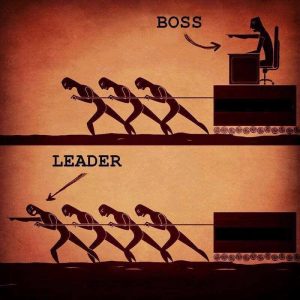
Antwi and Kale (2014) reviewed Lewin’s Three-Step Model that examines how social groups are formed, motivated, and maintained. As I interpreted the information from the interview process, a pattern that exemplified the role of leadership in implementing change. The key underlying impressions were without a champion or leader promoting and presenting the project with enthusiasm, the project will not succeed. As in Antwi and Kale’s (2014) comparison of the Canada Health Infoway Change Framework, with the first point being governance and leadership is essential in any implementation of change. The secondary interview findings promoted the need for resources at the right time and place, comparatively aligns with Antwi and Kale (2014) stakeholder engagement and perspectives. Weiner (2009) surmises that the individual-level theories of behavioral change have provided more in successful change processes.
Personally, my experiences in leadership in group and individual, the various applications of presenting it, has both pushed groups to succeed or lead them to fail. Both directions provide invaluable learning events for future change and organizational review on knowing when to initiate change.
Udas (2008) blogged that striking a balance between leadership through top-down decision making and resources needed in long-term planning requires middle management buy-in. Indicating key points that follow a neutral process that maintains a seemingly continuous progress of reaching the successful outcomes. In his blog, he further states that policy, procedure, and technology need to come together to bridge the gap between vision and reality. Many of these ideas were reemphasized with the interviewees, putting in my view leadership and change into both groups showing that individual skills and group harmonics require leadership in varying degrees throughout the organization.
References
Al-Haddad, S., Kotnour, T. (2015) ‘Integrating the organizational change literature: a model for successful change’, Journal of Organizational Change Management, 28(2), pp. 234–262. doi: 10.1108/JOCM-11-2013-0215.
Antwi, M. and Kale, M. (2014) ‘Change Management in Healthcare: Literature Review’, Monieson Centre for Business Research in Healthcare, Queen’s University, (January), pp. 1–35. Available at: https://pdfs.semanticscholar.org/4096/8d2ea62c423946f0089aacfb9d3f461035ed.pdf%0Ahttps://smith.queensu.ca/centres/monieson/knowledge_articles/files/Change Management in Healthcare – Lit Review – AP FINAL.pdf.
Udas, K. (2008, June 30). Distributed learning environments and OER: the change management challenge. [blog post].
Weiner, B. (2009) ‘A theory of organizational readiness for change.’, Implementation science: IS, 4(1), p. 67. doi: 10.1186/1748-5908-4-67.
Google definitions
Efficacy vs. Potency – Pharmacology – Medbullets Step 1. step1.Medbullets.com/pharmacology/107007/efficacy-vs-potency
Efficacy – Wikipedia https://en.wikipedia.org/wiki/Efficacy