Category Archives: Uncategorised

LRNT 525 – Activity 2- Successful Change


Successful change in a digital environment.

Successful change, whether large or small, begins with good leadership.  In my view, “successful change” is based on the acceptance of the change by the company, group, and individual.  My colleagues both corporate and academic interviewed all proposed that leadership in its many forms, influence peoples decisions and have greater effects on accomplishing change. One of the important conversation being told was that hiring or placing the right person for the job in a leadership role and champion the project was paramount in producing a successful outcome. The consensus was that leadership and leadership style, the type of leadership, and how it is introduced has a greater effect on the outcome of change than the method of change facilitation employed.  This is not to say that change theories and models are not necessary.  Indeed, they provide valuable clues and guidelines regarding the appropriate leadership style to implement and when to enact different elements of that leadership.  However, I feel that successful change is supported by flexible, change-promoting leadership.   Al-Haddad and Kotnour (2015) present their model of successful change against known models of systematic or managerial change methods. Their findings uncovered that less than 30% of the initiatives end in success, stressing the need to plan and adjust and select the methods that are likely to produce the desired outcome.  Wenek (2005) describes a viewpoint from the military leadership doctrine that instills the required leadership skills at all levels of the organization.  Providing leadership training to guide, monitor and adjust on the fly, with proven results in adapting to changing situations faster, and willingly.  A leadership style that promotes delegation of authority helps to train subordinates to the next level while building confidence, motivation, and buy-in.   It also helps increase tolerance for change in employees and leaders, since change becomes part of the organizational ethos through built-in expectations.  At the same time, these leadership skills offer some risk and leaders need to be able to accept this and focus on the benefits, such as building increased trust and improved communication.  Thus, leadership is, in my opinion, the underlying foundation of the change process.

While leadership drives the project, “resources required” moves it forward.  Resources and technical equipment must be provided to the project as the need arises in order to facilitate smooth transitions. Interviewing colleagues highlighted that improperly designed interfaces, programs, or learning material and resources will derail any project. This and my own experience in finding the resources needed to move a project forward, helped me to see the importance of resources as a contributing factor in successful change management.  Resource definitions are varied and could be specific or vague,  but all the participants interviewed indicated that successful change required resources at the right time.  For example,  one colleague talked about employees that were asked to use their own computers/devices to complete the course.  Without establishing a minimum requirement for computers and programs needed, caused a huge delay and issues in technical problems ranging from which browser worked and what programs open the learning material.  Navigation through interfaces in the programs utilized or organizational structure of the material can either frustrate the participant or build buy-in. The act of providing the additional training, allowing for feedback and acknowledgments of suggestions are all leadership skills that need to be applied while designing learning material.

In addition to leadership and resources, work groups are needed to assemble to complete further tasks within project scope, full time and temporary leadership positions can be assigned and nurtured to further give a value to tasks assigned. Recognition of milestones, accomplishments, and feedback is of utmost importance at this stage, helps build trust and commitment, turning the employee into a participant. Weiner. (2009) Readiness for change theory breaks down organizational change and implementation theories have been looked at both together and separately, to guide one or determine the best way to implement change.  I believe it can be monitored in this group and as the attitude and buy-in build, so will the readiness for change.

Leadership is demonstrated both in the individuals and groups, It is, however, the individual with the ability to use reason to overcome perceived fears and facilitate change.  Build on knowledge, milestones, personal goals, with rewards (certification and acknowledgment) filling the needs of adult learning, giving purpose and direction to the mission and acknowledgment, involvement and feedback to the employee. The individual leader is the one variable that holds the power in the successful change in a digital environment and can be the driving force or champion behind it. The Individual or team can also be the catalyst for failure.

References

Al-Haddad, S., Kotnour, T. (2015) ‘Integrating the organizational change literature: a model for successful change’, Journal of Organizational Change Management, 28(2), pp. 234–262. doi: 10.1108/JOCM-11-2013-0215.

Weiner, B. (2009) ‘A theory of organizational readiness for change.’, Implementation science IS, 4(1), p. 67. doi: 10.1186/1748-5908-4-67.

Wenek, K. (2005) ‘Leadership in the Canadian Forces: Doctrine, http://www.cda-acd.forces.gc.ca.


LRNT 525 – Assignment 1- Personal Leadership.

by

Klaus Rimke

Has the digital age changed leadership?

Training, conditioning, and repetition are interactions that all play a role in retaining learning events, changing behaviours, making them habitual.  Building a directed culture within an organization takes leadership. The type of leadership role adopted can be varied, leadership through reflection helps one to consciously look at what or how your role and or influences played in directing the outcome.  Some of this information can be gleaned from various reflective processes, both internal and external. For example, external reflection could be achieved through after-action reports and data collection such as scores or test results.  Now, if we include a focus on self, and see how it allows for reflection on your actions, the effect had on the outcome, with that could other solutions have had other effects (Castelli, 2016).  In my reflections on leadership and implementing digital technologies, in some cases requires thinking outside the box.  Leadership qualities such as being self-aware, mindful of the present moment, and applying personal wisdom, experience and maturity, all play a role in reflective leadership.  When incorporating these ideas and adapting to the changes created by digital learning, a reflective viewpoint would look at process changes.  Processes such as in testing knowledge retention once viewed as hands-on verification through observation, demonstration, and repetition.  Many safety compliance and regulatory organizations, still require a way to verify compliance and look toward traditional verification methods.  Add the accessibility of knowledge through digital technologies and the question becomes, how can leaders verify skill and ability in the digital world?  As the lines between a physical interaction of observation and the use of digital technology as a verification process are blurred, by computer-assisted testing, AI, and automation.  

Another factor that can affect assessment is the perceived lack of separation between leaders and teams.  While this can facilitate work groups, hiring and training global employees, and educating online students, it creates a unique set of problems in training. Despite this perceived proximity, a degree of separation is always maintained and can foster a unique set of problems.  Some solutions can be achieved through technology, such as LMS’s, which can provide online blackboards and video instruction modules to ensure basic skills are met.  Social media and the various video and chat communication tools can also be implemented and utilized to contribute to learning events.  In addition, leaders will need to adapt to incorporating learning through the growing realm of automation and 3D learning simulators.  Leaders, their teams, and learners’ experiences with these will contribute to determining how learning theory will adapt or be changed entirely by such experiential learning experiences.  Adapting to, accepting and promoting change through technology, from a leadership viewpoint, will invariably be related to buy-in on the part of leaders, learners and their teams, as well as adapting to the process used in implementing new technology.

 In my personal experience, the need or ability to adapt to change in a timely manner as well as being able to learn from mistakes are two of the most critical leadership skills to possess.  While it can be challenging, once you begin to actively practice these skills, learning through reflection begins to occur.  When you feel that you thought or reflected on a decision too long and appeared indecisive still a learning event.  So how does this change digital influences, modify how we look at leadership theories or does the theory need to change when used in digital learning environments?  In comparison, Khan (2017) looked at adaptive and transactional leadership, with adaptive leadership providing a higher capacity as the catalyst for change. Reflective and adaptive leadership both appear to follow many of the same traits and with the similar outcomes. Adaptive leadership theory, however, doesn’t explain how the leader reaches his decision, only that they must carefully consider external changes that can inversely affect an organization.  Thus, reflective leadership theory provides a method of reflection that can will help provide multiple viewpoints and insights through reflective pattern recognition.  Distributed leadership as discussed by Huggins (2017) also requires the ability to delegate authority and release some of the control normally held.  The reflective ability to determine how this will affect both the leader and the learner is based on how much risk the leader is comfortable in giving up. What I’m trying to say, is that in my opinion distributed leadership theory still requires some form of training and reflection to determine how, when, and where to relinquish power and control.  The military machine does this quite well through teaching up and delegation, exercises and training events and in doing so increases the risk capacity within the leaders.  In fact, it’s a brilliant way to build confidence, and leadership skills in a subordinate.

The question of leadership and the ability to adapt to the digital world relies on a leader’s ability to critically evaluate situations through their technical experience and knowledge within their field.  Tying work with a specific mission helps in understanding the culture within the organization.  Buy-in, compliance, and success are all tied to the mission and vision of the organization because these help the target audience know the expectations of the leaders.  In turn, the leaders are expected to help their teams reach the organization’s identified goals in keeping with the culture of the organization.  These leaders recognize the group’s capacity, are responsive to their team’s needs, and adapt quickly to change. To be responsive, they provide the proper and timely communication in both directions and offer constructive feedback.  They also understand that leaders must demonstrate ethical behaviour and build their teams’ trust in them.  Responsive leaders foster characteristics that meet the goals of reflective leadership by creating a safe environment through consistently ethical behaviour, open communication tools that challenge outdated customs, cultural beliefs, and assumptions (O’Toole 2008).  


References

Castelli, P. (2016). Reflective leadership review: a framework for improving organizational performance. Journal of Management Development, 35(2), 217-236.

Huggins, K. (2017). Developing Leadership Capacity in Others: An Examination of High School Principals’ Personal Capacities for Fostering Leadership. International Journal of Education Policy and Leadership, 12(1).

Khan, N. (2017). Adaptive or Transactional Leadership in Current Higher Education: A Brief Comparison. The International Review of Research in Open and Distributed Learning, 18(3).

O’Toole, James (2008). Notes Toward a Definition of Values-Based Leadership. The Journal of Values-Based Leadership, 1(1).

Sheninger, E. (2014). Pillars of digital leadership. International Centre for Leadership in Education.

Wenek, K. (2005) ‘Leadership in the Canadian Forces: Doctrine, http://www.cda-acd.forces.gc.ca.

Activity 6

Activity 6- Abundant digital content
Learning to cook, you may think that cooking skills can be pretty basic and everyone can do it. In my journey around the world, I enjoyed the ability to try new foods and flavors from many of different countries. Now in school, I’ve decided to learn how to cook new and exotic foods at home. In relation to the abundance of digital content available on this topic, I’m finding not only are the tremendous amounts Apps such as Yummly dedicated to providing cooking recipes for any topic and meal type. Variations of the recipes and the amount of variation and uploaded comments and feedback plus peer reviews can be accessed via the internet provides ample information. Online Dictionaries and search engines makes it very easy to find reasonable explanations and video when learning how to use specific tools and for example chopping techniques, and info such as measurement equivalents

The internet has made cooking accessible by everyone with internet connections.
The many cooking shows on TV describe the cooking techniques of famous chefs.

However, through the internet, U-tube, and the online cooking apps have expanded my choice of cuisine.

The convenience of cooking at home with fresh ingredients even goes one step further now with companies like Chefsplate.com, online ordering off a menu and have all the ingredients sent directly to your home with a detailed step by step instructional document. This type of program reduces the waste when trying different types of cuisine, and takes the challenge out of searching for exotic spices/herbs and or specialty ingredients. The ingredients all come measured and supplied eliminating the need to buy larger containers of the items, that you may only use once.
The internet has made cooking accessible by everyone with internet connections. When looking at the abundance of information available to learn from self-teaching and available research material can be found easily. The sharing of grandmothers recipes has been taken to a new level.

References
WWW.Yummly.com
WWW.Chefsplate.com
WWW.MAsterchef.com

Week 5 Assignment 1

Assignment 1 LNRT523
Has anyone else wondered about the Video and Audio enhance training material, the effect it has in comprehension and competency? In that, I’d like to explore the advantages of an optimized Visual and Audio aids in expanding written content, and whether or not video size and module sizes (i.e. a length of time spent in the modules affects comprehension and competency within the topic).
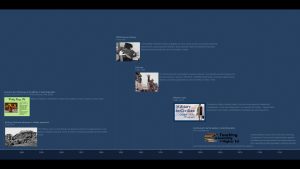
Trends and proven success in optimal training designs that have utilized innovations in the learning environments have been around for centuries. As technology and culture changes initiated a need for continued learning, from paper and the printing press, religion and the schools provided through the monks and priests. Innovative ways to train were being tried and developed alongside the theories being developed to meet the new ideas presented Persyn, and Polson, (2012). As early as WW1 circa 1927 innovative training used by the military, such as instructor-led classrooms aboard airplanes to teach urban geology, or by WW2 the use of radio and Film to train the deploying troops. In the 50’s with the Personal TV in most homes and the ability to broadcast educational films from a single broadcast location changed the impression and culture within instructional design concepts. With the invention of computers and their inclusion in higher education, early on the computing potential was realized. Yet being in its infancy, limitations in the new technologies created roadblocks through sporadic acceptance of the technology and failures in acceptance of a changing culture. Despite these difficulties, Industry, schools and personal computers popularity increased the use of multi-media and its interactive use as a multi-media learning tool. (Kettanurak, Ramamurthy & Haseman, 2001) The study showed the utilization of multi-media brought better understanding and a more meaningful learning experiences to the student. Decisions on which theories apply was consistently reviewed from a multi-disciplinary viewpoint, behaviorist, cognitivist (Jonassen, 1991).
• Behaviorist Theory- focuses on retaining or changing targeted behavior through reinforcement, with features such as;
o Verification,
o Learning progress (Stats)
o Self-Pacing Control over depth, difficulty, and type of media,
o Time spent and amount of practice
• Cognitivist Theory- focuses on What and How learning takes place to stimulate effective and efficient transfer of knowledge. Key features include;
o Questions,
o Practice /review
o Navigation requirements with elaborative feedback.
• Constructivist Theory- views learning as a process and how to make learners think and learn productively, Key features include;
o Hypermedia Structure-based navigation
o Hotspots
The cognitive theory of multimedia learning (CTML), determined cognitive frameworks in language comprehension implies that the listener breaks up the information received and builds on schemas from prior experiences and understanding to make sense of information heard. In the sense of complex information, it was determined to be able to repeat and recall info assisted in retention of knowledge. Which, however, at a lecture, the speed and repetition of information provided cannot be modulated by the listener to slow down or repeat info not understood unless its recorded and can be played back. The invention of Video Tapes and recording devices led the way to the use of the different types of media-assisted learning mediums. Some of the currently used mediums are for an example, Pod Cast, U-tube, ScreenCasts, Tutorial and video lectures, Embedded Powerpoint and published LMS modules and others. Lancellotti, Thomas, and Kohli, (2016) research covered the comprehension of material where a short video was added to one group and not another. The study found that the short videos provided a significant improvement in student learning as well as an increase in student satisfaction with < 90% of participants reported seeing a value in video enhancements. Participants responding that 73.5% preferred a combined Video and Lecture design, 24.2 % preferred traditional lectures with 2.2% preferring video only. Video production in shorter formats has been found to work better in lower bandwidth environment, adding voiceover and avatars (Bubbleheads) can be used to enhance the information provided when feasible to do so. These enhancements can also be even more useful as a tool in English as a Second Language or when lower language ability is noted. Furthermore, in Guo, Kim, and Rubin, (2014) their study included engagement and determined an average of 6 min Video, U-tube etc. is the optimal video length in maintaining engagement and knowledge retention. Video production costs can affect the ability to enhance presentations, modules or information provided, however, the gains in understanding (Competence) and student satisfaction must be weighed into the instructional design.

References

Anderson, T. (2016) ‘Theories for Learning with Emerging Technologies’, Emergence and innovation in digital learning: Foundations and applications, (1989), pp. 35–50. doi: 10.15215/aupress/9781771991490.01.

Dillenbourg, P. (2016) ‘The Evolution of Research on Digital Education’, International Journal of Artificial Intelligence in Education. International Journal of Artificial Intelligence in Education, 26(2), pp. 544–560. doi: 10.1007/s40593-016-0106-z.

Guo, P.J., Kim, J., and Rubin. R., (2014) How Video Production Affects Student Engagement: An Empirical Study of MOOC Videos http://pgbovine.net/publications/edX-MOOC-video-production-and-engagement_LAS-2014.pdf

KETTANURAK, V. (NUI), RAMAMURTHY, K. and HASEMAN, W. D. (2001) ‘User attitude as a mediator of learning performance improvement in an interactive multimedia environment: an empirical investigation of the degree of interactivity and learning styles’, International Journal of Human-Computer Studies, 54(4), pp. 541–583. doi: 10.1006/ijhc.2001.0457.

Lancellotti, M., Thomas, S. and Kohli, C. (2016) ‘Online video modules for improvement in student learning’, Journal of Education for Business. Routledge, 91(1), pp. 19–22. doi: 10.1080/08832323.2015.1108281.

Persyn, J. M. and Polson, C. J. (2012) ‘Evolution and influence of military adult education’, New Directions for Adult and Continuing Education, 2012(136), pp. 5–16. doi: 10.1002/ace.20031.

Adding Twitter to your RRU Word press site

In my search to add twitter to my Blog has been an interesting endeavor, Steve(also a cohort in the MALAT program) was extremely helpful and to that I say thanks! If anyone else wants to add their twitter account to their blog. Here is what you can do!
Note: there are certain Themes and templates that won’t let you do this

Adding Twitter to WP.
-Go to Twitter.com (Login)
-Click on the Icon with the 3 horizontal dots ( : looks like a colon with an extra dot)
-This takes you to options to click on “embed this profile”
-Embed timeline and Copy Code.

Go To Blog Dashboard and sign in
Scroll down to appearance tab in the menu – open
-go to Widgets –
find the “shortcut ultimate” and drop into the sidebar open and add code from Twitter.

My digital presence

Reflecting on my digital presence has led me to analyze the structure of the MALAT program and the way it is designed. What I have learned is that there are many different ways to incorporate the collaborative learning styles and techniques introduced throughout this program. Schmid et al. (2014) article on the important effect technology has in supporting communication and student interactions, through a collaborative learning process. Schmid et al,(2014) researched and recognized that many theoretical frameworks could be applied to distance and online education. (Anderson, (2003); Beldarrain, (2006); Moore, (1989)) all found the interaction between students, their colleagues, teachers, and content were extremely important in promoting greater achievement and long-term success. The study however also found that a likely assumption by educational practitioners, in providing the student with the opportunities to interact, will in turn automatically provide a collaborative and successful outcome. (Abrami et al., 2011; Kanuka & Anderson, 1999). A study performed by Borokhovski et al. (2012) theorized given an opportunity to interact doesn’t provide a guaranteed result, however, has not been truly verified through the research. The research did find an intentionally designed interaction greatly outperformed contextual designed interactions. This leads into the intentional and directed approach used in developing an online identity.
I felt tremendous tension, stress, and anxiety as I started this course and dived into the creation and cultivation of my digital presence. My original laptop had either picked up a virus or couldn’t handle the new programs I had downloaded causing the computer to freeze (5 years old and very cheap). There were many technical issues that I had to figure out on my own, as I switched from Windows-based Laptop then to a new MacBook Pro. Learning the platform differences within the use and function of applications such as Microsoft Word, to how to navigate the different operating system in itself increased the anxiety and confusion I experienced. With these computer related issues coming at a time when the initial links and digital presence was being implemented. These issues compounded the stress I felt, in attempting to complete assignments and setting up the initial online presence.
Distance learning and adult learning theories applied to online does require a technical support system for student interaction, due to separation in space and time. In regard to the students, teachers, and peers, this separation from face to face interactions places a much higher emphasis on technologies and their ability to communicate and function in a collaborative manner.

In determining the direction, I wanted to follow in developing my online presence, I needed to establish where I was comfortable in my online presence and its usage. Looking at my online presence through four categories, personal time spent, institutional (School- Work) time, as a visitor (browsing), and as a resident (comfortable in this technological space) in regard to online social media’s current communication methods. What I found is that 10-25 % of my time was spent online, out of which 50% of my personal time was spent on social media such as Facebook and LinkedIn. Text and email were consistently in the 10-20 % range with an average comfort level. I did, however, find it interesting that until starting this course, I had never entertained a need for tweeting, blogging and utilizing separate collaboration program such as slack. This may be due to the corporate mindset of the company I was with, who were concerned about security and all communication was through a structured and restrictive internal use process. This all comes back to my comfort level and my initial buy-in into the usefulness of Twitter and Blogs, being new to this community, I felt completely like a visitor, lost and overwhelmed by the influx of sensory overload.
Deciding on where to go from here, the reading material provided, such as in Boyd’s (2010) draft article in which emphasizes the growing aspect of social network sites and how that growth intertwines the lives of friends, families, and strangers. The internet, social media and your online presence connect many differently perceived groups together. Social media through the various group functions, recognize patterns or keywords to suggest and even promote other groups and or pages broadening connections and interactions. Diving further into how the digital presence works in relation to the risks and rewards or even benefits and or negative impacts on my presence online.
Slagter van Tryon. (2009) discusses how learning through face to face methodology and online learning differs in a sense of social disconnect and the inability to view social and sensory clues on the intent and meaning of the conversation online. This resonates with me, in the sense that I’ve watched emails and communication derailing conversation and communication through perceived or misunderstood meanings. Biocca, Harms, and Burgoon (2003) focus on the how technology mediates social interaction. Slagter van Tryon. (2009) implies that in the absence of social clues the learner fabricates or perceives connections and builds on these assumptions to make the connection. The process of social cognition and its impact on deciphering information to better understand or put their own perceptional context to the information gathered.
In the process of reflection, I personally saw the use of the social assumptions and perceived connections I made and how that impacted my online presence. Having been diagnosed with PTSD from military service, and after years of therapy, I now know how perceived threats and triggers even when unfounded can affect the thought process. This all leads to the discussion making process on how these influences impact the online persona and what choices I will make in designing my online presence. Referring to the graph above, I’ve come to realize my online presence is on average currently very minimal, there will be areas such as Twitter and LinkedIn where a more concerted effort will be placed. Programs and communication tools such as Slack are becoming more familiar and have had the ability to meet the team at residency has made this transition much better. That being said, in my current situation, my choices to be a little less open and controlled in developing my online presence. Twitter and the Social media tend to trigger my fight or flight responses, especially when topics arise that through my experiences, may cloud and or influence my thought process. Having the understanding on how and what happens in my thought process has made me second guess many of my responses and look at the validity of my reactions. This in itself has been guiding me to read posts only, with the occasional retweet and like. I find myself researching comments and online claims more than before, checking for the validity and source. However, the thought of not participating is not where I want to be, I hope I can bridge this gap with further research and the critical thinking skills being developed through this course.
Coming from more of a corporate side of my experiences, Blogging and using Youtube was never high on my priority list. All videos and training material developed were done so with the understanding that the equipment tools and procedures held proprietary information that was deemed critical in maintaining an industry advantage and security. I have come to realize that open discussions and group discussions can enhance the learning experience and am exploring various programs and options in social communication methods available. I am finding that the in the design and implementation of my blog between restrictions in the version of Word press and or advantages in use in comparison to other themes. Testing out various themes and how to link items such as Twitter or a calendar to my blog has proven interesting, I thought the utilization of You-tube and Web searches I’d find answers, it only brought questions. Also, being new to Word press and blogging sites, some confusion with the RRU supplied word press site and due to administrative restrictions, are adding to the confusion in setting up this site. A clearer document on what you can do and how to do it would be helpful. What I’ve also found helpful was access to other cohort’s reflections, some of their insights and directions are taken in the development of my plan. Blogging and Tweeting have been something I’m having difficulty with, looking at some of the suggestions and plans being developed I am going to set a minimum of at least two blogs or posts per month to get used to this process.
In conclusion, I’ve been trying to determine the direction and extent of my digital persona, I know it’s a moving target and changes as I grow and learn. Understanding myself as well as the meeting the needs of this course are of high priority to me. The reading and discussions are showing me the value of a well-rounded digital presence, and the drive to contribute to the academic community with the ability to make a difference in the quality of the lives and wellbeing of those being trained. I view my online presence as a fluid or moving target, hitting the target may be difficult, but through practice, guidance and teamwork, I will eventually succeed. Narrowing down what works and what doesn’t work for me will be a continuous endeavor, keeping an eye on the target and adjusting to the changing environments that may induce other triggering events and distractions. Just as in sighting a target through iron sights, accuracy improves with practice, trial, and error and by sending rounds down range. Learning from your mistakes and accepting counsel and criticisms, has been a tenant of my growth goals, as well as maintaining ethical and honorable personal traits.