Before I left for Maternity leave, my program at my place of work saw the beginning of some major overhauls and adjustments with the goal of a more structured, cohesive program. We began a program review, curriculum review and management/faculty shifts which based on feedback and personal opinion, left staff feeling overwhelmed dealing with the “growing pains” of an evolving industry. Having to implement change on a large scale can be a demanding task, but adding curriculum review and a management shift into the mix can cause unforeseen challenges and if handled incorrectly, can disrupt workflow, jeopardize innovation, sacrifice staff happiness and implore an apathetic, rushed attitude. My role at work, apart from teaching was focusing on curriculum development and prior to me leaving, I was assisiting with the changes in the program, as well as advancing my own classes. Opposed to focusing on the negatives of curriculum review/development and the stresses this may bring, I feel revisions are an opportunity to implement postive, constructive learning so they in turn can provide meaningful learning for the students in a post-secondary environment. “To find opportunity in challenge will require reimagining the ways that we currently think about innovation and design” (Conway et all, 2017).
I am currently the course lead for an “introduction to computers” class and I am continually met with red tape when it comes to updating, let alone a complete overhaul (which is what our program and curriculum review entails). Not everyone is on the same level and this goes for both the instructor and learner, so it is very difficult to appease everyone. From my experience with creating and designing a class, keeping things fresh and current is only the tip of the iceberg. I am continually searching for new and innovative ways to captivate the classroom and keep everyone engaged. One of the biggest issues I run into is that the course is too basic for some and too heavy for others. I am a big advocate for authetic learning to draw in real world experiences, which means I am met with pushback from instructors as the course is quite heavy with assignments, which gives them more to mark. One thing to take into consideration is that not only are students learning a new interface (ie; moodle, D2L), but they are also learning new technologies and software while working within this interface.
Possible project planning which may create smoother transition for curriculum change/development:
- Create a multi level learning management system. A LMS for management; train the trainer so that management can step into a leadership role and support the staff. This allows management to be aware of changes to come and possible trouble shooting questions which may arise. A LMS for faculty so that there is time for questions prior to teaching new material to a classroom, giving the faculty confidence and allow room for subject matter experts to grow.
- Implore instructional designers and learning technologists at the beginning stages to discuss design with both management and faculty. Scott (2019) states that learning technologists “help create an easy to use and access program for both learners and faculty to use” as they can inform, advise and give reference to pedagogical contexts (Scott, 2019).
- Allow time for both the learner and instructor to learn the material. Students at the University of Calgary “identified the effective use of technologies by their instructors as an enabler for their own effective use” (Learning Technologies Task Force, 2014), which tells us that when we have properly trained staff, they will lead by example and encourage intellectual risk taking while navigating authentic learning. It was also identified in the same study barriers that students identified regarding the speed of learning new technologies and tgere is a lack of time given to learn new technologies effectively.
- Create a survey for the instructor and student to receive honest feedback on the course and to generate more ideas which I can hopefully implement into the course.
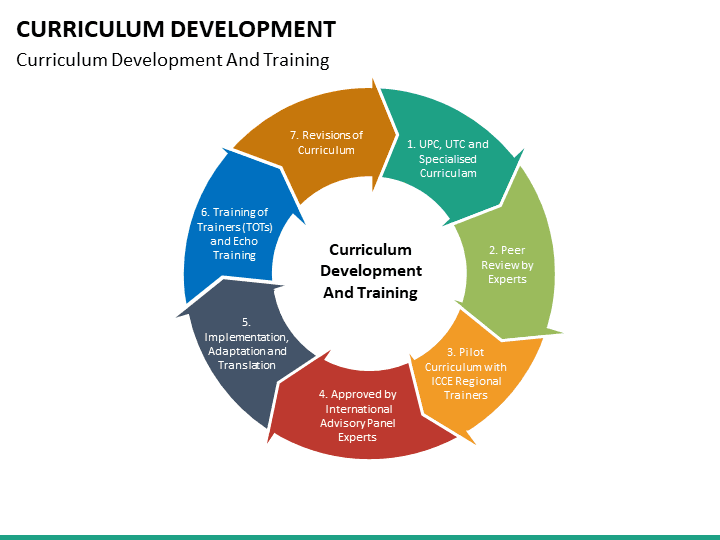
My course is taught online and face-to-face, which means there are a few layers involved when it comes to implementation. The university of Florida (n.d) outlines prime indicators to assess the readiness of such initiatives, and I will be imploring these initiatives upon returning to my role and continuing on with both the curriculum development and program review. I was recently informed that the program review is currently on hold due to the large amount of changes on the management level, which is not necessarily a bad thing as this ensures everyone can work together collectively and be on the same page. Curriculum review requires several stages of planning, researching, trialing with feedback, finally implementation, everyone needs to be involved to produce a cohesive course and if this means putting things on hold to ensure it is done right the first time, I am 100% on board.
References
Conway, R., Masters, J., & Thorold, J., (2017). From design thinking to systems change: How to invest in innovation for social impact. Royal Society of Arts, Action and Research Centre.
Scott, A. (2019, June 30). Why we need learning technologists. [Blog post]
University of Calgary, Learning Technologies Task Force. (2014). Strategic framework for Learning Technologies.
University of Central Florida (n.d.). Institutional capacity and readiness.
March 8, 2020 at 7:34 am
Hi Kerry,
Thanks for the great post and case – it sounds like you have a great project to consider for when you return to work. You have identified some great strategies to try to implement to introduce the changes you are hoping for in the curriculum – better supports for both the instructors and learners, and provide these early in the process. As an ID at my home institution we are constantly trying to get involved in program revisions and the review stage to help facilitate the process and be a support, but we are often forgotten. You also suggest including a survey for feedback – and that is a great way for your to collect your evidence and to then feed that back into your process and to your colleagues.
March 13, 2020 at 10:47 pm
Thank you for your comments Michelle. There are so many things that I have learned which I want to implement when I return to my role. I know what you mean when you say that “we are often forgotten” as this is a constant struggle on my end. Sometimes it can be tiring to continually put forward ideas for them to be disregarded or dismissed, even when they will be for the greater good.
– Kerry
March 9, 2020 at 1:17 pm
Hi Kerry,
I do not have a question; however, I would like to show my appreciation as someone whose student interactions depend largely upon innovative content delivery and curriculum design.
When I read your post, I felt a connection to your assessment of curriculum reviews and the challenges of implementations. New opportunities in content delivery are indeed exciting, as is the prospect of implementing positive, constructive, and meaningful learning in a higher education setting (K. Sharples, personal communication, March 8, 2020). According to Ben Mahmoud-Jouini, Midler, and Silberzhan (2016), when applied to the innovation process, design thinking not only advances implementation, but also involves a multitude of stakeholders to move past a blueprint, and contribute to an organization’s culture and strategy. I am a proponent of organizations who “live their values.” You are clearly very passionate about the post-secondary experience, and you seek innovative solutions whenever possible, which suggests you share in my values when it comes to learner engagement. Curriculum overhauls are no small feat, mainly when not all stakeholders are on board, and I appreciate the elements of design thinking you have incorporated into your proposed transition methods. I believe a holistic and inclusive approach to change and alignment with organizational goals to be crucial in navigating transformation within a post-secondary environment, and you appear to have the right leadership mindset for when you return to your role.
References
Ben Mahmoud-Jouini, S., Midler, C. & Silberzhan, P.(2016). Contributions of Design Thinking to Project Management in an Innovation Context. Project Management Journal, 47(2), 144-156. doi: 10.1002/pmj
Sharples, K. (2020, March 8). Personal Communication. Retrieved from: https://malat-webspace.royalroads.ca/rru0109/stripping-back-curriculum-development/
March 13, 2020 at 10:45 pm
Hi Christine,
Thank you for your great response and thoughtful words. You know the struggles of curriculum development all too well ☺I totally agree with what you are saying regarding being a “proponent of organizations who “live their values.” – I feel that too many times we don’t get to see this in action and we are living a Greek fable where everything is a contradiction. After taking some of our classes and growing from our teachings, I am really eager to get back to my role and implement so many of the new strategies I have learned. Your post was refreshing to read, thank you.
– Kerry