Hope should not be the framework for planning projects

Doing more with less is a deciding factor within business today. This is pretty much every organizations mantra these days. The future of business, therefore, relies on competitiveness and adaptability. In order to do these things efficiently the word planning becomes crucial. Proper planning means everything from meta to micro.
The Project Management Institute (PMI) defines a project as a temporary endeavor undertaken to create a unique product, service, or result. Also, on any project, you will have a number of project constraints that are competing for your attention. They are cost, scope, quality, risk, resources, and time.
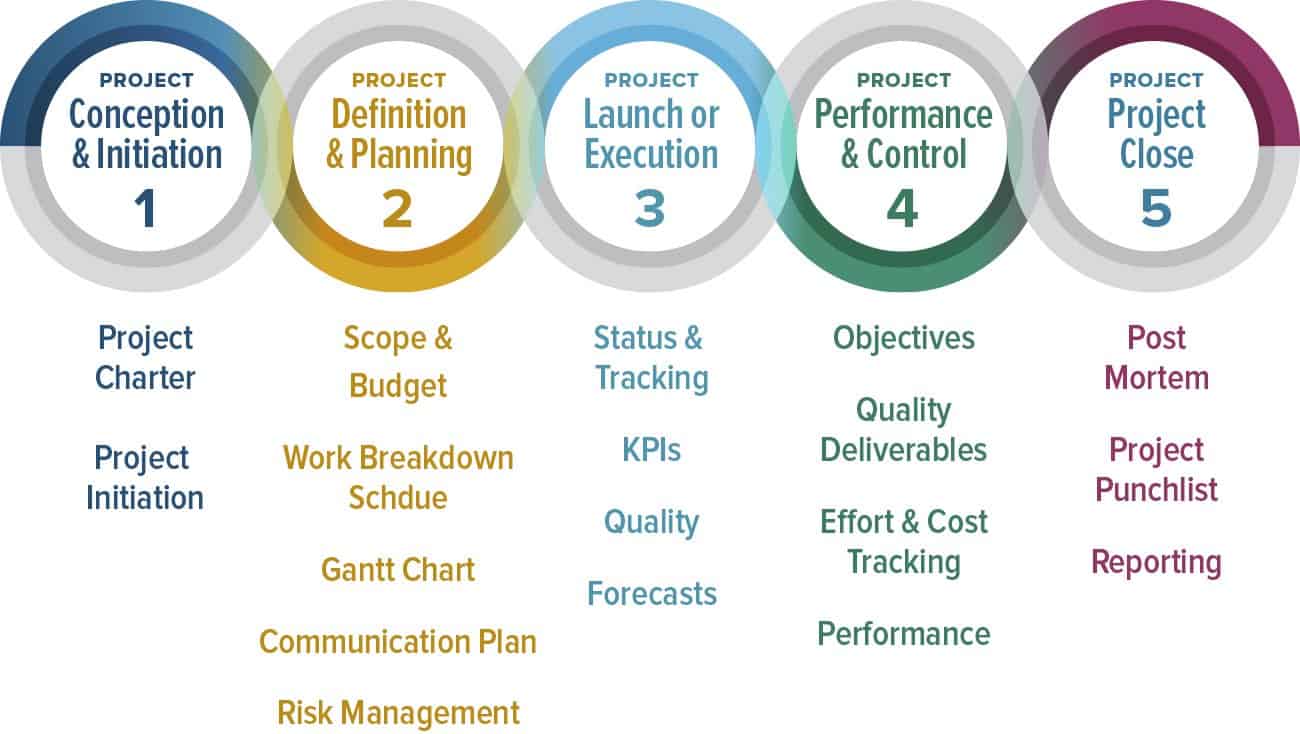
The diagram below gives you a snapshot of the project management life-cycle. Taken together, these phases represent the path a project takes from the beginning to its end and are generally referred to as the project “life cycle.”
Let me give you a real-life example of a large project about an infrastructure system change inside one of the largest health-care insurance companies in the US named ABC. The objective was to correct the contact center for better reporting and analytics of the customer calls. The senior leadership went ahead and spent $26M on a new device, (with 3-years licenses) and an unknown vendor called XYZ. The problems occurred right from the initiation phase, primarily for the following reasons. Lack of communication from the senior leadership to the entire organization, i.e the scope was never clear from the beginning. Work and decisions were made in silos and a lot of time was wasted on not proper strategy and metrics about the end results. The execution did not meet the requirements of deliverables, output and most importantly timelines. Not only the project was delayed by 18 months because of senior leadership shake-up and political landscape, the performance and credibility of the choice of vendor partnership with XYZ was a disaster. The sales team of XYZ did an amazing job in selling the complex infrastructure where they did not have enough experience in deploying for large enterprise like ABC. The project ended up 50% costlier than the stipulated budget and 40% of the features initially discussed, were never implemented, such as real-time reporting with analytics about their customer base. The ultimate cost was the employee low-morale, bright and experienced employees either left the organization or let go because of the pressure from the higher-ups.
In conclusion ABC failed to recognize the early warning signs by putting the project on hiatus for 18 months and not knowing the depth of experience and knowledge of the project managers of XYZ put them behind the eight ball. Making sure the right people are assigned to the right tasks. They could have done some re-delegating and re-allocating. Although several factors have been identified that influence the success or failure of projects, some of these factors are specifically related to the planning of projects.
References
Knolscape. (2013). Introduction to Project Management.
Navarre, C & Schaan, J. (1999). Design of project management systems from top management’s
perspective, Project Management Journal, 41 (2) p.19-27
Smith, M. (2002). Assessing the Effectiveness of Project Management Practices in Project driven Organisations
Watt, A. (2014). Project Management. Victoria, BC: BC campus

March 14, 2020 at 2:28 pm
Hi Tehreem,
This story is a great example of a disaster project. It seems that there is a lack of project management or none at all. What captured my interest is on your heading that “Hope should not be the framework for planning projects.” I believe in contingency planning, and I make sure when I lead a project that there are risk and mitigation strategies in place and back-up plans- a and b. If you have to consult with this organization, what do you think should be their priorities to get this project back on track?
Thanks,
Sharon
March 15, 2020 at 12:27 pm
Hi Sharon, thank you so much for your comments. I agree with you that the above mentioned example is a series of unfortunate events or as you appropriately described ‘ a disaster project’. The irony is that it is a real-life scenario which happened last year with an organization that I am quite familiar with.
There are quite a few missteps that could have been avoided even if the project was derailing. First and foremost despite the political tension amongst the leadership at the top. There should have been a change management task force established where their focus should have been to bring the silos together atleast for the sake of this project. Find a common denominator which was ” making their customer health needs paramount and providing them with prompt and efficient response for their questions and queries”.
Also, instead of implementing the project nationwide, take baby steps and start off with one regional location so they can do beta-testing and smooth out the kinks early in their process and planning..
Secondly, go back to the current vendor to see what can be salvaged, demand new and innovative best practices promptly, (otherwise risk losing a long-term lucrative customer) that they can introduce inside this multi-million dollar project with necessary tools and resources.
Sharon, thanks for visiting the blog.
Tehreem.