Presented by Rod. LRNT 523, assignment 1
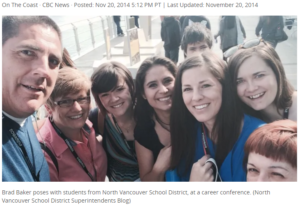
Brad Baker is an educator, based in North Vancouver. 1995, he discovered he was the first aboriginal teacher hired in the district. Brad has received recognition from the district as well with an indigenous educator leadership award, in 2014. Becoming an educator came through what I would call a humble start. Brad’s father is a survivor of the Indian Residential Schools. A loss of personal identity is noted in an online video, where he is asked from what part of Italy he hails. Not able to immediately correct his friends, he worried about being judged for being a kid on the reserve down by the river. Later Brad was able to come clean and express his indigenous identity to his soon to be best friends. Wanting to better life and family, becoming a teacher would break the lack of formal education in his family. Noting himself to be an aboriginal educator administrator, Brad has made it his mission to ensure other educators “indigenize” their classrooms. Now as an administrator in the district, Brad sets out to “indigenize” the classrooms of those within his control. This way, a repeat of Indian Residential Schools will not return.
The information presents a picture of a man that is looking out for his fellow man (any race), while ensuring the future contains well educated folks. Defaced Residential School memorial had Brad mention that those that committed this offence need to be better educated on the past events. This defacing only injures the survivors.
References
Courage: Going Forward in Aboriginal Education | Brad Baker | TEDxWestVancouverED [Video]. (n.d.). https://www.youtube.com/watch?v=5Wk48muy4oM
Richter, B. (2020, April 30). Vandal defaces North Vancouver residential school memorial. Retrieved September 16, 2020, from https://www.nsnews.com/news/vandal-defaces-north-vancouver-residential-school-memorial-1.24127366
October 14, 2020 at 9:18 pm
Hi Rod! Thanks for introducing me to Brad Baker. Stories like his remind me that it is imperative as an educator to learn from Indigenous scholars. Indigenous ways of knowing are as valid as Western ways of knowing and the holistic frameworks and theories therein may help lead so called “modern societies” out of crisis if there is the will to listen. My eyes were opened to an extent as related topics were discussed in a recent course: Outdoor Experiential Education. Two of the scholars I came across discuss Indigenous knowledge systems in their paper provided in the link.
https://www.fws.gov/nativeamerican/pdf/tek-barnhardt-kawagley.pdf