
Photo from Pixel.com
To wrap up LRNT522, we were given the opportunity to interview author, teacher, and researcher, Dr. George Veletsianos, an Associate Professor at Royal Roads University and Canada Research Chair of Innovative Learning and Technology, to ask him about his experiences and life’s work in the field of Education. The following is a discussion based on my key take-away from that session with Dr. Veletsianos concerning the role of technology in education.
Over the past two decades, there has been plenty of discussion among policymakers and administrators about finding solutions to ‘fix’ the many teaching and learning problems. While many of these conversations are worthwhile, they often center around technology. According to Dr. Veletsianos, if we keep this focus, we will not make any progress. Technology is a tool that helps students see the world, solve problems, and connect with others. While an integral part of 21st-century education, we are ignoring the core societal issues that plague our schools by viewing technology as an end rather than a means to an end.
In the age of information, the issues themselves do not receive the attention they deserve. Instead, the latest technological innovations that promise to radically transform education catch the spotlight. But why do we focus so much on the technology? Maybe because technology is tangible. It can be seen, touched, and interacted with. Therefore, when teaching and learning issues arise in our schools, it may feel intuitive to find ‘solutions’ like technology, which are already so ingrained in our daily lives.
Dr. Veletsianos believes this is a serious problem. He asserts that by focusing on technology, we lose sight of what matters. He illustrates this point further using his research interest in expanding access to education as an example. Dr. Veletsianos says one could start by researching online education as a solution to address this issue. But, he warns that expanding access may not be a technological problem. There may be other aspects beyond online education that require attention, like obstacles related to socioeconomic status, restrictions due to location, or other components that are not technological. That being said, education involves multiple facets of which technology is only a part.
It appears we are at a critical moment in time to reflect on how the choices we make today might impact the future of education and online learning. As educators, it is our responsibility to change the conversation about education and technology’s role within it. Learning, not the tools, should be the focus.
As we enter LRNT523, we should take Dr. Veletsianos’ advice and spend some time thinking about what exactly interests us. What are the issues worth exploring that may be of societal benefit if solved? For the decisions we make today will affect the type of society we create for tomorrow.
“What are the teaching and learning problems that may require your attention?” (Veletsianos, 2021).
References
Veletsianos, G. (2021, August 11). Personal interview [Personal interview].
Future of Education in 2030: Exploring the impact of VR technology on Higher Education
Photo by fauxels from Pexels.com As a parent of a young child, there is nothing more important than working on issues related to the possible futures of education. For the sake of all children, it is imperative that we contemplate what kind of world they will inherit....
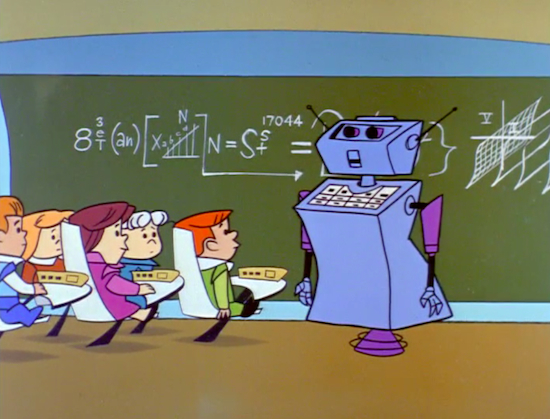
The Future of Classrooms: Media vs. Methods Debate
Image courtesy of larrycuban.wordpress.com Co-authored by Ashley Breton & Sam Kirk The Great Media Debate on the link between media and learning has been going on for decades. This now-famous feud started with an article written by Richard Clark in the early '80s...
People in the Field: Dr. Bonnie Stewart
Technology influences every aspect of present-day education, constantly changing and becoming more progressive. But while the words "education” and “technology" suggest innovation and progress, diversity and representation still lack in the field, particularly for...
Weller’s 25 Years of EdTech: 2002 – 2011
Do you remember how exciting it was when your homeroom teacher wheeled out the big TV into class? It felt like the holidays had come early! Sure, you usually ended up watching a grainy documentary, but it was better than another hour of regular classwork. Video as an...
Weller’s 25 Years of EdTech: 1995 – 2001
For our activity this week, we were assigned the first eight chapters of Martin Weller's book 25 Years of Ed Tech, which discusses the history of ed-tech across higher education since 1994. Each chapter sheds light on a particular technology, theory, or concept that...
Music and Memory
Photo by Monstera from Pexels.com Have you ever heard that one song on the radio or in a store that seems to transport you back to the same memory every time? Most of us know the power of an old song to evoke strong memories from our past. A familiar piece of music...
The Difference Between Primary and Secondary Research
Photo by Zen Chung from Pexels Click here to view my Primary vs. Secondary Research infographic Researchers and academics use various methods to collect and analyze data (Hox, 2005). Some may perform original research with the goal of producing new knowledge in their...
What Makes a Good Research Question?
Image from Pixaby What is a research question, and why is it important for it to be good? A research question describes “what researchers want to understand about the research problem that led to their study” (Given, 2008, p. 786). It is the active first step taken in...
Global Educators and the Dilemma of Digital Learning
For Unit 4: Activity 1, Katia, Stephanie, and I paired up to discuss the various impacts of digital learning on global educators. After doing some research and discussing the topic, we created a visual presentation of our findings along with an infographic to...
Visual Network Map – LinkedIn
Photo by Tracy Le Blanc from Pexels.com In this week’s activity, we were asked to create a visual of our network that identifies where and how we are situated. To perform this task, I used Microsoft Excel and Kumu to develop a graph of my LinkedIn social network....
Recent Comments