
Our team, The Extendibles, chose to look at Extended Realities (XRs). Augmented Reality (AR) is an example of XR. A recent Financial Post article estimated massive expected growth in the XR industry in the next five years (Shelling, 2021). As an example, it described a 3D App that IKEA released in 2017 that allowed customers to ‘place’ pieces of furniture in their desired space at home. Pokémon Go is another popular application in which players use AR on their cell phones to find, capture, train, and battle other players with Pokémon creatures in their real-life communities.
As the Extendibles delved deeper into AR, we discovered an Australian company called JigSpace. Through JigSpace, users are able to create ‘jigs’ which are 3D projections into users’ real-life contexts. Re-imagining ourselves as a fictional trucking company, Zapaka Co., we looked for a solution to a maintenance problem we had. We noticed that our trucks were breaking down because of clogged air filters in remote locations. These breakdowns weigh heavily on our maintenance budget and efficient, effective customer service. Predictive maintenance would allow Zapaka Co to stay ahead of trucks breaking down, as described in Deloitte’s (2017) position paper. We needed to train drivers to change air filters themselves. Bringing everyone to a central location for every update was not feasible nor cost effective.
JigSpace’s case studies impacted our decision making. Zapaka Co essentially had two issues: 1) Finding a way to show employees how to change the filter and 2) Delivering training in situ in remote areas. In one of the JigSpace case studies we reviewed, UNICEF needed a way to deliver vaccines to very remote areas. Swoop Aero devised a drone-based way to do this and used JigSpace to deliver drone pilot training. “The Jig could accurately convey the size of the drone, how it would land and how to offload the cargo – right on the ground in front of them” (JigSpaceb, n.d., para.5). In another case study, DTCo needed to train workers to use complex machinery as described in Figure 1. “Using JigSpace, we can drop a large-scale Jig into a customer’s office space, carpark, or boardroom table so that everyone can see and collaborate on it without any fancy and expensive VR gear” (JigSpacec, n.d., para. 8). These two solutions were exactly what Zapaka Co needed.
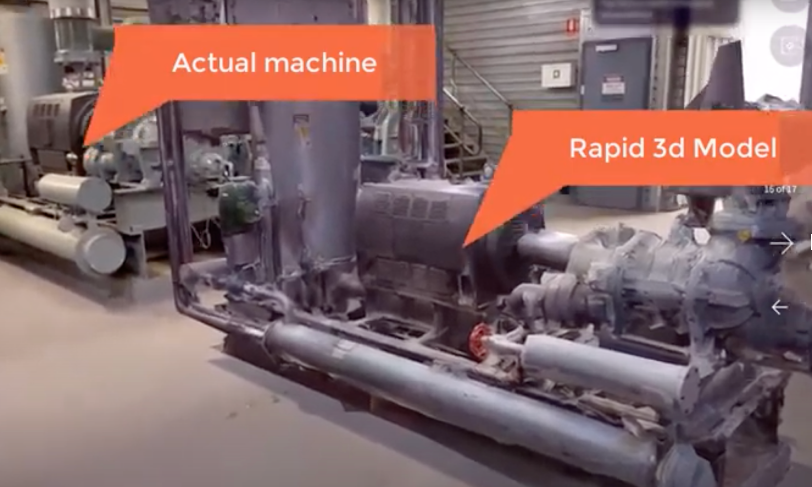
Figure 1. JigSpace rendering of DTCo’s machinery. From JigSpace, n.d. https://www.jig.space/case-studies/3d-modeling-and-mechanical-simulations-made-easy
Using ideas derived from Swoop’s and DTCo’s solutions, Zapaka Co’s solution, we created a 3D Jig of the air filter, then uploaded the Jig to our drivers’ cell phones. The 3D Jig air filter allowed them to see all the details of the filter, interact with it, see the details, move around the filter, then change their own air filter. Zapaka Co is very interested in XR solutions to avoid time and money wastage. As Deloitte (2017) pointed out, major savings can be realized using AR. Mourtzis, Siatras, & Angelopoulos (2020) looked at real time remote maintenance with AR and found operating and maintenance costs can be lowered by improving timeliness and accessibility using AR for training. Zapaka Co is taking the XR possibilities even further by giving the truck drivers the skills to replace the air filter on their own. In our case, our employees do not need clunky headsets to interact with the 3D Jigs, just their phone.
In our tale, checking in with fictional Zapaka Co staff, they found the XR a good solution. Figure 2 shows the rationale and journey we followed. Access did not depend on having internet connectivity. Looking critically at the teaching and learning for changing the air filter, Zapaka Co needs to ensure the new technology is inclusive and to listen to feedback from employees. As Selwyn said, “All actors have equal power in participating, and where all actors can determine what educational technology is or how it is used” (Selwyn, 2010, p.71). Looking at the future, extended realities sit on the edge of possibility and have been there for decades (Selwyn, 2010). Perhaps now is their moment.
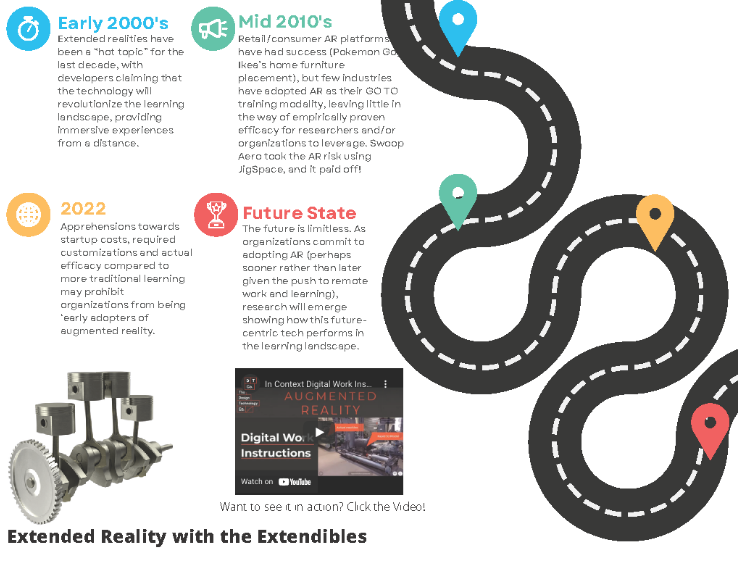
Figure 2. Extended Reality with the Extendibles. Infographic May 5, 2022
References
Deloitte (2017). Predictive Maintenance. Deloitte Deutschland. https://www2.deloitte.com/de/de/pages/deloitte-analytics/articles/predictive-maintenance.html
Green, D. P., Rose, M., Bevan, C., Farmer, H., Cater, K., & Fraser, D. S. (2021). ‘You wouldn’t get that from watching TV!’: Exploring audience responses to virtual reality non-fiction in the home. Convergence: The International Journal of Research into New Media Technologies, 27(3), 805–829. https://doi.org/10.1177/1354856520979966
Houldsworth, C., Insell, P., MacDonald, Z., Maxwell, K. (Group course work). (2022). Extended Reality with the Extendibles. [Infographic].
JigSpacea (n.d.). JigSpace: The world’s highest-rated AR demonstration app. https://www.jig.space/
JigSpaceb (n.d.). Swoop Aero, Augmented Reality Product Training | JigSpace. https://www.jig.space/blog/augmented-reality-product-training-with-swoop-aero
JigSpacec (n.d.). Case study: DTCo’s 3D mechanical simulations made easy with JigSpace | JigSpace. https://www.jig.space/case-studies/3d-modeling-and-mechanical-simulations-made-easy
Mourtzis, D., Siatras, V., & Angelopoulos, J. (2020). Real-Time Remote Maintenance Support Based on Augmented Reality (AR). Applied Sciences, 10(5), 1855. https://doi.org/10.3390/app10051855
Selwyn, N. (2010). Looking beyond learning: Notes towards the critical study of educational technology: Looking beyond learning. Journal of Computer Assisted Learning, 26(1), 65–73. https://doi.org/10.1111/j.1365-2729.2009.00338.x
Shelling, M. (2021, November 16). Why extended reality is powering the next generation of technology companies. Financial Post. https://financialpost.com/business-trends/why-extended-reality-is-powering-the-next-generation-of-technology-companies
Recent Comments