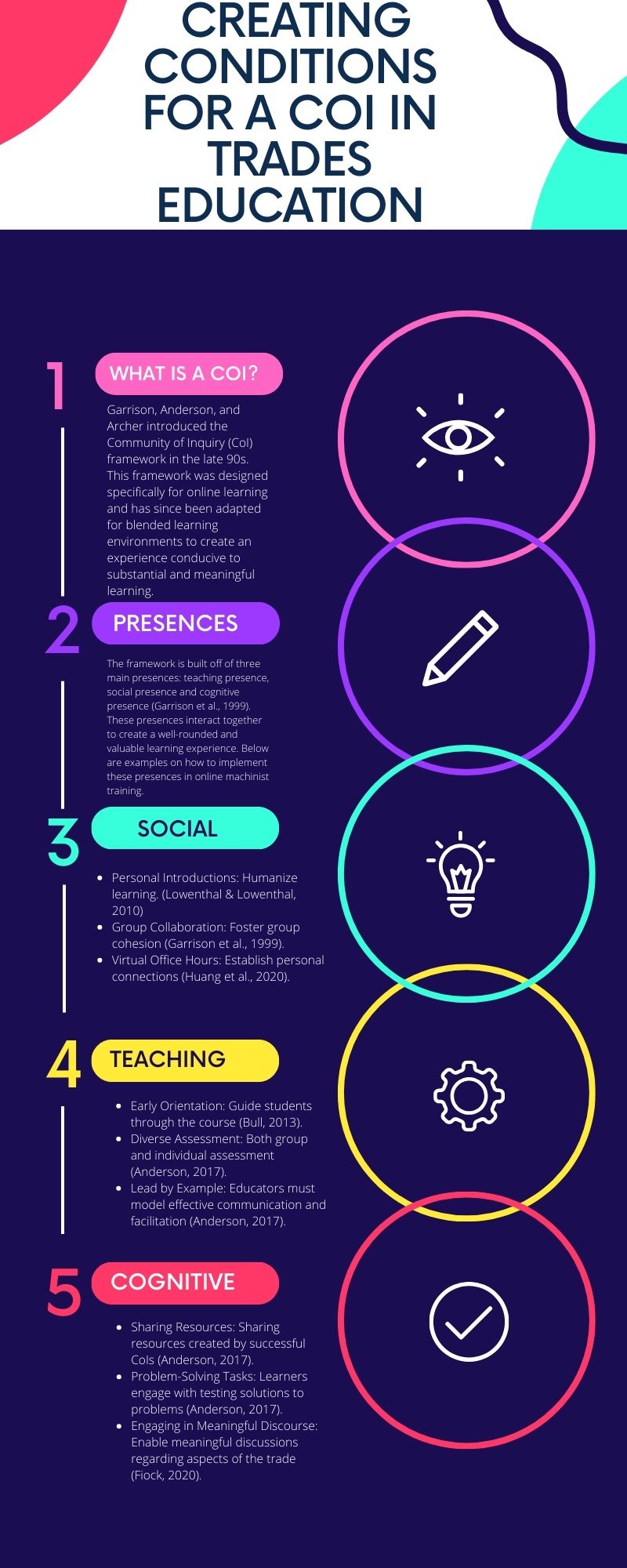
Figure 1: Creating Conditions for a Community of Inquiry Infographic. https://www.canva.com/design/DAFtsyO_yXg/vPfiGkqaYUhEz4DjcU83HA/edit?utm_content=DAFtsyO_yXg&utm_campaign=designshare&utm_medium=link2&utm_source=sharebutton
The Community of Inquiry (CoI) framework, developed by Garrison, Anderson, and Archer in the late 90s, was initially designed for online education but has since evolved to accommodate blended learning. Figure two illustrates the framework built on three key elements: teaching presence, social presence, and cognitive presence. This infographic and rationale explore ways for the practical application of this framework in an online learning environment for the machining trade. Below each presence are practical applications in a machining context.
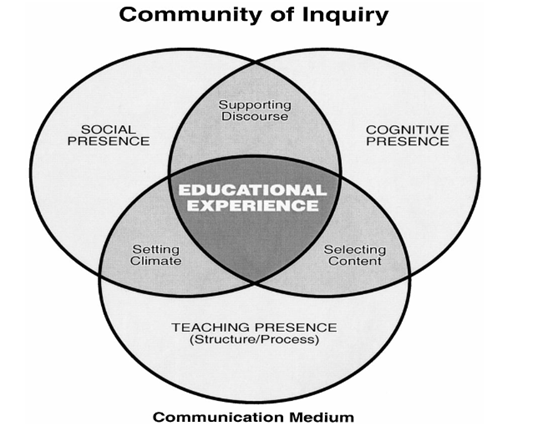
Figure 2: Community of Inquiry (Garrison et al., 1999).
Social Presence
Social presence involves creating a supportive and engaging digital community that enhances the learning experience and promotes learning (Garrison et al., 1999). Students must perceive each other as real people, not just digital entities.
- Personal Introductions: Early in the course, encourage students to introduce themselves using video or audio in an online discussion forum. This activity humanizes the online experience and can boost learner satisfaction (Lowenthal, 2010).
- Group Collaboration: Assign group projects earlier in the course to foster learner cohesion (Garrison et al., 1999).
- Virtual Office Hours: These hours allow for personal connections between learners and educators and can also aid in addressing learner concerns (Huang et al., 2020).
Teaching Presence
Garrison et al. (1999) describe the teaching presence as the “binding element in creating a community of inquiry” (p. 96). Teaching presence ensures that learning objectives are met, and students navigate the learning process effectively.
- Early Orientation: Instructors can build presence by guiding learners through the technical layout of a course and the content (Bull, 2013).
- Diverse Assessment: Anderson (2018) emphasizes the significance of both group and individual assessments. This might involve offering opportunities for students to collaborate on assignments and presenting various written and practical assessments.
- Lead by Example: According to Anderson (2018), educators must play a critical role in modeling effective communication, providing feedback, and facilitating tasks to enhance teaching presence.
Cognitive Presence
Cognitive presence involves the process of critical thinking and the construction of knowledge (Huang et al., 2020). It is about how learners engage with content, interact with peers, and build knowledge.
- Sharing Resources: Anderson (2018) stressed the importance of sharing resources created by other COIs. This can be done by pulling resources from across the globe that demonstrate new or emerging machining skills.
- Problem Solving Tasks: Anderson (2018) stressed the importance of students observing learning and actively resolving and testing solutions to problems. In the machining trade, this can be done by learners to troubleshoot problematic coding assignments.
- Engage in Meaningful Discourse: Create opportunities for meaningful discourse and discussions about machining techniques, safety, and industry trends (Fiock, 2020).
References
Anderson, T. (2018). How Communities of Inquiry Drive Teaching and Learning in the Digital Age. Contact North. https://teachonline.ca/tools-trends/how-communities-inquiry-drive-teaching-and-learning-digital-age
Bull, B. (2013). Eight roles of an effective online teacher. Faculty Focus. https://www.facultyfocus.com/articles/online-education/eight-roles-of-an-effective-online-teacher/
Fiock, H. (2020). Designing a community of inquiry in online courses. The International Review of Research in Open and Distributed Learning, 21(1), 134–152. https://doi.org/10.19173/irrodl.v20i5.3985
Garrison, R., Anderson, T., & Archer, W. (1999). Critical inquiry in a text-based environment: Computer conferencing in higher education. The Internet and Higher Education, 2(2), 87–105. https://doi.org/10.1016/S1096-7516(00)00016-6
Huang, W., Hurt, A., Richardson, J. C., Swan, K., & Caskurlu, S. (2020). Community of Inquiry Framework. Purdue Repository for Online Teaching and Learning. https://www.purdue.edu/innovativelearning/supporting-instruction/portal/files/4_Community_of_Inquiry_Framework.pdf
Leave a Reply