For several years, K-12 education has been attempting to integrate technology into the classroom effectively. British Columbia’s education system has also been working hard at centering curriculum around Core Competencies and trialling new assessment measures, which focused on several aspects, including flexible communication with parents and increasing transparency (British Columbia Ministry of Education, n.d.-a) (British Columbia Ministry of Education, n.d.-b).
One recent project I was involved in was implementing e-portfolios that would allow parents to see what students were working on in classrooms and allow students to choose, reflect, and share what they deemed their best or most significant work. Not only did this address the transparency concern, but it also allowed students to practice identifying and reflecting on Core Competencies.
As far as communication goes, the objectives were clear and well articulated. As Watt (2014) states in his book regarding project management, it is critical to have the project manager (in this case, our administration team) lay out clear goals. Watt (2014) also states that project managers should choose people with expertise as part of their plan. Although this was more informal, my administration team had two or three people on staff as contacts for support if teachers had any questions.
As a teacher, I was not privy to any project plan, but I knew there were clear objectives and a timeline to follow. There were several training sessions in the form of staff meetings and professional development days to allow teachers to practice using the tool and ask questions.
One of the main barriers to change was organizational readiness. Rafferty et al. (2003, as cited in Al-Haddad & Kotnour, 2015) suggest that an optimistic attitude and commitment to change can enable effective and successful change plans. Some staff members were hesitant to use e-portfolios or were lacking or unsure of their skills regarding the technology. Furthermore, staff illustrated some confusion around the purpose of e-portfolios, mainly in their use of them as assessment tools.
To address these barriers, the use of data could be helpful. Issuing surveys for staff regarding abilities and comfort level could help provide targeted interventions and extra support; data could be used to make decisions based on tangible evidence rather than assumptions or anecdotes (KelloggInsight, 2015). To further support organizational readiness, Weiner (2009) states that cultivating and supporting confidence among staff leads to higher change efficacy. To help boost confidence, the administration could provide additional training sessions through video tutorials, lunchtime, or after-school sessions for those that need them.
As for the challenges around the usage of e-portfolios, increased clarity and communication would have been beneficial. Watt (2014) comments on the importance of continual communication. I found communication was strong to start but soon dwindled once the tool was implemented. Regular meetings or check-ins regarding the tool throughout the year could have identified and addressed concerns such as the questions surrounding assessment.
Being a part of this change has allowed me to reflect on what aspects of change and project management I value most. If I were to implement change in my school, I would first examine if a change was needed (using data to substantiate this) and assess and promote organizational readiness. As for project management, I would create clear objectives, communicate them continuously with my team, and focus on time and resources (Watt, 2014).
References
Al-Haddad, S., & Kotnour, T. (2015). Integrating the organizational change literature: a model for successful change. Journal of Organizational Change Management, 28(2), 234-262. https://doi.org/10.1108/JOCM-11-2013-0215
Leadership is a multi-layered term with qualities that are challenging to define. Generally, it can be agreed upon that leadership involves people who are passionate about change and will inspire and unite those around them to accomplish personal and organizational goals (Workman & Cleveland-Innes, 2012).
Change is also a complex yet necessary aspect of leadership in most organizations. As Al-Haddad & Kotnour (2015) state, companies have realized that change must be involved to maintain or acquire success. This constant change also requires strong leadership. As Sheninger (2014) highlights in his article regarding digital leadership, digital leaders need to realize the potential of technology to establish a creative direction and initiate sustainable change.
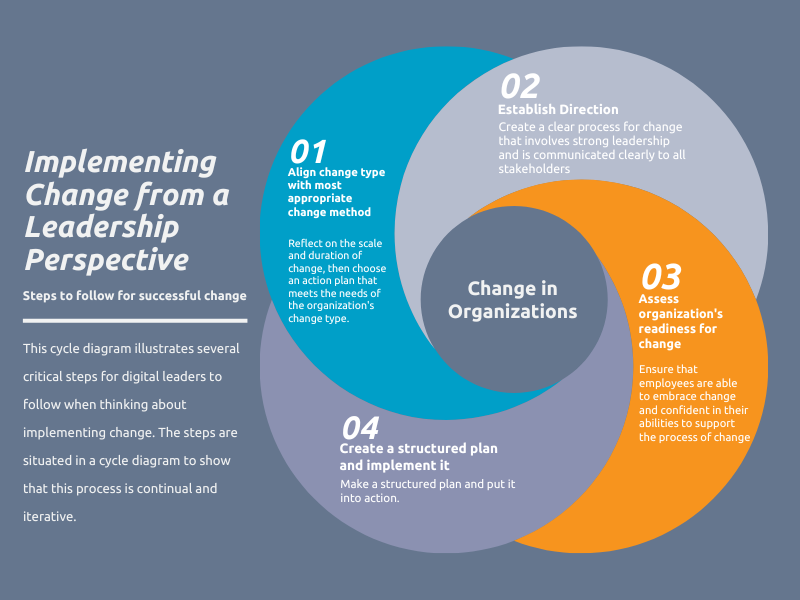
A digital leader then needs to instigate and implement change in the organization effectively. Several steps should be taken to promote organizational change and encourage desired outcomes. One of the first steps is to have a clear process for change. Al-Haddad & Kotnour (2015) propose that for change to be successful, organizations need strong leadership that can provide a structure for change, decrease barriers and foresee consequences, but also realize that businesses are diverse; finding a process that fits all businesses is unlikely. Therefore, Al-Haddad & Kotnour (2015) propose a framework for organizations that aligns a change type (aspects that describe forms of change, such as scale and duration) with a suitable change method (actions taken to cope with change, both systematically and with change management). Regardless of the chosen change direction, alignment with the scale and duration of change is key for success (Al-Haddad & Kotnour, 2015).
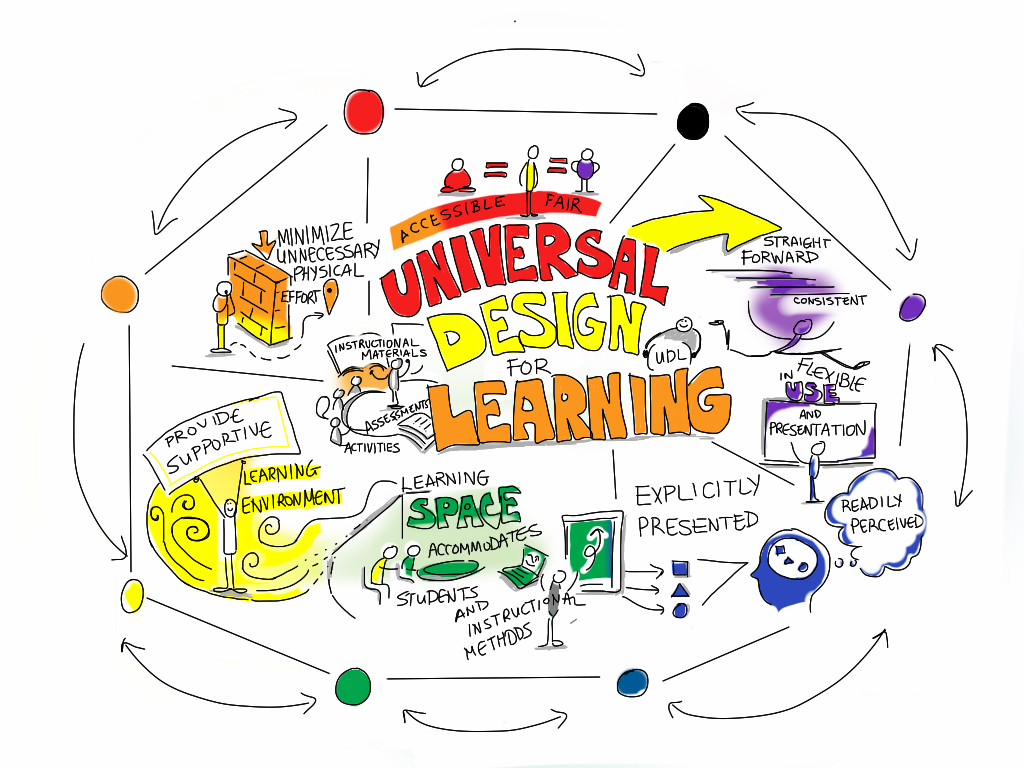
As Al-Haddad & Kotnour (2015) state, many change methods exist. It can be helpful to look to organizations and their leaders to help gain an understanding of what method to choose. Mindy Holman, a teacher-librarian for a Vancouver Island high school, discussed her role as a digital leader during the pandemic when British Columbian schools were required to go online. She recalled that she was given clear direction on what needed to be accomplished (teachers creating online platforms for students), which helped her attain outcomes (M.Holman, personal communication, February 16, 2023). The significance of direction is also echoed in an interview with Sandra Norum, a support teacher for K-12 education in BC. When implementing Universal Design for Learning (UDL) principles, she states that clear directions and expectations are helpful for implementing change (Harrison, n.d.). Clearly, when implementing change, digital leaders should provide clear direction for change to promote success.
Readiness for change is another aspect that digital leaders should be mindful of when planning. Mindy mentioned that a significant challenge in implementing a digital change in the K-12 education system was teachers who were entrenched in their non-digital ways; much time was spent encouraging, teaching, and persuading these educators to adopt this new technology (M.Holman, personal communication, February 16, 2023). Change readiness could have been more optimal; as Mindy discussed, several employees needed more preparation for this significant change. Wiener’s (2009) article discusses change management and organizational readiness; Wiener argues that organizational readiness (defined as members of the organization who are committed to change and confident in their abilities to do so) is key to successful change. One change method that addresses a part of change readiness is the Luecke method. Luecke developed a change process that highlighted change as an opportunity, not a barrier, and focused on encouraging employees to accept change (Al-Haddad & Kotnour, 2015). A digital leader can increase an organization’s readiness for change by encouraging all members to welcome it. Beich (2007) mentions Theory O, which also supports a notion of organizational readiness that focuses on employee participation and the bond with their organization, again focusing on employees who will welcome change, illustrating readiness.
Once there is a clear direction and a readiness for change, digital leaders can work on a structured plan. As Beich (2007) suggests, leaders need to have a plan for successful change; not only do they need a plan, but they also need to implement it. Beich (2007) suggests the CHANGE model to help create an actionable plan, as it is generic enough to adapt to many different situations and needs. There are six steps in the CHANGE model, including acknowledging the need for change, aligning leadership with organizational needs, activating commitment and ensuring readiness, creating a design, guiding implementation, and evaluating change (Beich, 2007). It is a continual process, which Udas (2008) puts forward as a significant factor for success.
For the best chance at successful change, digital leaders should consider several important factors, such as alignment of change type with a change method, clear direction, ensuring the organization is ready for change and creating and implementing a plan. Following these steps, digital leaders can take helpful steps to achieve their goals.
References
Al-Haddad, S., & Kotnour, T. (2015). Integrating the organizational change literature: a model for successful change. Journal of Organizational Change Management, 28(2), 234-262. https://doi.org/10.1108/JOCM-11-2013-0215
Our first assignment for our most recent course asks us to reflect on our thoughts about leadership. At first, this was a fairly straightforward assignment, but after reflecting on our readings, I thought this was a more complex task than I initially thought.
An excellent place to start this conversation is with a definition. To prove my point earlier, defining leadership is complicated. Workman and Cleveland-Innes (2012) allude to the plethora of definitions available. Fitzgerald (2003) discusses the problematic definition of educational leadership in neglecting gender, race, and socioeconomic status, and O’Toole (2008) bluntly states that values-based leadership is nearly impossible to define. The question remains, what is leadership?
For me, leadership is about leading people cumulatively towards a goal and achieving their personal best. Referring back to Workman and Cleveleand-Innes’ (2012) definition, leadership is inspiring, supporting, and guiding others to attain personal growth. To add to this definition, O’Toole (2008) also mentions that leaders unite people with differing agendas toward a common purpose; therefore, leaders foster personal growth and connect people towards a common goal.
Despite the challenges of defining leadership, I found it much easier to list the qualities of a good leader. One of our initial tasks for this course was to rank a list of twenty leadership characteristics; my top five were supportive, competent, dependable, cooperative, and caring. However, after discussing our rankings as a team and engaging in our required readings, my characteristics regarding leaders changed.
Working as a group was enlightening as I could listen and discuss different perspectives on what these characteristics mean to each group member. Three of us work in the education field, and two of our members are in corporate settings. Our varied workplaces illustrated how leadership could be viewed and valued differently.
Despite our varied backgrounds, we all found our leadership qualities challenged after the readings. Gill mentioned that she initially ranked the characteristics from more of a managerial perspective, then realized that leading is different than managing. As Sarder (2015) states, managing is more of an operations role, whereas leadership is about “spirit” and passion for change.
With this new perspective on leadership, characteristics I had initially ranked in the top five (supportive, competent, dependable, and cooperative) seemed less about leading and more about managing. After careful reflection during our group discussions and readings, I rearranged leadership values to reflect my new understanding.
Firstly, I realized that there is a certain amount of courage that is needed to be an effective leader, digital or otherwise. O’Toole (2008) alludes to this in his discussion about uniting people with different values; this can often lead to conflict and would take a certain amount of courage to address. In Huggins et al.’s (2017) article, the courage lies within leaders relinquishing control to support and promote others’ personal growth. It also takes courage to question traditional leadership definitions and practices to reflect a more diverse population, as Fitzgerald (2003) discusses in her article regarding indigenous women’s voices in educational leadership.
More specifically, digital leadership requires a certain amount of courage. As Sheninger (2019) states that to promote a digital culture, schools must “Boldly move…forward…” (para. 6); to do this, leaders must relinquish control. Certainly, this will take courage.
Two of my initial leadership characteristics remain the same. Competency is significant in digital leadership; leaders should be aware of how to leverage technology to create a supportive digital learning culture (Sheninger, 2019). Caring is also a key component. Sarder (2015) discusses that leaders should be passionate and caring about their causes. Digital leaders are no different; they should be passionate about technology and change to promote this mindset in their employees and workplaces (Sheninger, 2019).
In my own experiences as a K-12 teacher, I also see much value in leaders being broad-minded. Being open to new and different ideas allows for creativity and innovation (Buchanan, 2018). It would seem that digital leaders would need to have a broad mindset in order to foster innovative ideas. Being broad-minded can also build trust and allow for open and honest communication, traits that Kouzes & Posner (2011) suggest build credibility and good leadership.
The readings I have pursued regarding leadership have allowed me to reflect on what I truly value in a digital leader. If we use Sheninger’s (2019) definition of digital leadership as using technology to encourage and foster a digital culture within our learning and work environments, leaders should be courageous, competent, caring, and broad-minded.
Fitzgerald, T. (2003). Changing the deafening silence of indigenous women’s voices in educational leadership. Journal of Educational Administration, 41(1), 9-23. https://doi.org/10.1108/09578230310457402
Huggins, K.S. (2017). Developing leadership capacity in others: An Examination of high school principals’ personal capacities for fostering leadership. International Journal of Education Policy and Leadership, 12(1). https://doi.org/10.22230/ijepl.2017v12n1a670
Kouzes, J., & Posner, B. (2011). Credibility : How leaders gain and lose it, why people demand it (2nd ed.). Jossey-Bass.
Sarder, R. (Producer). (2015, June 4). What makes a great leader? by Peter Senge, author of the Fifth Discipline[Video]. Youtube.https://youtu.be/1aYaj2-GZqk
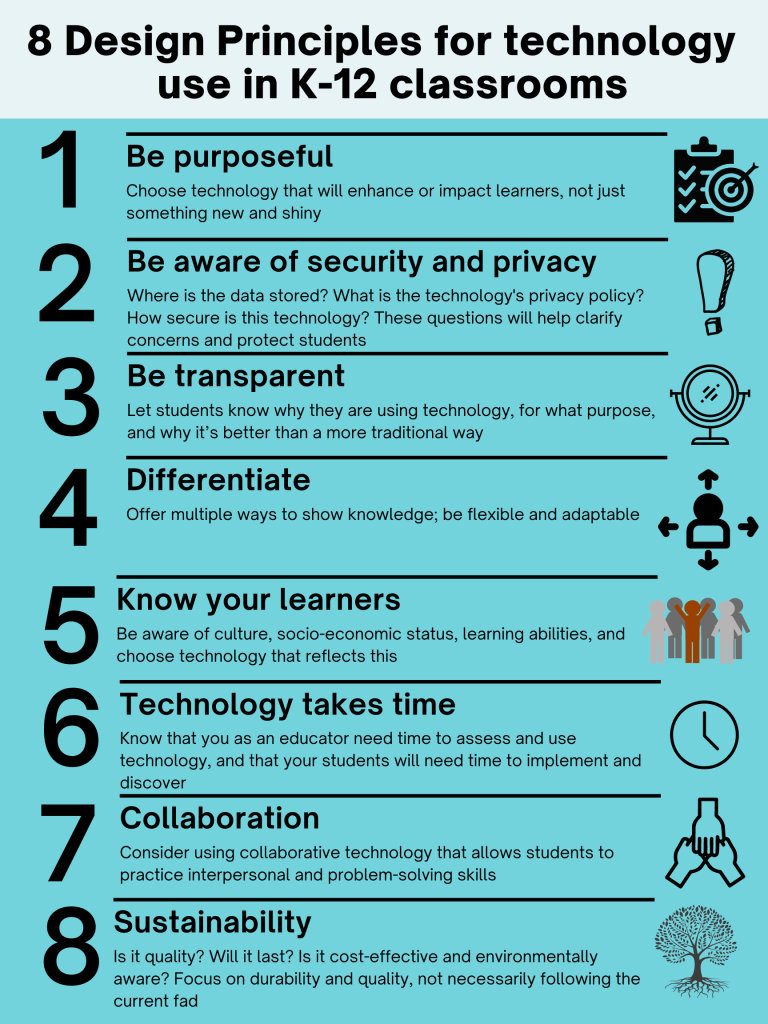
Choosing the technology to implement in a K-12 classroom can be overwhelming. Morris (2018) states in his article about critical digital pedagogy that educational technology offers many benefits but that participation in these tools requires a complex understanding of multi-literacies. That complex understanding takes time to assess, research, and implement, but teachers are notoriously short on time when effectively implementing technology (Delaney, 2011). The following design principles are meant to address significant steps to ensure that teachers choose the right technology for the right reasons and keep student safety and success at the forefront.
Firstly, choosing technology with purpose goes beyond simply using it but instead focuses on the reasoning behind this technology; this can be more impactful for your teaching and students’ learning (Morris, 2018).
Being aware of security and privacy allows you and your students to protect personal and sensitive information (Kimmons, 2020). Some questions to consider before choosing technology are: has your school district approved the tool? What personal information does the tool require from users? Where is this data stored, and who effectively owns it? The answers to these questions will aid in choosing technology that prioritizes student safety.
Clarity and transparency are essential when it comes to technology tools. Being explicit with your intentions allows for more meaningful learning, increased motivation, and even an increased sense of belonging and confidence (Kirkpatrick, 2020).
Differentiation is a key principle in teaching and learning and can also be applied to technology. By offering multiple ways to show understanding, differentiation allows all types of learners to be successful and included (Takacs et al., 2021). Universal Design for Learning (UDL) is a great framework to help plan for differentiation.
Awareness of your students’ diverse backgrounds allows you to be inclusive and understanding of the variation in your classroom and can help plan for and address “learner jaggedness” (Takacs et al., 2021, p.17). Technology can help but also hinder when it comes to diverse learners. Using a cycle like the one proposed in Kaczorowski et al.’s (2021) article, Designing an Inclusive Future,illustrates the importance of choosing technology that reflects classroom diversity.
When implementing new technology, educators must remember that it takes time, not just for the teachers to learn but also for the students to adjust and learn (Delaney, 2011). Educators often need more time to effectively learn new technology; it is helpful for educators to plan for this extra time as they incorporate new technology (Delaney, 2011).
From “Designing an Inclusive Future: Including Diversity and Equity With Innovations in Special Education Technology”, by T. Kaczorowski, D. MacMahon, and A. Hollingshead, 2022, TEACHING Exceptional Children, 0(0), (https://doi.org/10.1177/00400599221090506).
When implementing new technology, educators must remember that it takes time, not just for the teachers to learn but also for the students to adjust and learn (Delaney, 2011). Educators often need more time to effectively learn new technology; it is helpful for educators to plan for this extra time as they incorporate new technology (Delaney, 2011).
With technology and technology tools, consider incorporating collaborative resources. Using technology that promotes collaboration can foster problem-solving and interpersonal skills, while allowing more of a facilitator approach to teaching (Amplified by Design, 2018).
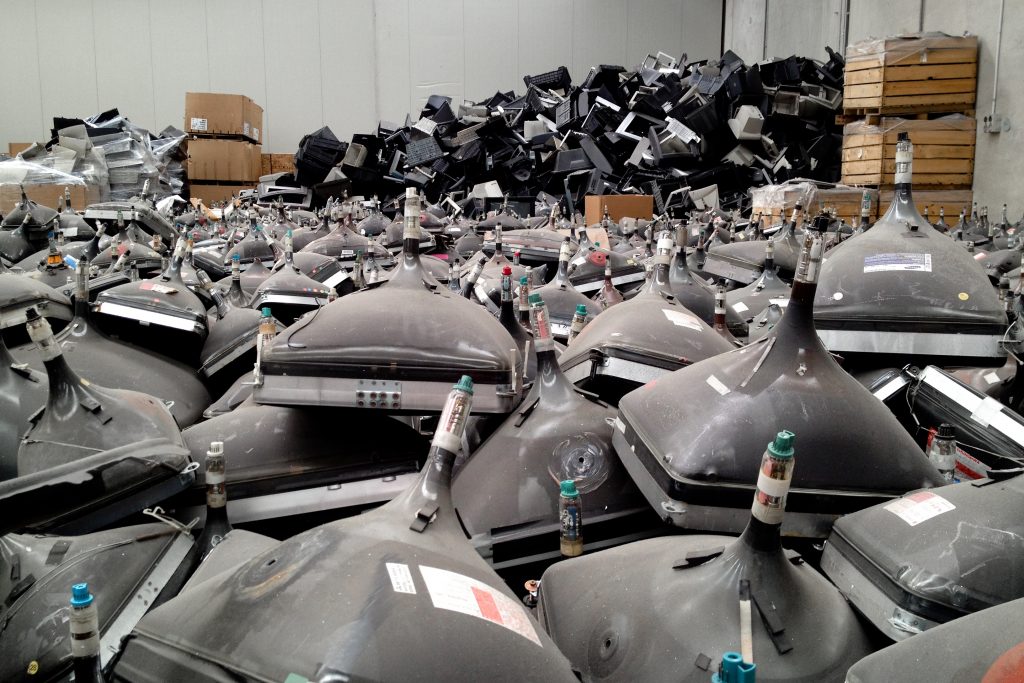
Finally, being aware of the effects of technology on our environment can help educators make smart and environmentally conscious decisions. By choosing refurbished technology and focusing on durability and quality, teachers can alleviate the strain of “limitless technology” and potentially create less e-waste, not to mention saving precious and limited funds (Selwyn, 2021) (Selwyn et al., 2020).
By using these eight design principles when implementing technology into the classroom, educators can effectively implement resources that are reflective of diversity and inclusivity and have students’ best interests in mind.
Kaczorowski, T., McMahon, D., Gardiner-Walsh, S., & Hollingshead, A. (2022). Designing an Inclusive Future: Including Diversity and Equity With Innovations in Special Education Technology. TEACHING Exceptional Children, 0(0), https://doi.org/10.1177/00400599221090506
Selwyn, N., Hillman, T., Eynon, R., Ferreira, G., Knox, J., Macgilchrist, F., & Sanch-Gil, J.M.(2020). What’s next for Ed-Tech? Critical hopes and concerns for the 2020s. Learning, Media and Technology 45 (1), https://doi.org/10.1080/17439884.2020.1694945
Selwyn, N. (2021). Ed-Tech Within Limits: Anticipating educational technology in times of environmental crisis. E-Learning and Digital Media, 18 (5), https://doi.org/10.1177/20427530211022951
Takacs, S, Zhang, J., Lee, H., Truong, L., & Smulders, D. (2021) A comprehensive guide to applying Universal Design for Learning. BC Campus. https://pressbooks.bccampus.ca/jibcudl/
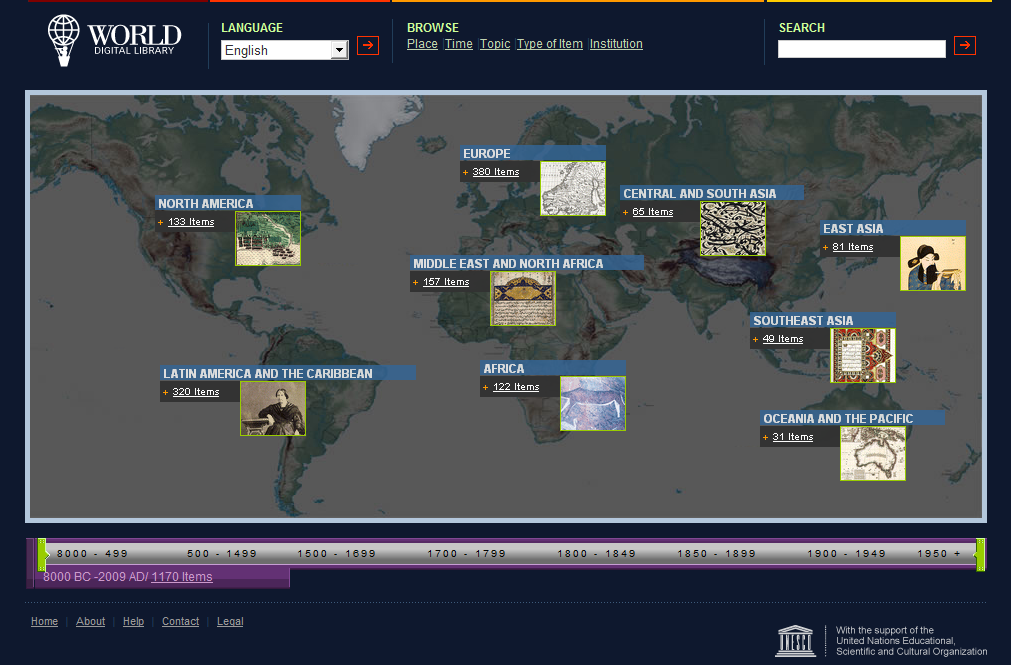
In an increasingly technologically driven society, it is no surprise that digital content is at the forefront of both organizations and education. In education, digital content libraries are collections of digitized learning materials that can include (but are not limited to) audiobooks, videos, texts, social media posts, and even practice assignments; these “learning nuggets” aid students with learning concepts in various areas of study (Dani, 2022). Content libraries are also used in organizations to help streamline and share content with various groups; content libraries help these organizations with company-wide access, communication, and identifying content needs (Vasquez, n.d.).
By CMBJ – Screenshot of The English home page of the World Digital Library, Public Domain, https://commons.wikimedia.org/w/index.php?curid=8680623
For this blog post, I will focus on the K-12 educational use of digital content libraries. There are many examples of digital content libraries ranging from simple to complex. An example of a simpler version is through the Ballenas Secondary library website. Here you can find various resources, including e-books, writing help, presentation, and Web 2.0 tools. The resources included include various videos, website links, and graphic organizers. More comprehensive digital libraries are Europena, the World Digital Library, and specialized digital collections such as the Miguel de Cervantes digital library. With such a plethora of resources and information, learners can explore and choose based on their needs.
The impact of these content libraries on learners has the potential to be quite significant, mainly in the area of accessibility. Learners no longer have to go to a physical space to get materials; they can log on to a computer, tablet, or phone and access learning content in various formats (Dani, 2022). Digital libraries also promote personalized learning for students, where learners can choose what and how they learn (Candella et al., 2007). By promoting personalized learning, digital libraries could also increase student engagement, which could positively impact student achievement (The Center for School Reform and Improvement, 2007).
Despite the possible benefits to learners and users, there are some challenges associated with digital libraries. One concern is cultural sensitivity. Many digital libraries are curated and run by Western countries, meaning there is a high possibility of inherent cultural biases (Witten et al., 2010). Secondly, digital libraries rely heavily on technology, which can pose its own challenges. In order to gain access, users must have access to reliable internet or wifi; many people, most notably remote users and lower socioeconomic status users, have challenges concerning accessibility, meaning the reliance on technology can be exclusionary (Vincent-Lancrin et al., 2022).
As with any learning innovation, digital content libraries are useful tools that are not without their challenges. They provide learners with multiple modes of information and allow for learner autonomy, but they also may be culturally biased and are heavily reliant on internet access. Moving forward, digital libraries can improve by offering a variety of cultural content in multiple languages and having organizations employ people of varied backgrounds to help with culturally sensitive curation of materials.
References
Candela,L., Castelli, D., Pagano, P., Thanos, C., Ioannidis, Y., Koutrika, G., Ross, S., Schek, H-J., & Schuld, H. (2007). Setting the foundations of digital libraries: The DELOS manifesto. D-Lib Magazine, 13 (3/4). doi:10.1045/march2007-castelli.
Vincent-Lancrin, S., Cobo Romani, C., & Reimers, F. (eds.), (2022). How learning continued during the COVID-19 pandemic: Global lessons from initiatives to support learners and teachers. OECD. https;//doi.org/10.1787/bbeca162-en.
We have just begun our fourth class in our Master’s program journey. This class (Innovation, Design, and Learning Environments) has asked us to reflect on design decisions in learning and technology.
I found some key tenets of both LD and ID helpful in my readings. First, each design is unique and different, meaning that there is no ‘one’ design that is made to ‘fit’ all projects (Dousay, 2017). Because of this, many models are available for designers to use as a basis for their design.
When looking at several of these models, there seemed to be some commonality in their principles. For example, Dousay (2017) states that the ADDIE process (analyze, design, develop, implement, evaluate) is at the heart of most design models, but how it is used differs with each model, allowing designers to customize their designs according to the context and learner needs.
After reading Dousay’s (2017) introduction to Instructional Design Models, I had a better grasp on the structure of design. At the end of this chapter, Dousay (2017) asks industry designers for tips for ID; the tip that resonated most for me was from Brent Wilson, University of Colorado: “… do not forget to meet the needs of learners, especially those at the margins.” (Wilson, n.d., in Dousay, 2017).
There are several reasons why this particular tip resonates with me. Firstly, I am a K-12 educator with a specialty in Special Education, essentially the teaching of those learners ‘in the margins’. Everyone has the right to learn and be included, which means that ID and LD need to reflect this principle, yet it seems like many past models may not. Heaster-Ekholm (2020) looks critically at ID models of the past and concludes that many models neglect to address the inherent biases of designers and their lack of cultural diversity in the design process.
In my culminating paper from our last course, I wrote about the future of education being based on the theory of respectful design (Grandoit-Sutka, n.d.). Kaczorowski et al. (2022) pointed out that technology use in the classroom was not reflective of classroom abilities or culture, therefore creating barriers to learning for many students. As Heaster-Ekholm (2020) suggests, if designers are aware of their biases and aim to understand the culture and context of the learners, they can select a model that will best reflect the learning environment.
Finally, realizing the importance of design to include all learners helps with effectiveness and practicality. Although ID and LD have some differences, they both aim to improve opportunities for learning (Parchoma et al., 2020).
One model that attempts to accommodate varied learners and cultures is Universal Design for Learning (UDL). UDL asks designers and educators to question their beliefs, assumptions, and biases to plan and prepare for differences in learners (Takacs et al., 2021).
Shelly Moore, (n.d.), a special education advocate and teacher, discusses UDL through a special education lesson lens and provides short, relatable, easy-to-understand videos of how UDL works in the classroom. In one of these videos, she describes a more ‘traditional’ model of learning that emphasizes a need to “fix” students who do not fit into the model (Moore, 2021). The traditional approach uses many resources (Educational Assistants, specialized equipment, etc.) for a handful of students. Instead, Moore (2021) asks us to design with all learners in mind, making those limited resources available to all, not just those in need. By removing barriers and asking ourselves, “What is limiting learner success?” we can create a more effective and practical design for learning (Moore, 2021). This idea of design being cognizant of context is seen in Dousay’s (2017) chapter regarding ID models and Heaster-Ekholm’s (2020) literature and can lead to improved opportunities for learning.
As I continue with my career in K-12, I will search for design models based on the concept of respectful design and be cognizant of those learners in the margins.
Heaster-Ekholm, K. L. (2020). Popular Instructional Design Models: Their Theoretical Roots and Cultural Considerations. International Journal of Education and Development Using Information and Communication Technology, 16(3), 50–65. https://files.eric.ed.gov/fulltext/EJ1275582.pdf
Kaczorowski, T., McMahon, D., Gardiner-Walsh, S., & Hollingshead, A. (2022). Designing an Inclusive Future: Including Diversity and Equity With Innovations in Special Education Technology. TEACHING Exceptional Children, 0(0), https://doi.org/10.1177/00400599221090506
Parchoma, G., Koole, M., Morrison, D., Nelson, D., & Dreaver-Charles, K. (2020). Designing for learning in the Yellow House: A comparison of instructional and learning design origins and practices. Higher Education Research & Development, 39(5), 997–1012. https://doi.org/10.1080/07294360.2019.1704693
Takacs, S, Zhang, J., Lee, H., Truong, L., & Smulders, D. (2021) A comprehensive guide to applying Universal Design for Learning. https://pressbooks.bccampus.ca/jibcudl/
In our final assignment for Foundations of Learning and Technologies, we were asked to predict the future of education, learning, and teaching in 2030. Here is my speculative future for K-12 education. Enjoy!
To predict the future, one must look to the past. In the near future, education continues to evolve and iterate around awareness of respectful design (Grandoit-Sutka, n.d.). Over time this concept grew into the dominant force shaping the future of K-12 education. The idea of respectful design was formed in response to various societal concerns that were present in the early 2000s-2020s. Using this timeframe as evidence, the future of teaching, learning, and education in the K-12 public education system will use respectful design in response to those decades’ societal concerns, specifically awareness of diverse perspectives and environmental awareness in teaching and learning (Grandoit-Sutka, n.d.). What is presented here is a potential glimpse into the not-so-distant future of 2030; a place where society has taken a critical look into its past and attempted to instill measures to promote positive change.
The term respectful design is not so much a definition as a way of being; it revolves around respect: respect for cultures, environment, gender, and abilities (Grandoit-Sutka, n.d.). Regarding design and education, respectful design reflects these varied perspectives (Grandoit-Sutka, n.d.). The classroom of 2030 promotes inclusivity by choosing technology tools that are diverse and equitable, promoting the ideals of respect for all (MacGilchrist et al., 2020). One technology tool in use in the 2030 classroom is open educational resources (OER). OER are free online materials used for educational purposes and are of varied mediums; they also follow the standards of retention, reuse, revision, remixing, and redistribution (Liao, 2018). Some examples of OER in the 2030 classroom are lesson plans, online textbooks, and videos (Liao, 2018). OER reflects respectful design in that it is available to everyone, regardless of socioeconomic status, and removes barriers to diverse perspectives, allowing an open platform for everyone (MacGilchrist et al., 2020). Not only does it allow for diverse content, but OER is customizable (Liao, 2018). Teachers in 2030 are adapting and choosing OER to suit their classes’ cultural and diverse makeup and abilities. Students now have access to more voices from varied backgrounds, leading to a more holistic worldview and different ways of thinking.
Another aspect of respectful design is illustrated in the 2030s use of technology usable for all, including differently-abled students. In the 2010s and 2020s, concerns were raised about technological barriers for students with diverse needs (Kaczorowski et al., 2022). Educators in the classroom of 2030 are assessing technology to ensure that it reflects many abilities. Teachers are required to take courses in respectful design, either during their initial introduction into education or as part of professional development opportunities. In these courses, they receive training in accessing and implementing frameworks that help reflect the current class culture, ensuring that all students are included. Furthermore, technology is evaluated consistently to ensure that it is culturally reflective, accessible to all abilities, and supported by pedagogy (Kaczorowski et al., 2022).
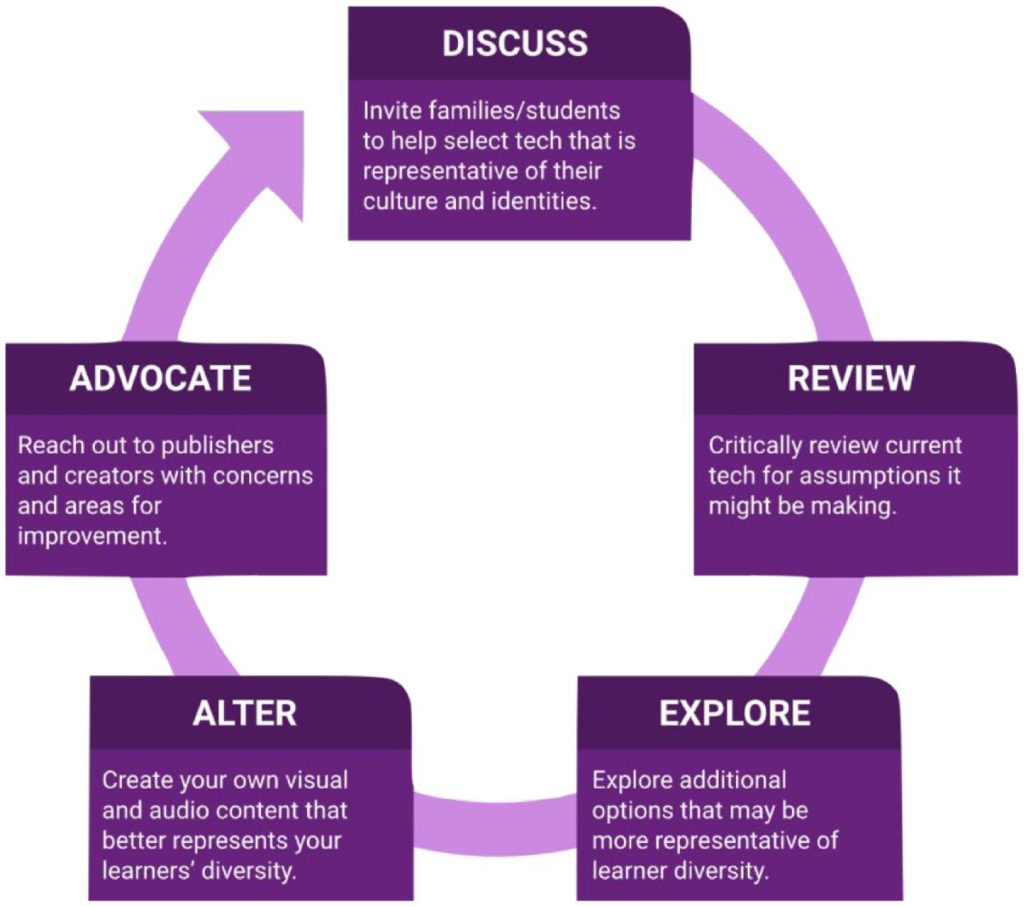
An example of a respectful design framework is seen in Figure 1 (see Appendix A). This framework illustrates a collaborative and respectful design approach when selecting representative technologies. For example, it is collaborative between teachers, parents and students, allowing multiple perspectives for integration. It also calls for a review of the technology itself, ensuring that no inherent biases or assumptions are present in the technologies’ design or functionality. This framework’s explore and alter stages ask educators to examine other options that may increase diverse perspectives. This can tie back to OER, which is also being used in the classrooms of 2030. Finally, advocating to publishers and designers about inclusivity and respectful design allows inclusivity and diversity to be at the forefront of organizations’ minds. Because of leaders advocating for change during the 2020s, OER and respectful design are now commonplace in the K-12 classrooms of the future.
Teaching and learning in 2030 reflect another societal concern of the early twenty-first century: environmental impact. Growing anxiety about extreme weather, limited natural resources, and climate change were at the forefront of peoples’ minds throughout this time (Government of Canada, 2022). Nevertheless, the 2000s-2020s neglected to see the harmful effects of digital technology on the environment. As Selwyn stated in the late 2010s, society had an “…entitled sense of digital abundance.” (Selwyn, 2021, p.501). There was little regard for the effects of consistently replacing technology and its associated hardware devices. This was to become more apparent in the mid to late 2020s, as costs continued to rise for raw materials and access to limited natural resources became problematic; the unsustainable pace of growth in technology became known (Selwyn, 2021). To mitigate the increasing demand on the environment, select school districts in British Columbia (BC), Canada, began pilot projects focusing on “computing within limits”; a mindset that focuses on technology supporting well-being while remaining within global environmental limits (Nardi et al., 2018).
Select BC classrooms in 2030 have instituted several measures that fit the “computing within limits” ideal (Nardi et al., 2018). Firstly, teachers now attend off-campus meetings or conferences online through remote video conferencing software. By meeting virtually instead of taking transit, there are decreased environmental costs, although not entirely negated (Nardi et al., 2018). Secondly, purchasing decisions on technology for classrooms and schools will focus on durability and quality, not necessarily following the current fad (Selwyn, 2021). This means that many technological tools are refurbished, helping to dispel the decades’ previous notion of limitless technology and putting less strain on our resources and reducing the amount of e-waste (Selwyn et al., 2020). Finally, when acquiring technology in 2030, school districts, administrators, and purchasers are working towards mandatory implementation of Electronic Product Environmental Assessment Tools (EPEAT) to assess the impact of technology purchases on the environment (United Nations, n.d.). The continued development of the EPEAT ecolabel database provides comprehensive criteria for environmentally conscious technologies, while also listing technologies that have been allocated an EPEAT ecolabel certification (Global Electronics Council, n.d.). This allows school districts easy access to a multitude of verified products that meet environmentally sound criteria. By assessing the environmental impact of technologies, school districts can make greener choices to help alleviate the strain on our environment (Selwyn, 2021).
By implementing respectful design practices in K-12 classrooms in 2030, schools recognize the need to address and change the societal issues of the early 2000s-2020s, though these changes do not come without challenges. Even though OER and respectful design principles are being promoted and implemented in 2030s classrooms, not all teachers have bought in. Teachers may not take advantage of the professional development opportunities offered, and often state that there is not enough time to implement these new ideas, leading to inconsistent implementation (Delaney, 2011).
Another challenge faced by 2030s classrooms is the computing within limits ideal. Although schools are purchasing refurbished technology and focusing on sustainability with more durable, reliable products, these efforts make little impact on the environment (Selwyn, 2021). For significant changes to happen, a societal shift in our behaviours and actions must occur (Selwyn, 2021). These kinds of significant shifts in global communities could take generations to develop.
The future looks promising in the K-12 classrooms of 2030. This generation attempts to address the issues of the past by implementing core aspects of respectful design. K-12 classrooms use OER to reflect the diversity of their classrooms while promoting varied perspectives and removing barriers. Educators are ngaged in implementing respectful design frameworks that allow for varying abilities, perspectives, and class compositions. Finally, select future classrooms are involved in sustainable technology practices that are cognizant of the harmful effects of technology on our environment. Yet these future classrooms of 2030 are far from perfect. Challenges remain with teacher training and buy-in, and efforts to employ more sustainable technology have insignificant environmental effects. Despite these challenges, what remains optimistic about the 2030s is that they are willing to look critically at the past and take action to secure a better future.
Kaczorowski, T., McMahon, D., Gardiner-Walsh, S., & Hollingshead, A. (2022). Designing an Inclusive Future: Including Diversity and Equity With Innovations in Special Education Technology. TEACHING Exceptional Children, 0(0), https://doi.org/10.1177/00400599221090506
Kaczorowski, T., McMahon, D., Gardiner-Walsh, S., & Hollingshead, A. (2022). Reflective cycle for selecting technologies representative of diverse learners [Infographic]. TEACHING Exceptional Children, 0(0), https://doi.org/10.1177/00400599221090506
Liao, Y. (2018). Open Educational Resources. In A. Ottenbreit-Leftwich & R. Kimmons, The K-12 Educational Technology Handbook. EdTech Books. Retrieved from https://edtechbooks.org/k12handbook/oer
Macgilchrist, F., Allert, H., & Bruch, A. (2020). Students and society in the 2020s. three future ‘histories’ of education and technology. Learning, Media and Technology, 45(1), 76–89. https://doi.org/10.1080/17439884.2019.1656235
Nardi, B., Tomlinson, B., Patterson, D.J., Chen, J., Pargman, D., Raghavan, B., & Penzenstadler, B., (2018). Computing within limits. Communications of the ACM, 61 (10), 86-93. https://doi.org/10.1145/3183582
Selwyn, N., Hillman, T., Eynon, R., Ferreira, G., Knox, J., Macgilchrist, F., & Sanch-Gil, J.M. (2020). What’s next for Ed-Tech? Critical hopes and concerns for the 2020s. Learning, Media and Technology 45 (1), https://doi.org/10.1080/17439884.2020.1694945
Selwyn, N. (2021). Ed-Tech Within Limits: Anticipating educational technology in times of environmental crisis. E-Learning and Digital Media, 18 (5), https://doi.org/10.1177/20427530211022951
Reflective cycle for selecting technologies representative of diverse learners
Note. This image was created to illustrate the process of selecting technology based on diverse perspectives and abilities. From “Designing an Inclusive Future: Including Diversity and Equity With Innovations in Special Education Technology”, by T. Kaczorowski, D. MacMahon, and A. Hollingshead, 2022, TEACHING Exceptional Children, 0(0), (https://doi.org/10.1177/00400599221090506).
For our final assignment in our course about foundations of learning and technologies, we are being asked to predict the (near) future of education, learning, and teaching in the year 2030. My future is one based on the pessimism of the 2010s and early 2020s but will attempt to instil hope and optimism.
The future of education for 2030 is responding to the variety of societal crises of the 2010s and early 2020s. I will base my predictions around the past and tie historical events to future projections. For example, I will be discussing the effects of COVID-19, creating more flexible learning options, such as flipped classrooms and blended learning (Statti & Villegas, 2020).
Next, I will reference the 2010s and 2020s, illustrating the beginning of diverse perspectives with movements such as Me Too, Black Lives Matter, and Canada’s Truth and Reconciliation Commission. The class of 2030 will reflect these diverse perspectives by employing “respectful design” (Tunstall, 2017 in MacGilchrist, 2020) and increased attention to differently-abled students (Kaczorowski et al., 2022).
Another topic the 2030 education system will be addressing is equity. Both K-12 and higher education are relying more and more on open educational resources (OER), although the market is not yet saturated (Educause, 2021). With increased flexibility of blended learning options, students can access their classes through any device, consequently cutting technology costs at a school level and decreasing access issues with lower-income students (Educause, 2021): more equity for all.
Finally, I will discuss the 2010s and early 2020s climate crisis; with increased concerns from our population about environmental concerns, the classrooms of 2030 will focus on Nardi et al.’s idea of “computing within limits” (2018). The 2030 educational system will place less concern on keeping up with the current ‘fad’ technology and instead look into sustainability in technology by purchasing more durable, high-quality products and refurbished technology, creating less ‘e-waste’(Selwyn, 2021).
I will use other articles to provide complementary views to support my outlook on the future. Overall, the future is looking bright and attempting to respond to social demands of flexibility, diversity, equity, and a greener future.
Kaczorowski, T., McMahon, D., Gardiner-Walsh, S., & Hollingshead, A. (2022). Designing an Inclusive Future: Including Diversity and Equity With Innovations in Special Education Technology. TEACHING Exceptional Children, 0(0), 1-8. https://doi.org/10.1177/00400599221090506
Macgilchrist, F., Allert, H., & Bruch, A. (2020). Students and society in the 2020s. three future ‘histories’ of education and technology. Learning, Media and Technology, 45(1), 76–89. https://doi.org/10.1080/17439884.2019.1656235
Nardi, B., Tomlinson, B., Patterson, D.J., Chen, J., Pargman, D., Raghavan, B., & Penzenstadler, B., (2018). Computing within limits. Communications of the ACM, 61 (10), 86-93. https://doi.org/10.1145/3183582(2018). Computing within limits. Communications of the ACM, 61 (10), 86-93. https://doi.org/10.1145/3183582
Selwyn, N. (2021). Ed-Tech Within Limits: Anticipating educational technology in times of environmental crisis. E-Learning and Digital Media, 18 (5), https://doi.org/10.1177/20427530211022951
Statti, A., & Villegas, S. (2020). The use of mobile learning in grades K–12: A literature review of current trends and practices. Peabody Journal of Education, 95 (2), 139-147. https://doi.org/10.1080/0161956X.2020.1745613
For this assignment, we were asked to write a collaborative blog post with one of our colleagues in the Master of Arts in Learning Technology program. The post was to be based on two pieces of published materials that demonstrated characteristics of techno-deterministic thinking. Published pieces could be from mass-media articles or media releases by technology companies. We chose an article from Forbes magazine, and another from the Microsoft Canada website.
We were to summarize the claims in each piece, then comment on how we believed Richard Clark and Robert Kozma would respond to each piece. Clark and Kozma are respected researchers in Education Technology (EdTech,) and hold opposing views on technology’s ability to influence learning.
Forbes, a well-known publisher and magazine, claims that technology in education can lead to better results in their article “Twelve ways technology can yield better educational outcomes”. This statement goes against Clark’s claims that media and technology do not result in any learning benefits (Clark, 1994). Clark’s position is that attributes of technology and media are replaceable by other means and, therefore, not influential to learning (Clark, 1994). The Forbes Technology Council counters Clark’s assertion by claiming that technology allows students to apply their knowledge and improve outcomes by employing self-assessment measures, creating personalized learning, and connecting with teachers and peers (Forbes Technology Council, 2021). Many of Forbes’ claims to improve educational experiences from technology focus on student engagement; Clark would take issue with this as he consistently claims that it is not the technology or media responsible for learning but rather the instructional method that is employed (Clark, 1994). Clark would argue that one could reproduce student engagement without technology, illustrating that technology is not influential in learning.
On the other hand, Kozma would side with Forbes’ claims that technology impacts learning because of the student’s cognitive and social interaction with the technology (Kozma, 1994). Forbes states that technology improves student engagement, connection, and collaboration by offering interactive learning opportunities like augmented reality, the creation of real-world simulations, and a game-play approach to learning (Forbes Technology Council, 2021). Essentially, Forbes is illustrating students’ interactivity and engagement with technology. This connects to Kozma’s position on technology and learning. Kozma would argue that because students are actively engaging and interacting with technology cognitively and socially, their learning is indeed being positively affected (Kozma, 1994). Kozma also states that to understand the connection between learning and technology better, one must look at how students use the capabilities of technology to aid in their learning (Kozma, 1994). Forbes’ provides multiple (although cursory) examples of this, including e-sports to foster connections, using augmented reality to simulate real-world interactions, and using subtitles on videos for differentiated learning (Forbes Technology Council, 2021). Kozma (1994) believes in the potential of technology in learning, which is echoed in the article, “The key to using technology for improvement is to focus on what can be done rather than replicating what has been done” (Osinick, 2021, as cited in Forbes Technology Council, 2021).
Forbes’ article about the benefits of technology can be viewed in two different ways, as evidenced by Kozma’s and Clark’s assertions that either support or counter the benefits of technology. This illustrates a need to continue assessing and questioning technology use in our learning environments.
In the blog post published on the Microsoft Canada website and titled “Unimaginable Circumstances, Teachers are Using Technology to Help Reach Students” and attributed to the president of Microsoft Canada, we are told how the company’s products such as OneNote, Teams, and Flipgrid met and exceeded K-12 needs in the early days of the Covid 19 pandemic, and how the Microsoft products continued to be used when in-class instruction resumed in the fall of 2020.
Using a Catholic private elementary school in Ontario as a case study, we learn as well through a video testimonial by one of the school’s teachers, who is also a credentialized Microsoft Innovative Educator (MIE), how technology played a role in helping students keep up with their coursework, and to generally thrive in the online learning environment.
The article’s author tells us that when in-class instruction resumed, the Microsoft products continued to be used, and continued to be a catalyst toward students’ engagement with their coursework. We are also told that technology can provide all students with equitable learning environments.
In her testimonial, teacher Kaylyn Dorland says, “When we’re able to use technology in the classroom, it helps to level the playing field. And when students feel they have the confidence and the support in the tools that they are using, it changes the game for everybody.” Which could lead the reader to conclude, as Dorland does in her conclusion, “When you use technology, it not only increases student engagement, but it also increases the amount of fun the students are having, but I also think it increases the fun that I get to have as a teacher.”
This post and testimonial align with Kozma’s assertion that media does influence learning and can thereby lead to innumerable educational benefits such as increased student confidence, engagement, which in tandem can lead to student success. On the other hand, the Microsoft post runs counter to Clark’s assertion that media and its attributes do not have learning benefits simply on their own, and instead require assistance to have any effect.
Indigenous educational technology is not yet a universal term in the ed-tech field, but it soon could be with the help of Mikaela Jade. Jade is an Indigenous Cabrogal woman from Australia who has deep connections with the land (Ball, 2022). Her initial career was as a park ranger in Australia where she soon realized that many visitors were unaware of the significance of the land from a First Peoples’ perspective and wanted to share this knowledge with others in a meaningful, relevant way. Her experience at university led her to an interest in augmented reality (AR) and the development of Indigital, an “Indigenous Edu-Tech company” (Indigital, n.d.). Indigital uses technology to educate and connect with both indigenous and nonindigenous people, focusing on a First Peoples’ cultural knowledge of the land (Questacon, 2017). Indigital’s goal is to also provide opportunities for indigenous peoples to gain access to a digital world (Indigital, n.d.).
Image retrieved from https://indigital.net.au
Jade illustrates the importance of perspective in a digital world. She identifies as both woman and indigenous, two relatively underrepresented groups in the ed-tech field (Lynch, 2018). Jade discusses her female leadership role, amongst other topics, in the podcast “The Leadership Lessons”, a series that showcases successful and influential women (Chowdry, 2021). As part of an underrepresented group, she shows the potential to provide unique perspectives, address potential biases, and illustrate that marginalized groups have a place in technology (Mone, 2017). There is evidence that diversity in technology can allow for innovative, creative, and effective problem-solving, and Jade illustrates this as the founder and CEO of Indigital (Mone, 2017).
Jade’s innovative work with AR to share Indigenous knowledge can serve as an example for other countries to follow (Questacon, 2017). She discusses AR in an interview with NEC’s ‘Women in Technology” series (Ball, 2022). By implementing technology to share stories, Jade is marrying old-world knowledge with new-world technologies, bridging the gap between ancient and modern. Digitizing indigenous knowledge also helps to preserve history and allows easy access to key information (Lodhi & Mikulecky, 2010). Jade’s work with Indigital provides a template for others to build upon, an important first step in being able to share indigenous knowledge using relevant technologies.
Lodhi, S., & Mikulecky, P. (2010). Management of indigenous knowledge for developing countries. In V. Mladenov, K. Psarris, N. Mastorakis, A. Caballero, & G. Vachtsevanos (Eds.), Communication and management in technological innovation and academic globalization (pp.94-98). WSEAS Press. https://www.wseas.org/multimedia/books/2010/Tenerife/COMATIA.pdf