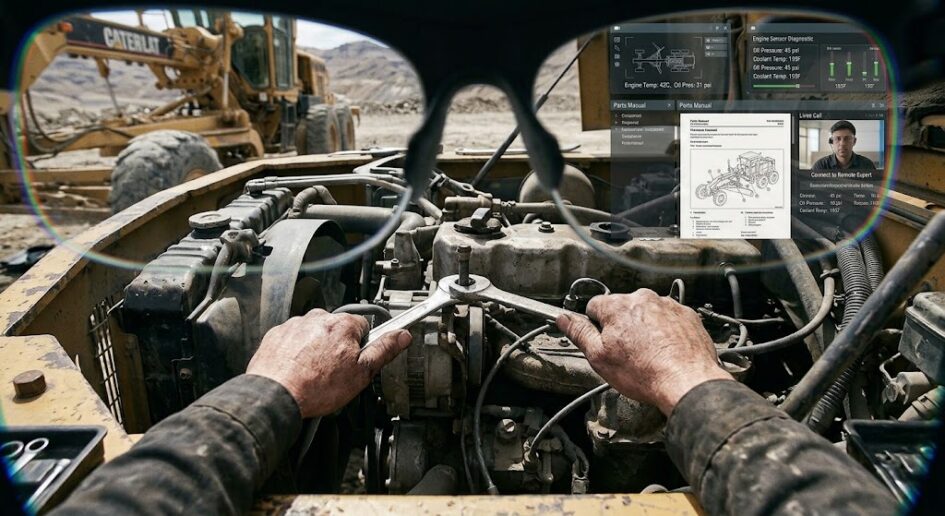
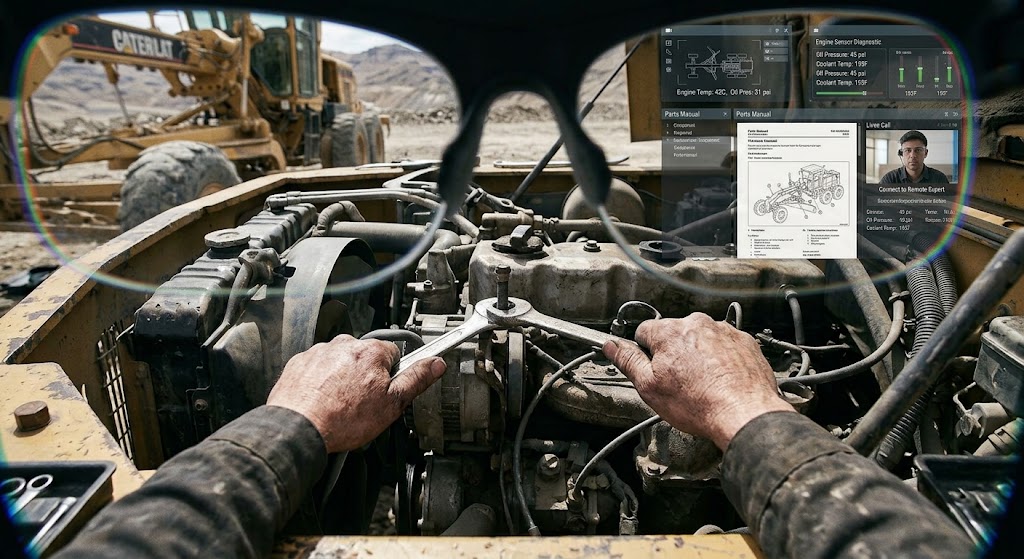
Image created by Gemini
Current trades education has the training for each year jammed into 8-week chunks. The topics covered within that term can be quite varied and very intense. What would happen if those topics covered were separated and cut into smaller, more digestible bits. These smaller courses, or micro credentials, could be self-paced and learned in a form of just in time training. A worker starts out as a helper in an area that interest them. When they are comfortable with their roll and would like to gain more skills they can take a relevant course online that gives them the theory they need to progress. When they have accumulated enough badges, or credentials they can challenge the government test that allows them to become certified for the next level.
Just in time training has been used in business help employees acquire new skills and update old ones. The idea is to make the information that is needed, available when and where it is needed (Jones, 2001). With advances in AR technology and better communications systems for data transmission, the ability to remotely access information and training aids when needed will potentially change how skills are learned. Workers can take courses to help progress themselves while in remote locations, or do short term face to face micro credentials. If instruction is needed while on site, the required information can be accessed via phone, tablet, laptop, or smart AR headsets. Some of this technology is being used by car dealerships today,
Porsche Techs Use Augmented Reality Glasses To Repair Cars
Is the future of trades training moving towards online, on the job, just in time learing?
Reference
Jones, M. J. (2001). Just-in-time Training. Advances in Developing Human Resources, 3(4), 480-487. https://doi.org/10.1177/15234220122238409
16 October 2026 at 5:43 am
Hi Ron,
I really like your idea of breaking trades training into smaller pieces that workers can access when they actually need them. In my own work teaching adults, I often find that people learn something much more easily when they can immediately see how it applies to their lives or their jobs.
Your post also made me think about something I raised during our AI debate. I used trades such as welding as an example of where I thought human instruction would remain especially important because an experienced instructor can see when someone is doing something incorrectly or even dangerously. Your idea adds another possibility that I hadn’t really considered. Technology does not necessarily have to replace that instructor. AR and just-in-time learning could give workers additional support right at the moment they need it.
I still think there will always be some skills that need hands-on instruction and supervision, but I can definitely see how this could change the way trades training is delivered.
Great post!
18 October 2026 at 12:45 pm
Hi Christina,
Thanks for your comments. There are some outcomes that are taught that don’t have any hands on component and they could easily be turned into online micro credentials. Most of the curriculum needs hands on practice, but there may be ways that this could be done on the job with supervision. There is conversation starting in the industry that employers want to have some trades broken down into job specific roles that don’t require the full four years of training. Micro credentials and a modified just in time training approach may be the way to make this happen.
It would all have to have government approval first.
29 October 2026 at 10:56 am
I really connected with this. In my own training work, I’ve found that information becomes much more valuable when people can access it at the point where they actually need to use it. Breaking trades education into smaller pieces could also give learners a much clearer connection between what they’re learning and what they’re doing on the job. I like the idea of those smaller accomplishments eventually adding up to something bigger rather than treating them as separate from the traditional pathway. Thanks for sharing this.