
Authors: Claire Guiot & Zubeida Kudoos
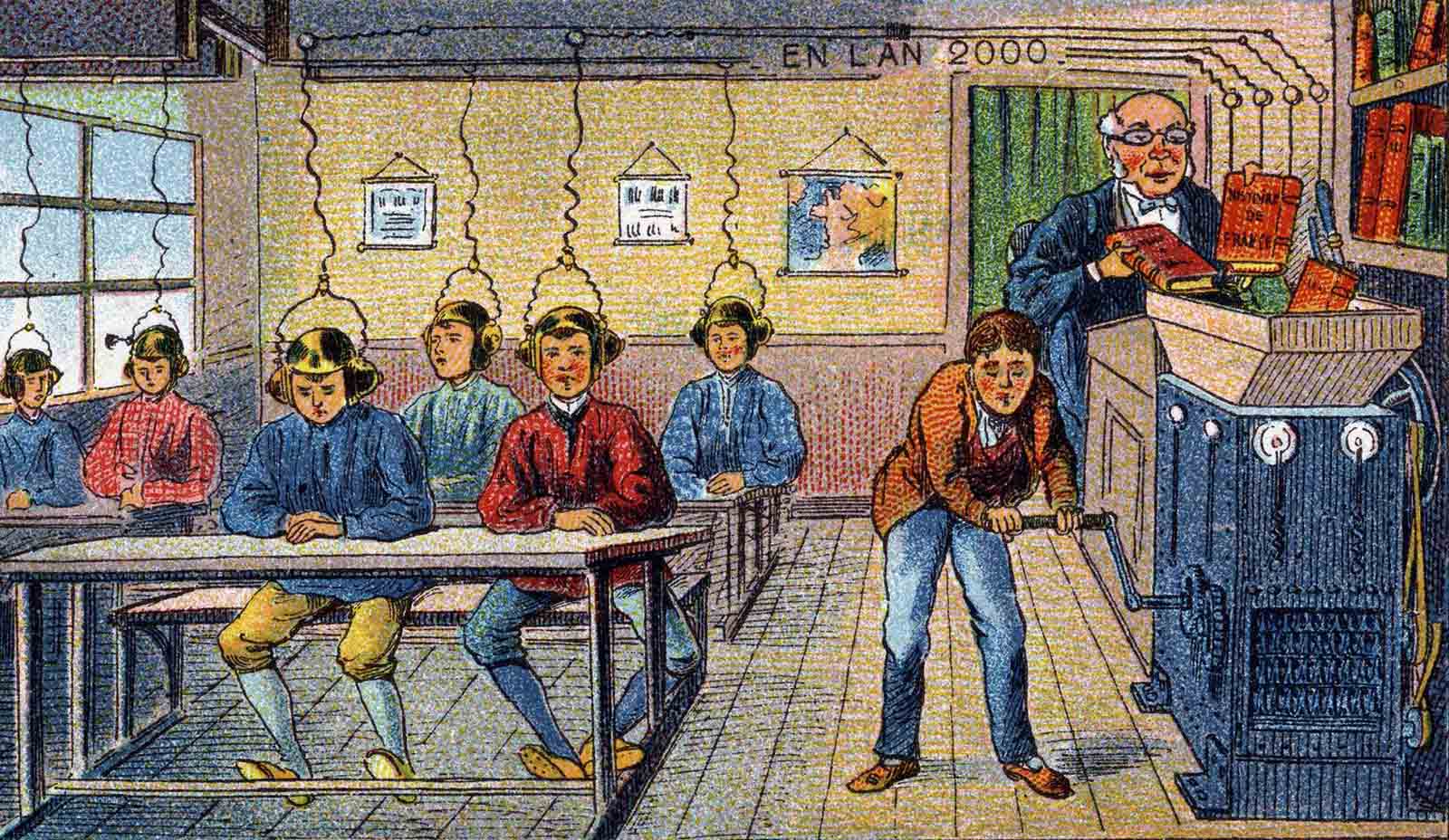
Although the technologies have changed dramatically, the promise sounds familiar: give educators and learners better technology, and better learning outcomes will follow. This blog post examines two corporate announcements nearly a decade apart: a 2017 partnership between Nelson and Microsoft targeting Canadian K–12 classrooms, and the 2026 announcement of Project Helix by Coursera and Udemy targeting workplace learning and upskilling. Despite the different educational contexts, both announcements position technology as a key driver of learning improvement and organizational transformation.
Article 1: Nelson and Microsoft’s Partnership

Article: Nelson and Microsoft Partnering to Transform Education in Canada
In March 2017, Nelson and Microsoft announced a partnership intended to “transform education in Canada” (Nelson, 2017). A Microsoft Windows device equipped with content provided by Nelson, Canada’s largest K-12 educational publisher, would be supplied to every student and teacher in Canada. The media release, written by Nelson and published by PR Newswire, claims that the use of Microsoft Azure’s machine-learning and analytics capabilities would “optimize the device’s learning path to improve student outcomes” (Nelson, 2017).
Techno-Deterministic Thinking
The announcement presents technology as a way to “solve many of the challenges in the shifting educational landscape” (Nelson, 2017) and makes a direct connection between technological affordances and improved learning outcomes. However, learning is more complicated than optimizing a content pathway. Student motivation, teaching practices, assessment, relationships, prior knowledge, and the learning environment all influence how well a student learns (Weller, 2020).
“We are excited about how this partnership will drive innovation in the Canadian market and beyond.”
Salcito (Nelson, 2017)
Furthermore, the release is brief, and its omissions are not neutral. While technology is positioned as a primary driver of innovation, the article says little about how teachers will meaningfully integrate these tools into curriculum and classroom activities. As a piece of promotional content from a major technology company, it presents a simplified story of educational transformation that leaves out much of the context that might complicate its narrative such as pedagogy, student agency, or institutional context.
Clark’s Perspective
While the press release claims that merging “Microsoft’s technology with Nelson’s pedagogical content” on Windows devices will “transform student learning” (Nelson, 2017), Clark (1994) would critique this as a fundamental “confusion of technologies” where a delivery medium is mistaken for an instructional method (p. 23). Hardware and analytics are “mere vehicles” (p. 22) and any learning gains originate from the embedded pedagogical strategy, not the media. Under Clark’s replaceability challenge, if identical results can be produced using alternative media, then the Microsoft-Nelson technology itself is not the causal agent (Clark, 1994, p. 22).
Kozma’s Perspective
Robert Kozma (1994) frames educational technology as a “design science” that creates new possibilities for learning (p. 1) and would likely view the release optimistically. Rejecting the “delivery truck” view, Kozma argues that a medium’s intentionally designed affordances enable specific pedagogical methods (p. 8) which would otherwise be difficult to implement. In the Nelson–Microsoft partnership, Windows devices, Nelson’s content, and Azure analytics provide processing capabilities intended to support students when they encounter learning difficulties (Nelson, 2017). Kozma’s argument suggests that such capabilities can enable instructional methods that would otherwise be difficult to implement (1994, p. 13). However, Kozma emphasizes that technology does not automatically guarantee learning; rather, it creates potential that only succeeds when media and method are thoughtfully integrated with the educational, social and cultural context (Kozma, 1994, p. 16).
Article 2: Coursera and Udemy’s Project Helix
Article: Announcing Project Helix: A skills platform for the AI era
In May 2026, Coursera and Udemy, two platforms often used for workplace learning, officially merged. In Announcing Project Helix: A Skills Platform for the AI Era, Supanc (2026), Chief Product Officer, presented the joint vision for an AI-powered learning platform designed to identify skills gaps, personalize learning pathways, assess employee capabilities, and connect learning outcomes to business objectives.
Techno-Deterministic Thinking
The article positions AI as a key solution to workforce learning and development challenges. Rather than simply describing the platform’s features, the article suggests that AI-driven personalization, assessment, and skills intelligence can accelerate skill development, improve workforce readiness, and contribute to positive business outcomes. This framing places significant emphasis on the technology itself as a driver of organizational and educational change.
“Continuous, personalized feedback and adaptive practice engage and progress learners more rapidly from basic comprehension to mastery.”
Supanc (2026)
Clark’s Perspective
Clark (1994) would likely challenge the article’s assumption that AI itself is responsible for improved learning and workforce performance. According to Clark (1994), employees improve because they practice, receive feedback, apply skills and engage in effective instructional activities. The AI platform helps to deliver these experiences in a cost effective and scalable way, but it does not cause learning. In the context of AI, Clark’s (1994) critique remains relevant because AI’s capabilities are ultimately programmed into it through algorithms designed by humans. Therefore, the instructional approach exerts a greater influence on learning than the technology itself (Clark, 1994).
Kozma’s Perspective
Kozma (1994) would likely view Project Helix more favorably because he argues that the medium’s characteristics shape the learning experience. AI features like adaptive learning pathways, AI role-playing, personalized feedback, and learning embedded within daily work create learning opportunities that are impractical or difficult to achieve through traditional training methods. Rather than viewing AI as a simple delivery vehicle, Kozma (1994) would argue that AI can actively shape the learning experience through personalization, adaptation, and feedback. Consequently, while Clark’s argument may still apply to more passive media like books and videos, AI blurs the distinction between medium and method (Kozma, 1994).
Conclusion
Nearly a decade apart, whether in K-12 classrooms or workplace learning environments, both articles illustrate how educational technology vendors continue to frame new technologies as transformative solutions to learning challenges. As Martin Weller (2020) observes, this reflects the field’s persistent “historical amnesia” (p. 3), presenting new tools as starting points for transformation while overlooking the social and pedagogical conditions in which they are used.
The 1994 Clark–Kozma debate provides a useful lens for questioning these claims. Clark (1994) reminds us that technology does not itself cause learning: effective instructional methods remain essential. Kozma (1994), by contrast, argues that the affordances of media can shape what learning experiences are possible. However, the relationship between media and method may be more complex than either Clark’s (1994) or Kozma’s (1994) position initially implies. Both human instructors and education technology systems embody instructional assumptions, although in different ways. Human instructors draw on tacit knowledge, experience, and professional judgement, while educational technologies rely on algorithms, programmed models, and design decisions created by people. Consequently, neither can be considered entirely neutral, and both shape how instruction is delivered.
Additionally, neither media nor method is a sufficient condition for learning (Kozma, 1994), as learning also depends on learner engagement, opportunities for authentic application, social context, and the broader educational environment. This aligns with Connectivist perspectives that learning results from interactions among learners, tools, networks, content, and contexts (Siemens, 2005).
Educational technologies will continue to evolve, but the critical question remains unchanged: not whether technology can transform learning, but under what conditions it actually does.
References
Clark, R. E. (1994). Media will never influence learning. Educational Technology Research and Development, 42(2), 21-29. https://doi.org/10.1007/BF02299088
Kozma, R. B. (1994). Will media influence learning? Reframing the debate. Educational Technology Research and Development, 42(2), 7-19. https://doi.org/10.1007/BF02299087
Nelson. (2017, March 22). Nelson and Microsoft partnering to transform education in Canada [Press release]. PR Newswire. https://www.prnewswire.com/news-releases/nelson-and-microsoft-partnering-to-transform-education-in-canada-616812214.html
Siemens, G. (2005). Connectivism: A learning theory for the digital age. International Journal of Instructional Technology and Distance Learning, 2. http://www.itdl.org/Journal/Jan_05/article01.htm
Supanc, P. (2026, September 9). Announcing Project Helix: A skills platform for the AI era. Coursera Blog. https://blog.coursera.org/announcing-project-helix/
Weller, M. (2020). 25 Years of Ed Tech. Athabasca University Press. https://doi.org/10.15215/aupress/9781771993050.01
AI Transparency Statement
This blog post was developed collaboratively by the authors using ChatGPT and Microsoft Copilot as critical discussion and editing tools. AI was used to help identify potential examples of techno-deterministic thinking, clarify the arguments of Clark (1994) and Kozma (1994), review the logic and cohesion of the blog structure, and provide feedback on wording, transitions, and organization. The connections between the articles and Weller, the interpretations and synthesis of the Clark-Kozma debate, Connectivist connections, and final conclusions were developed by the authors. All sources were selected, reviewed, and verified by the authors, who take responsibility for the final content.
I liked that you didn’t let Kozma off easy with Helix either. Adaptive features blurring the line between medium and method is a real argument in AI’s favour, not a reason to wave the whole platform through, and you held that line.
Bringing in Siemens at the end earns its place rather than feeling tacked on, because it answers the question Clark and Kozma leave open between them: if the method matters and the medium can matter, what’s actually doing the connecting. “Not whether technology can transform learning, but under what conditions it actually does” is the best one-line summary of this whole unit I’ve read from anyone in the course.