In my Design Identity post, I noted a blind spot from my five years in BCIT’s Software Systems Developer program: I often treated a cohort as a single unit and did not account for students’ very different starting points. The Week 2 Community Reflection design challenge brought that exact tension back into focus. I could not attend the synchronous session live and so I reviewed the session recording. Every group worked with the same learning outcome but designed for very different audiences. I chose recreational sport coaches as my audience. I am not a coach, but as the parent of young athletes, I have seen that world from the sidelines, where many of these disagreements start.
Who Are These Learners?
The group in the synchronous session pictured young coaches dealing with parents on the sidelines. I pictured a different slice of the same audience: adult volunteers coaching community teams and clubs. They are usually parents and not trained educators. Because they give up evenings and weekends to volunteer, their time is limited and their formal training is low. Disagreements happen with parents, officials, athletes, and sometimes other coaches, and they tend to unfold in public with children watching.
What Would I Design?
I would start with backward design. The outcome specifies that learners will “identify strategies,” so the assessment should ask coaches to identify strategies and nothing more. A short set of realistic scenarios, such as a parent upset about playing time, an athlete arguing a call, or a co-coach disagreeing on training, would allow coaches to choose an appropriate response and explain their reasoning.
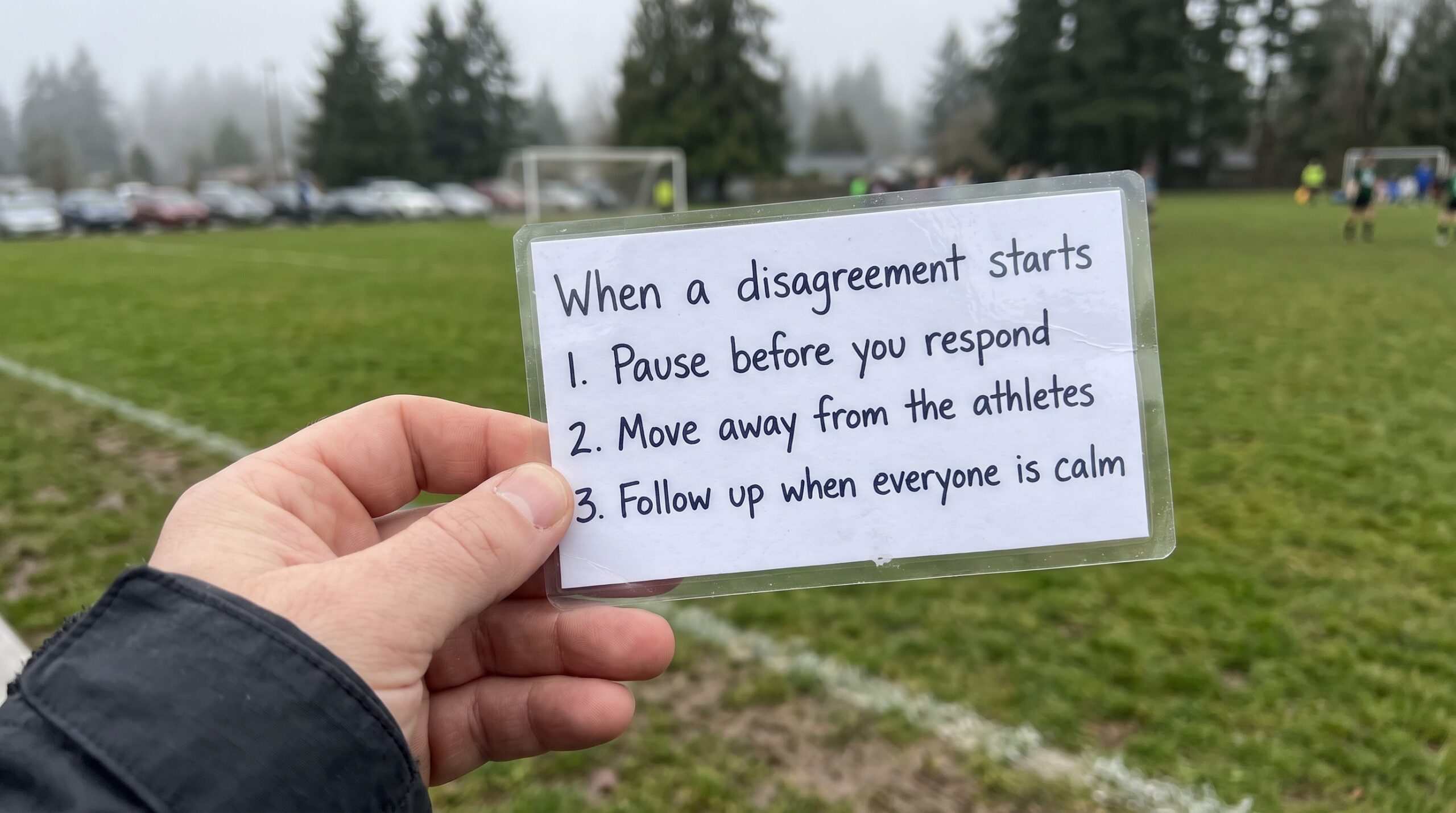
The learning activities would then prepare them directly for that assessment. I would keep the core content to three or four practical strategies, such as pausing before responding, moving the conversation away from the athletes, and following up later when everyone is calm. Coaches would practise these strategies in pairs using their own real-world stories, because experienced volunteers learn more from each other than from a slide deck.
Delivery matters as much as content. A single 60-minute session at the field or clubhouse before the season starts respects their schedules, while a simple pocket card gives them something tangible to reference when an actual disagreement happens.
Barriers I Would Plan For
Effective design requires analyzing emotional and cultural barriers before selecting activities. Some coaches will see conflict training as criticism of how they already handle situations, while others will have very different comfort levels with confrontation. Drawing on Universal Design for learning principles around welcoming learner identities. Framing the session as sharing what works, not fixing what is wrong, lowers defensiveness and fosters psychological safety.
How the Other Groups Compared
Listening to the cohort’s share-outs, I noticed how much the context decided the balance between structure and flexibility. The customer service group designed for consistency, because every new employee had to meet the same company standard. The newcomers group leaned on Universal Design for Learning, prioritizing choice, belonging, and room for learners to help shape the content. The group designing for adults aged 75 and older planned around pacing, familiar language, and face-to-face delivery. My volunteer coaches sit somewhere in the middle: there is no formal regulatory standard to meet, yet a club still needs its coaches to respond in a consistent way.
What I Took From This
The learning outcome never changed, yet almost every design decision, including the length, the location, the scenarios, the delivery format, and the tone, came directly from the learners. I also noticed how much the verb in the outcome matters. “Identify” is a modest cognitive goal. If we wanted coaches to actually apply these strategies under pressure on the sidelines, the outcome, the practice activities, and the assessment would all need to shift together. That is constructive alignment, and I am starting to see it everywhere.
I’m starting to treat instructional design models as thinking tools rather than rigid checklists. A clear learning outcome is only the starting point; meaningful learning happens when the pathway, the pacing, and the supports are shaped around the specific people in the room.
AI Transparency Statement
I used Gemini to help edit this post and generate the image. The views are my own.
Leave a Reply