
Rationale
For the infographic below, the recommendations from Salmon (2018), Bull (2013), Boettcher (2013) and Dunlap & Lowenthal (2018) were synthesized to develop the top five online facilitation tips. The theme for the infographic’s facilitation tips is to prioritize the learner. The infographic’s tips are not chronological, but rather are synergistic elements that, when present, result in the facilitator prioritizing the learner. The following will state the importance of each tip as to how it relates to the learner as a facilitator’s priority.
1) Make learning accessible: ensure clarity and relevance
This tip is important because it prioritizes the learner by advising that the course content should:
• Be relevant, such as current events, so that it motivates learners to engage in the content (Dunlap & Lowenthal, 2018).
• Be digital to ensure accessibility on multiple devices (Boettcher, 2013).
• Include short and clear instructions to keep the learners coming back to the course (Bull, 2013).
2) Outline clear expectations: for yourself, learners and the course
This tip is important because it prioritizes the learner by:
• Decreasing the loss of learners by making them aware of expectations at the start (Dunlap & Lowenthal, 2018).
• Clarifying effort and time to limit surprises to the learner (Boettcher, 2013).
• Providing a guide for learners to use and refer to during their learning experience (Bull, 2013).
3) Make time for communication: providing quality feedback is key
This tip is important as it prioritizes the learner because:
• Facilitator communications, such as announcements and forum postings, demonstrate care to the learner (Boettcher, 2013).
• Clear, explicit feedback, with opportunities for clarification, support student success and knowledge construction (Dunlap & Lowenthal, 2018; Salmon, 2018).
• Feedback requested from learners can help the facilitator to modify the course (Dunlap & Lowenthal, 2018; Boettcher, 2013).
Communication with the learner and learner feedback can also aid the facilitator to adjust their presence to support the next tip; cultivating a learning community.
4) Make your presence known: cultivate a supportive community
This tip is important as it prioritizes the learner because:
• Planning discussion posts that encourage questions, discussions, reflections and responses is key to engaging learners (Boettcher, 2013).
• Facilitators acting as active participants and sharing work in the learning community encourages learners to contribute in a meaningful way (Bull, 2013).
• Learners can support other learners’ goals when cooperating and contributing to the community (Salmon, 2018).
A good community requires a variety of activities and experiences for learners to work (Boettcher, 2013) and leads into the next tip of championing learner success by increasing options.
5) Champion learner success: emphasize personalization
This tip is important as it prioritizes the learner because:
• Providing options make it possible for learners to link their learning more directly to their experiences and needs (Boettcher, 2013).
• Ensuring personalized, applied activities and projects motivate learners by supporting personal and professional goals (Bull, 2013; Boettcher, 2013).
• Personalizing for the learner maximizes their opportunities from the course (Salmon, 2018).
References
Boettcher, J. V. (2013). Ten Best Practices for Teaching Online.
Bull, B. (2013). Eight Roles of an Effective Online Teacher. Faculty Focus.
Dunlap, J. C., & Lowenthal, P. R. (2018). Online educators’ recommendations for teaching online: Crowdsourcing in action. Open Praxis, 10(1), 79–89
Salmon, G. (2018). The five-stage model. Online resource.
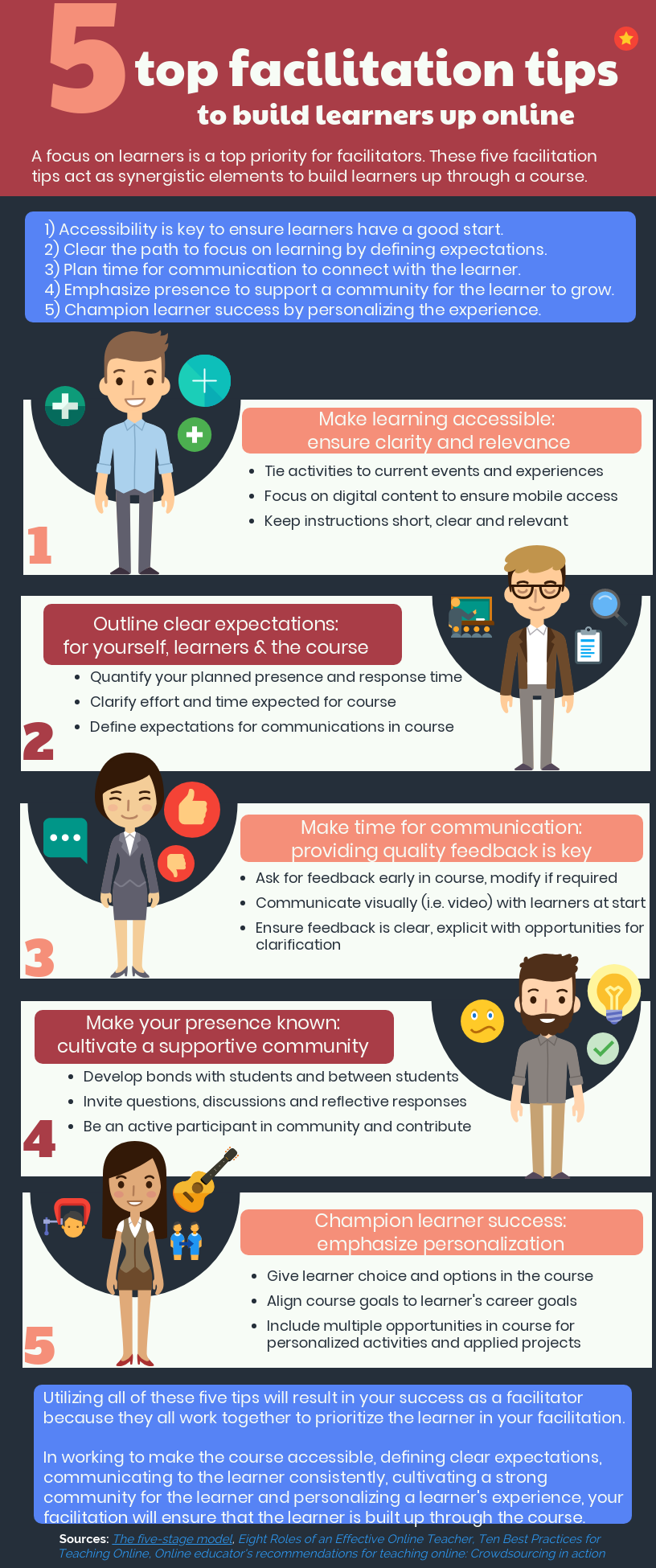
Note: The infographic exported image does not have the ability to contain the live links that are embedded into it that, when clicked, source back to the links above in the References section.

Leave a Reply