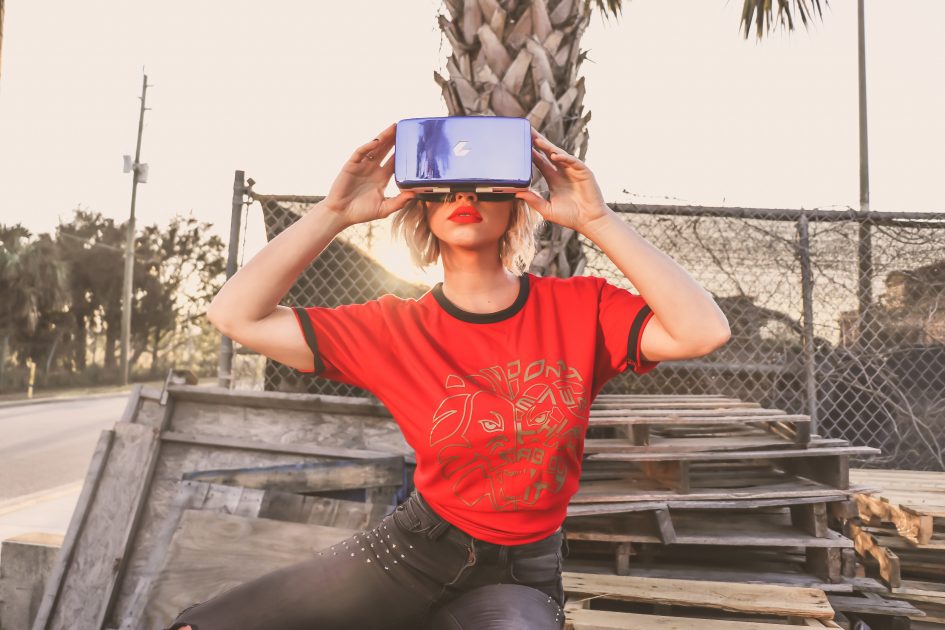
The following are my reflections on LRNT 528 Week 8a’s learnings from the course Virtual and Augmented Reality in Educational Settings.
Here’s what (to show new understandings constructed about VR and AR)
The development of pedagogical norms and best practices for use in learning for virtual reality (VR) and augmented reality (AR) are integral to widespread use and acceptance of these technologies within the field of learning (Wang, Callaghan, Bernhardt, White & Pena-Rios, 2018; Fowler, 2015). Fowler predicts that higher adoption of AR may occur as a result of “some hitherto unknown application or opportunity driven by commercial or personal needs” (2015, p. 1400). This is similar to how the increase in personal mobile use due to several mobile applications that are now commonplace, previously unknown, drove m-learning to gain importance in education.
So what (provide an interpretation or new meaning to the new knowledge)
It is difficult to make pedagogical considerations for a technology that is still gaining importance in personal use and therefore, provides an additional barrier to gain learner’s buy-in and offer a knowledge base of the technology that reduces cognitive load associated with its use.
Now what (share a prediction, implication or question for VR/AR in my educational context)
A prediction is that development of AR for commercial and marketing purposes of organizations will open the door for the learning function to be more widely utilized. Though pedagogy and best practice are identified as barriers for the technology to be used in learning, a bigger barrier is that the technology may need to become more mainstream to be accepted for organizational learning and for pedagogical standards to develop.
References
Fowler, Chris. (2015). Virtual Reality and learning: Where is the pedagogy? British Journal of Educational Psychology, 46(2), 412-422. doi:10.1111/bjet.12135
Wang, M., Callaghan, V., Bernhardt, J., White, K., & Pena-Rios, A. (2018). Augmented reality in education and training: Pedagogical approaches and illustrative case studies. Journal of Ambient Intelligence and Humanized Computing, 9(5), 1391-1402. doi:10.1007/s12652-017-0547-8
Featured Image Source: Photo by Tim Savage from Pexels

Leave a Reply