
Kate designs global experiential learning cohorts for undergraduate programs. Dino leads learning and design efforts for pilot training at a Canadian airline. Despite having disparate contexts both are seeking blended learning strategies to increase, the utility, accessibility and engagement in their short-course training programs.
Our problem scenario
There is low student engagement (i.e. passive learning) during the introductory portion of the course in both contexts. Feedback suggests this is because the inductions are formatted to be content-driven and instructor-centred rather than learner-focused.
For example, there is a high reliance on PowerPoints and ‘information dumping’ to cover the required content in Dino’s train-the-trainer course. The three-day program content is bound by larger regulatory authorities and must incorporate a significant amount of theoretical and practical material.
Whereas in Kate’s contexts, the information imparted is less structured and more experiential. The course guides learners through a series of curated projects related to their specific international settings and goals.
Design thinking process
In both contexts, traditional and inflexible instructional design models (e.g. ADDIE) were not best serving the experiential learning goals (Bates, 2014). Instead, we looked to learner-empathic approaches to explore and improve how students would experience the instruction (Parrish, 2006; 2008, as cited in Vann, 2017). Using the Stanford University Institute of Design (2016) design thinking process as a base, we co-constructed solutions by looking at our challenges from the lenses of user experience and learner-empathy.
Through a cyclical process of inquiry and ideation, our design thinking took into consideration the shared parameters, challenges & needs showcased in Figure 1.
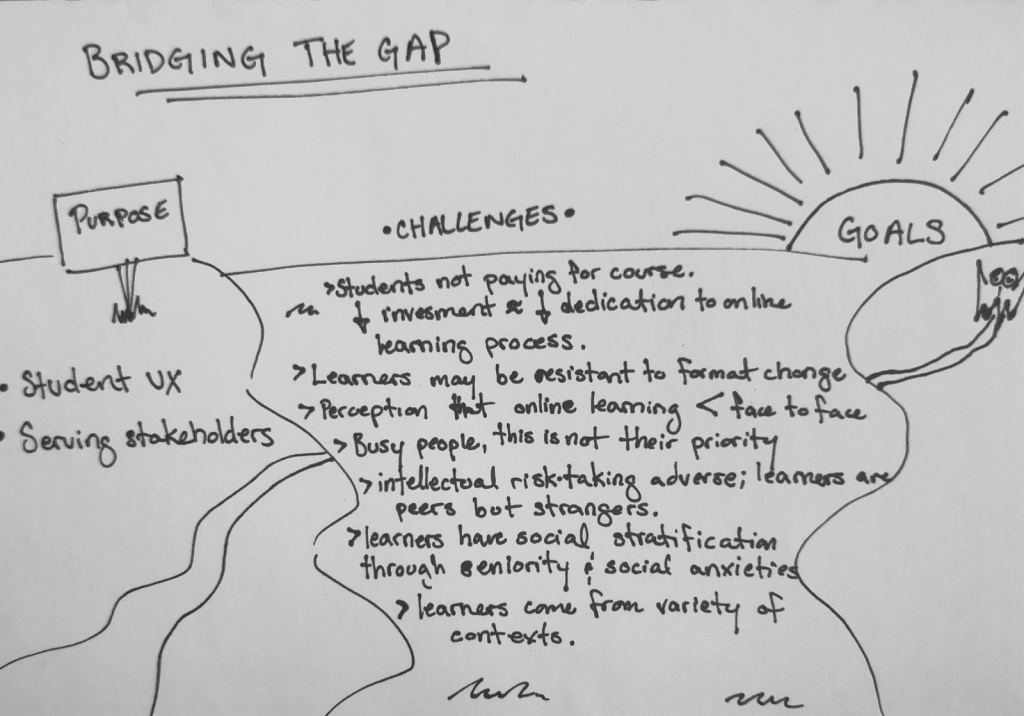
Figure 1. Summary of challenges (own image).
Solutions
Once we defined and unpacked our student needs, we began to imagine a well-designed blended-learning environment that served as a community of practice. We realized a shared need to introduce strategies that would invite intellectual risk-taking, inciting curiosity and prompt deeper engagement. For example, including auto-ethnographic approaches like inviting students to share their backgrounds, experiences, expectations at the outset of the course.
Following multiple brainstorms, we compiled our respective ideas and came up with the following solution possibilities:
- Move the theory and knowledge digestion to self-study; develop a workbook as a prerequisite to the online module. The workbook will cover key content and an adaptive learning quiz, as well as instructor digital tools video tutorials.
- Online learning environment (OLE) as a prerequisite to face to face aspects of the course. Treat online learning as a warm-up; a gradual introduction to new learning styles and to the cohort.
- OLE will have two parts. Part A, an asynchronous eLearning module and Part B, an asynchronous facilitated social learning environment allowing interactions and intellectual risk-taking; capitalize on online learning benefits for creating a safe environment
- OLE part B includes an icebreaker for introductions to self and goals for the course
- Further to completion of self-study and OLE Part A and B, we expect learners to demonstrate self-efficacy by being confident in accomplishing the assigned tasks during the face-to-face portion.
- The classroom portion will focus on real scenarios/simulations and hands-on practice.
Conclusion
Because we realized that motivation is the key to active engagement and learning, we did not start with the assumption that learners would be overly enthusiastic about the introduction of an online learning environment. The suggested learning solution will be explicit about the benefits of the blended format as related to their self-motivators towards the beginning. Furthermore, the solution intends to satisfy both intrinsic and extrinsic motivators, such as being self-sufficient, and well-prepared when it comes to helping the end users perform well on the job or in their studies.
References
Bates, T. (2014, September 9). Is the ADDIE model appropriate for teaching in a digital age? [Blog post]. Retrieved from https://www.tonybates.ca/2014/09/09/is-the-addie-model-appropriate-for-teaching-in-a-digital-age/
Stanford University Institute of Design. (2016). A Virtual Crash Course in Design Thinking — Stanford d.school [Website]. Retrieved from https://dschool.stanford.edu/resources-collections/a-virtual-crash-course-in-design-thinking
Vann, L. S. (2017). Demonstrating empathy: A phenomenological study of instructional designers making instructional strategy decisions for adult learners. International Journal Of Teaching & Learning In Higher Education, 29(2), 233-244.

December 5, 2018 at 4:12 pm
Hi Kate and Dino,
Thank you for providing context into the various challenges encountered by learners in your respective organizations and potential solutions. As mentioned in your post, students in both practices had minimal engagement and motivation to introductory courses due its nature of being content driven and instructor centered (Hatzigeorgiou and Nickelchok, 2018). I think it is very pertinent that learners have the opportunity to channel their own part so as to break the barrier/stereotypes of learning. Being able to pin point the actual problem within learning environments are crucial to initiate change or modifying the present structure of course delivery to foster engagement and motivation among learners (Wright, 2013). Wright (2013) underscored how student-centered classes, empowers student to take charge of their learning while empowering and motivating their peers to become actively engaged. This brings me to your potential solutions, I think it is a great idea to allow the learners, the opportunity to share their experiences and expectations from the inception, this allows for feedback and feedforward. This strategy may prove to be very effective for learners, and gives a basis for adjustments within the course (Garcia-Sanpedro, 2012). In the second solution, where the OLE will be “a gradual introduction to new learning styles” (Hatzigeorgiou and Nickelchok, 2018), have you considered the varied levels of digital literacy skills (DLS) for learners? Would learners with minimal DLS be less motivated to engage in OLE? It would be great to have a bit more context to solution number two and how it will be achieved.
Garcia-Sanpedro, M. J. (2012). Feedback and feedforward: Focal points for improving academic performance. Journal of Technology and Science Education, 2(2), 77. doi.org/10.3926/jotse.49
Hatzigeorgiou, C., & Nickelchok, K. (2018). Kate and Dino: Our design challenge [Blog post] .
Wright, S. (2013). Start with why: The power of student-driven learning. [Blog post]. Retrieved from https://plpnetwork.com/2013/06/21/start-why-power-student-driven-learning/
December 11, 2018 at 3:29 pm
Hi Phiz,
Thank you for your thoughtful comments and suggestions. We greatly appreciated reading your feedback.
In response to your comment, digital technologies are daily parts of the learners’ lives. In Dino’s context, pilot trainers are masters of utilizing sophisticated aircraft systems. For instance, they search for aircraft navigation information using a company tablet, access electronic flight plans, and utilize technologically advanced training devices (integrated procedures trainers, flight simulators) to train pilots. In Kate’s context, learners, as third or fourth-year undergraduates, are mostly “digital natives,” or students who grew up with digital technologies, and have engaged with DLEs to some degree in previous courses.
That said, despite some safe assumptions around DLS, familiarity with DLE does not preclude comfort, participation or engagement (Henderson, Selwyn and Aston, 2015). As Wilkes (2018, December 5) points out, there are certain limitations to DLEs as there are to any learning environment (Bates, 2014). In turn, those limitations must be at the forefront of user-centred design. According to Wilson, learning environments, digital or traditional, are “intrinsically fuzzy and ill-defined” (Wilson 2008, as cited in Veletsianos, 2015, p. 242). Therefore, to bridge the possible division of digital literacies, Dino and Kate’s re-design repurposes existing digital environments by using platforms their learners are familiar with and currently use (e.g. Yammer, Facebook, LinkedIn). The learners’ stratifications will, therefore, be met since our audience already uses social communication tools to discuss, share, and interact with their organizations and each other (Karunanayaka and Naidu, 2015).
A critic might suggest that social software is not learning platforms. However, Suhonen and Sutinen affirm that DLEs are any “educational software, digital learning tool, online study program” or digital resource used in learning regardless of the original intent of their developers (2006, as cited in Veletsianos, 2016, p. 243). Indeed, ‘remixing’ an existing public medium can play an important part in developing innovative open educational practices (OEP) (Karunanayaka and Naidu, 2015).
References
Bates, T. (2014, September 9). Is the ADDIE model appropriate for teaching in a digital age? [Blog post]. Retrieved November 20, 2018, from https://www.tonybates.ca/2014/09/09/is-the-addie-model-appropriate-for-teaching-in-a-digital-age/
Veletsianos, G. (2016). Digital learning environments. In N. Rushby & D. Surry (Eds), Handbook of Learning Technologies (pp. 242-260). UK: John Wiley & Sons.
Wilkes, P. (2018, December 5). Our design challenge [Online forum comment]. Retrieved from Physaun Wilkes https://malat-webspace.royalroads.ca/rru0055/kate-dino-our-design-challenge/
December 6, 2018 at 9:38 am
Hello Kate & Dino,
Very good blog and the blended-learning environment that served as a community of practice resonates with us. Understanding the importance of intellectual risk-taking and wanting to create curiosity and deeper engagement is very important.
The idea of moving theory and knowledge pieces to self-study by developing a workbook as a prerequisite to the online module is a good idea. Adaptive learning quizzes are also very good.
With respect to the online learning environment (OLE), you mention that you would have two parts. Part A will have asynchronous eLearning modules and part B will have asynchronous facilitated social interaction. Would it work better if part B was a synchronous facilitated social environment? This way the facilitator would be present to help guide “live” discussions for students to take an intellectual risk. The facilitator could introduce the icebreaker and model how the interaction could begin.
Lastly, it seems you have a classroom portion that will focus on real scenarios/simulations and hands-on practice. How will you achieve this? Are you considering the use of Virtual Reality or Augmented Reality, or are you considering role play, or both?
Gwen and Joyce
References:
Bates, T. (2014, September 9). Is the ADDIE model appropriate for teaching in a digital age? [Blog post]. Retrieved November 20, 2018, from https://www.tonybates.ca/2014/09/09/is-the-addie-model-appropriate-for-teaching-in-a-digital-age/
Stanford University Institute of Design. (2016). A Virtual Crash Course in Design Thinking — Stanford d.school [Website]. Retrieved November 12, 2018, from https://dschool.stanford.edu/resources-collections/a-virtual-crash-course-in-design-thinking
Vann, L. S. (2017). Demonstrating empathy: A phenomenological study of instructional designers making instructional strategy decisions for adult learners. International Journal Of Teaching & Learning In Higher Education, 29(2), 233-244.
December 11, 2018 at 3:38 pm
Hi Gwen and Joyce,
Thank you for your thoughtful comments and suggestions. We greatly appreciated reading your feedback.
The merits of ‘guided’ versus ‘minimally guided’ facilitation in DLE is a hot debate. Direct instructional guidance is when the information provided entirely explains the concepts and learning steps the students should follow, as well as supporting their understanding of the content (Veletsianos, 2016). On the other hand, unguided or minimally guided facilitation (such as problem-based learning (PBL) and inquiry learning (IL) is defined as “one in which learners, rather than being presented with essential information, must discover the information for themselves” (Kirschener, Sweller, & Clark, 2006, p. 75, as cited in Veletsianos, 2016, p. 250). Kirschener, Sweller, and Clark (2006) argue that guided instruction is more effective because it prevents working memory saturation and information overload. However, Hmelo-Silver, Duncan, and Chinn (2007, as cited in Veletsianos, 2016) counter that PBL and IL afford instructors more time to scaffold student learning, thereby supporting long-term retention and learning effectiveness.
Veletsianos (2016) suggests that course designers have to consider many constraints and opportunities for learning effectiveness before adopting pedagogies and instructional strategies. For example, in Dino’s environment, resource costs are a significant constraint, while time-zone and connectivity differences make synchronous events inaccessible to Kate’s cohort.
Although a synchronous, video-conference, icebreaker session, as suggested, may not fit Dino and Kate’s particular situations, the underlying value of creating space for peer-to-peer interactions at the outset of the course has merit. Future iterations could incorporate introductions and icebreakers, though creatively designed to have impact still if minimally guided and performed asynchronously.
Connecting both pieces of peer feedback, the facilitators’ DLS and ability to help students asynchronously could be another constraint. Realistically, the facilitators may be less familiar with DLE than the students and therefore struggle to meet the design needs. The course prototype redesign phase will have to account for and mitigate these constraints through the learning cycle.
Regarding your last question, you’re correct to assume that simulations will include roleplay and teach back exercises.
Reference
Veletsianos, G. (2016). Digital learning environments. In N. Rushby & D. Surry (Eds),
Handbook of Learning Technologies (pp. 242-260). UK: John Wiley & Sons.